Sorry about the damaged email. Please click on the link below to access the blog:
TheBassmanBlog.com
Sorry about the damaged email. Please click on the link below to access the blog:
TheBassmanBlog.com
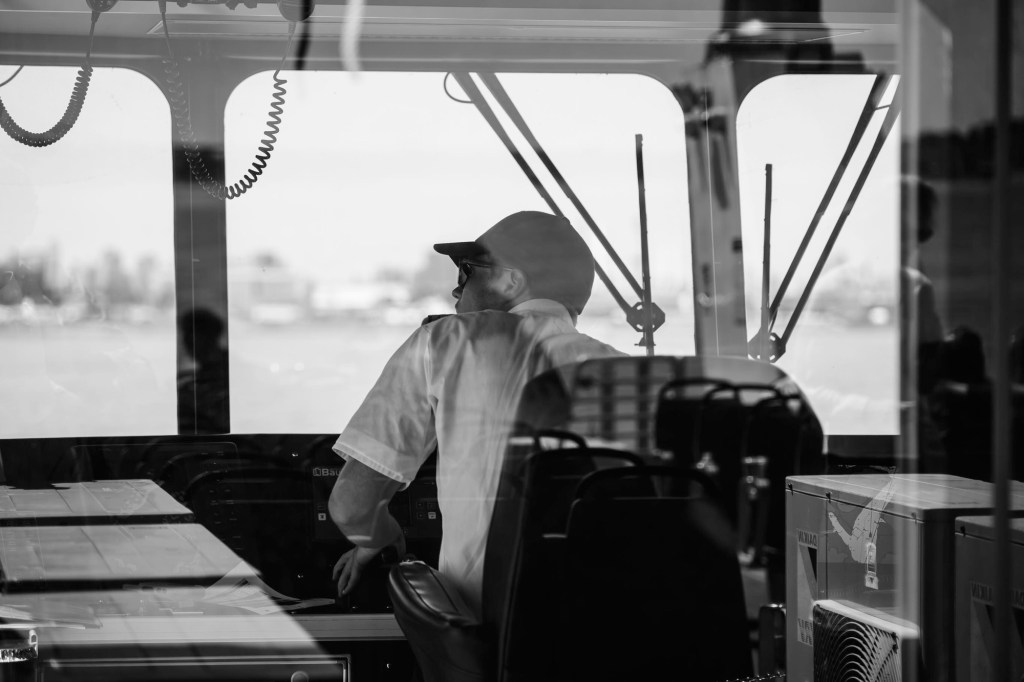
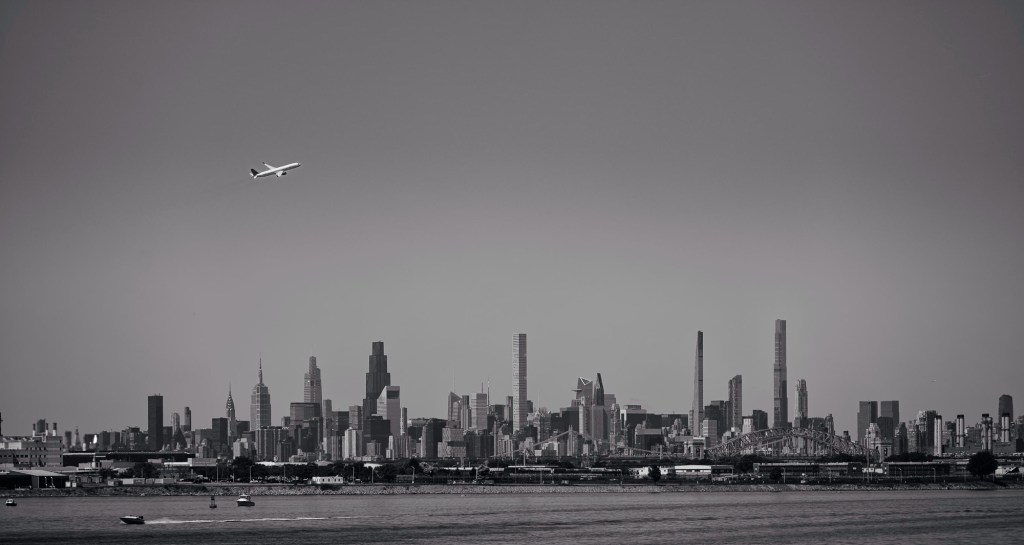
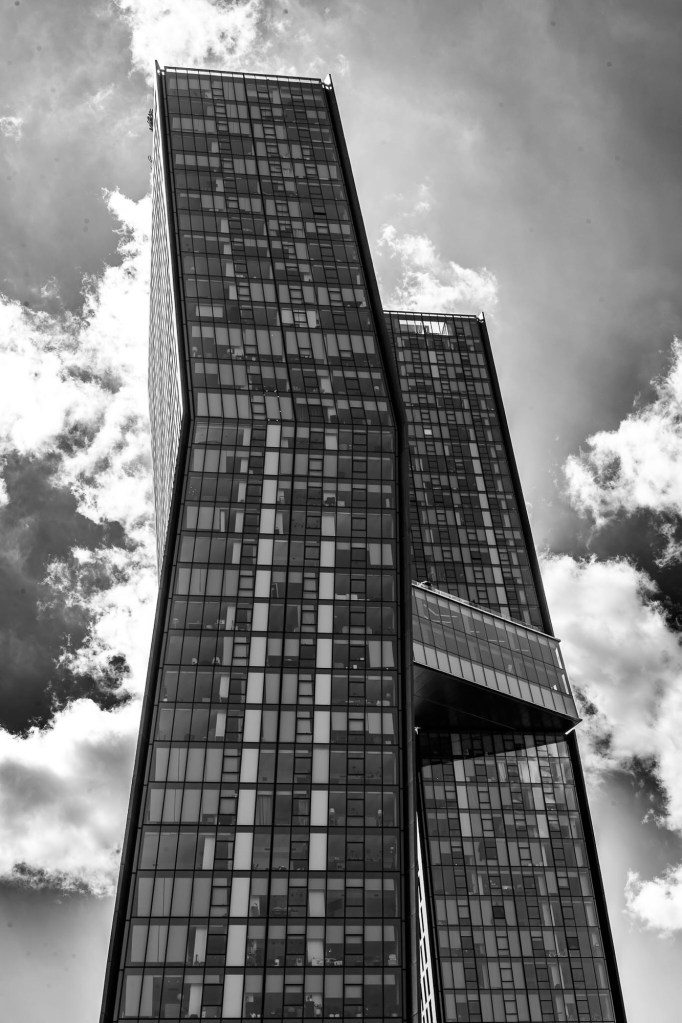
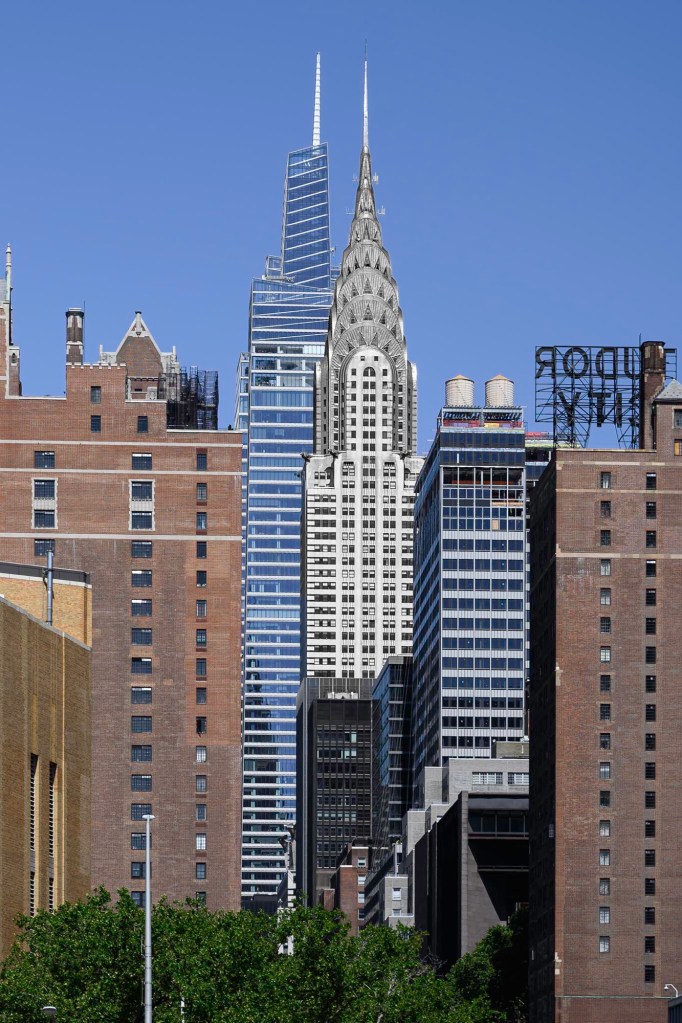
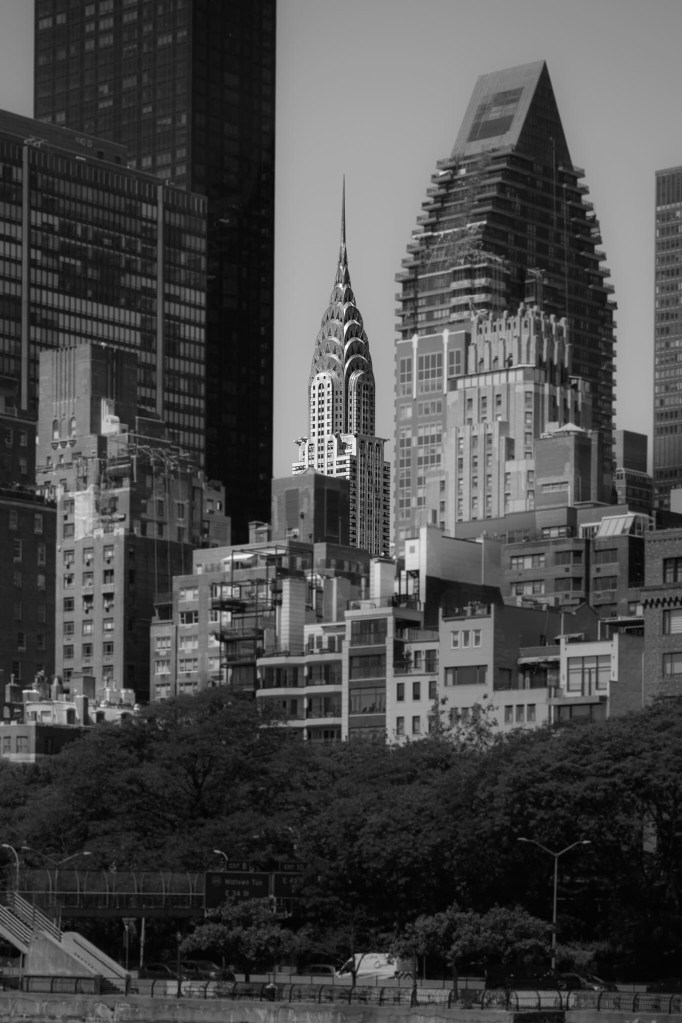
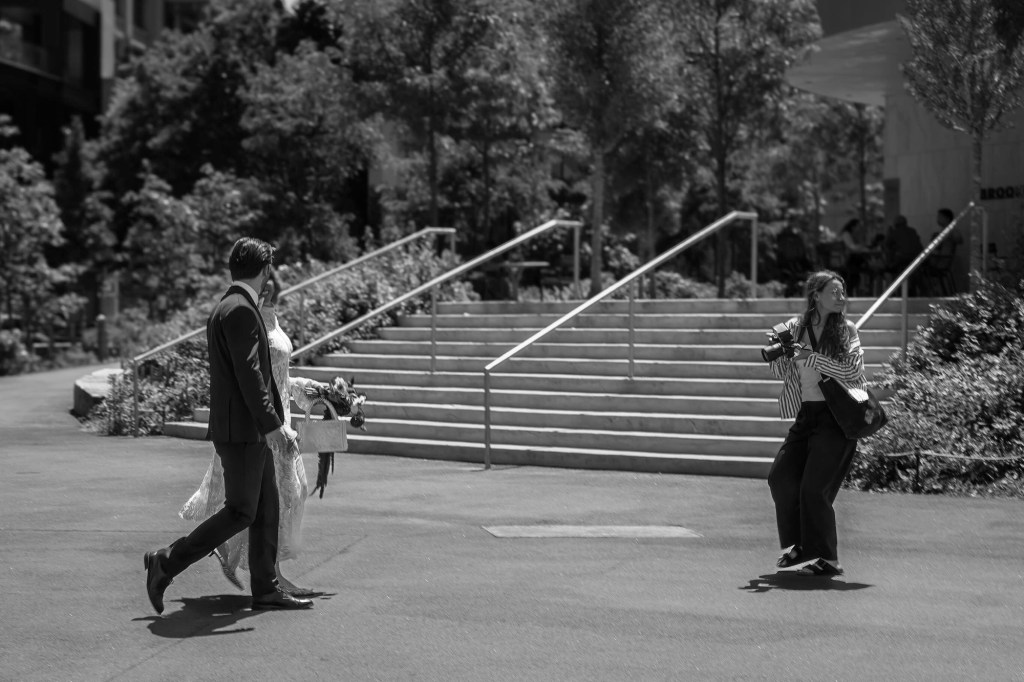
I spent the day traveling to NYC via the ferry system, mostly down the East River. Here are some images from that trip.
Enjoy!
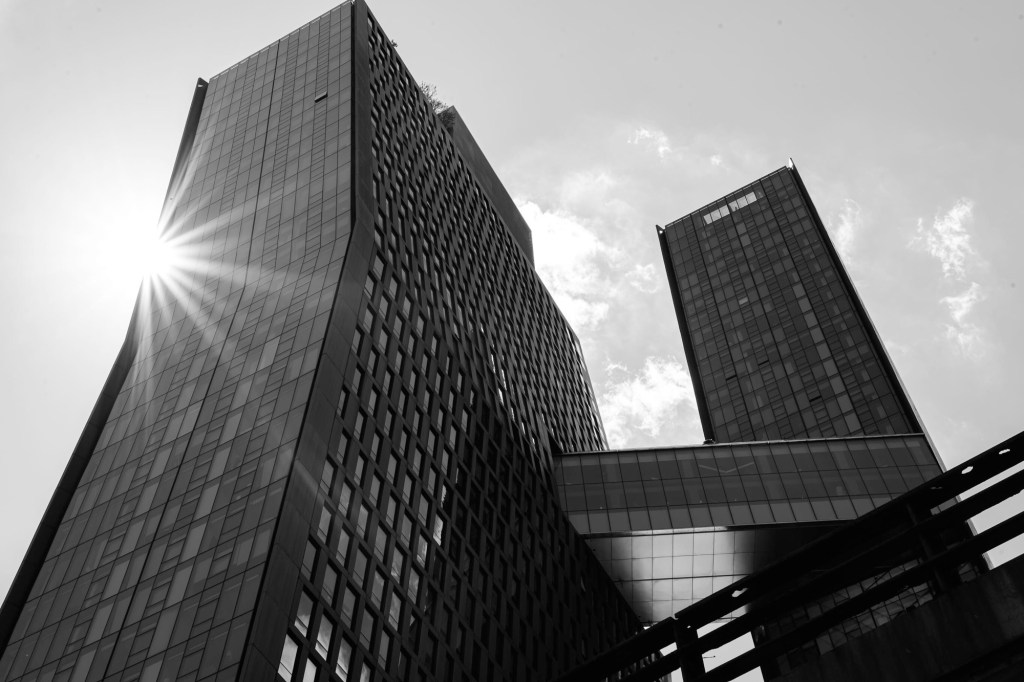
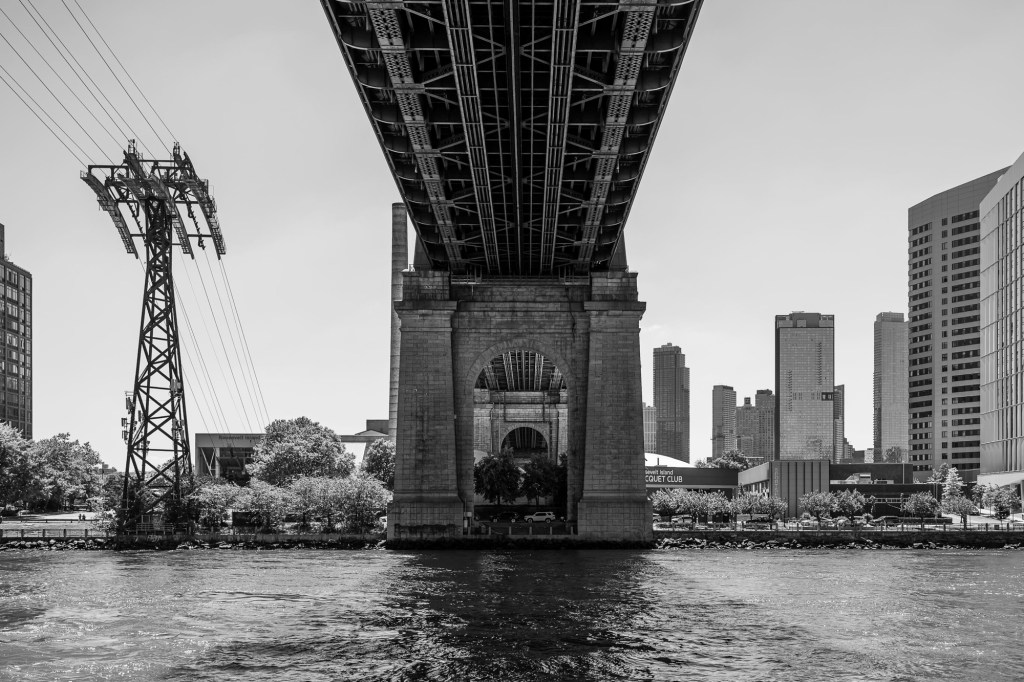
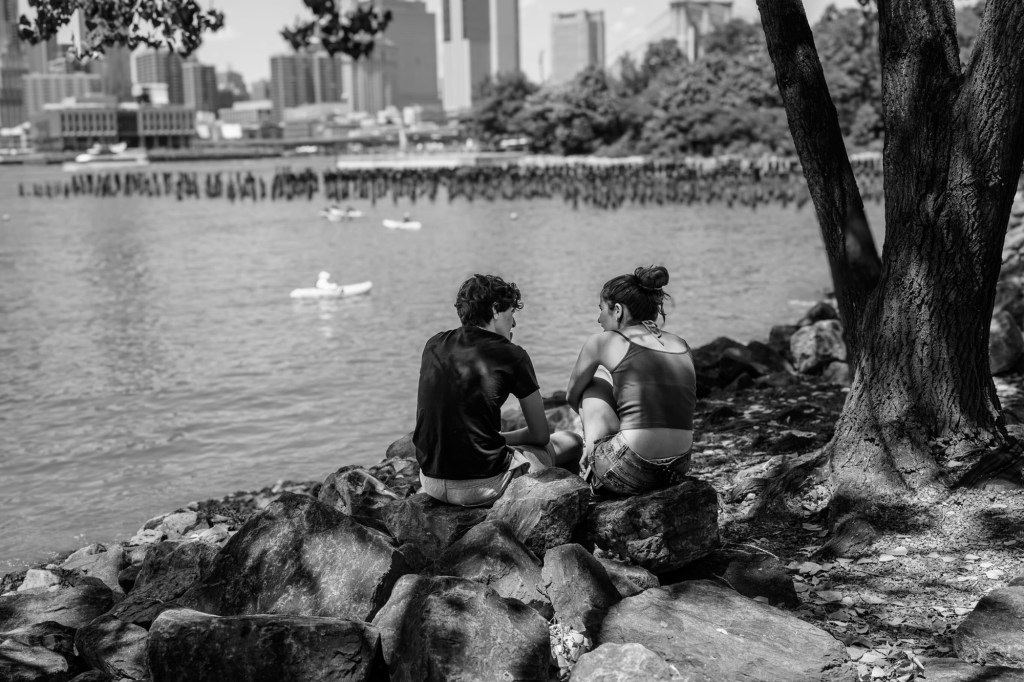
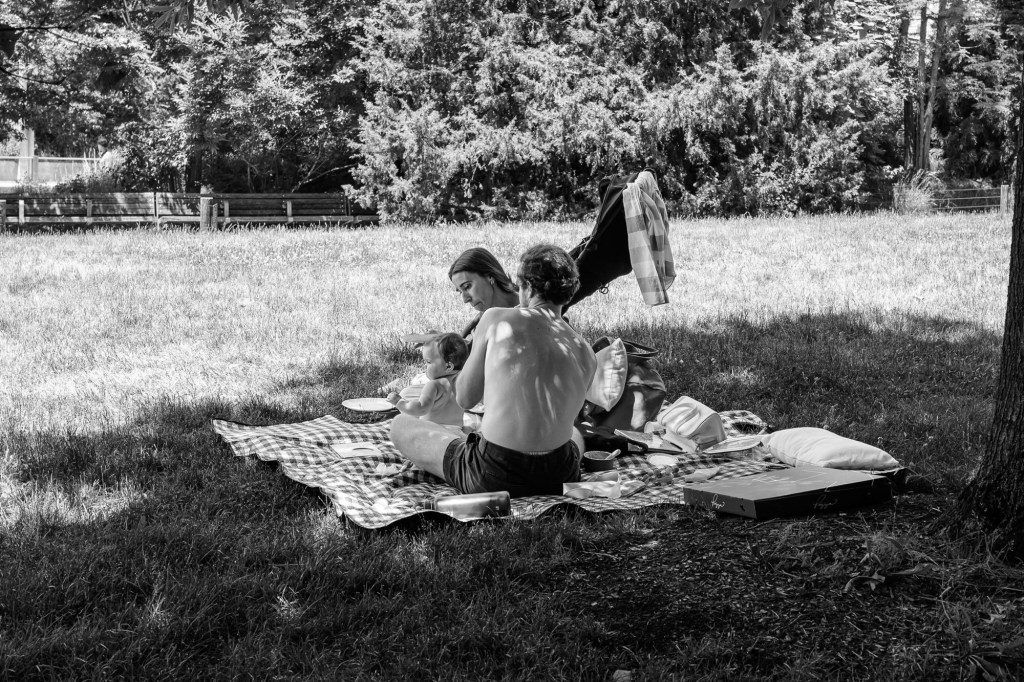
(1) Deep reference to the 59th Street Bridge Song, by Simon & Garfunkel
Today we headed home. Like every part of this trip, it involved a long car ride – in this case, we’re expecting to take about four hours to drive from our hotel to Arequipa Airport, going from high in the Andes near the Colca Canyon down to a mere 8,500’ elevation.
In years past, we always shopped for souvenirs and gifts. At some point, we didn’t want any more stuff for ourselves, we never had the luggage space to bring home lots of gifts, and we generally didn’t want to spend our vacations shopping. But when something pops up unexpectedly and it looked like it wouldn’t take much room, we occasionally would acquire it.
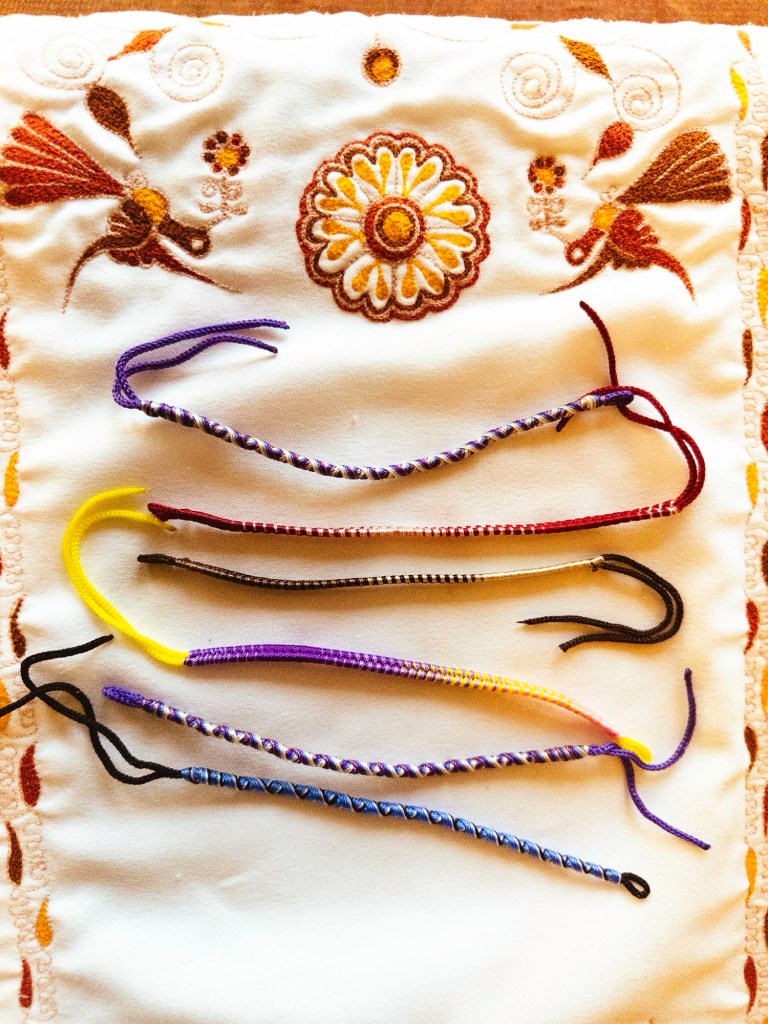
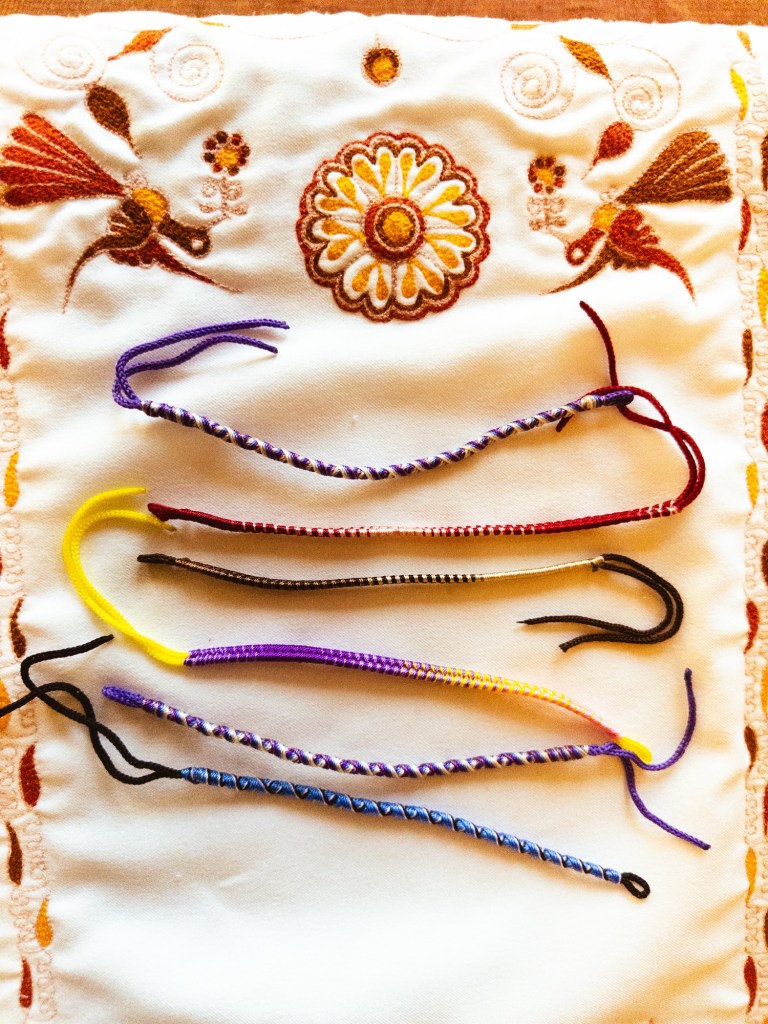
We picked these up at the floating islands on Lake Titicaca.
In addition to the driving, we had almost three hours at Arequipa Airport before departure, a four hour layover at Lima Airport, an eight hour flight back to New York which landed at 9:00am, and finally the usual wait for our checked bags and over an hour to drive home. Door to door, 23 hours. But we got to sleep on the plane 🤨.
So how was this trip?
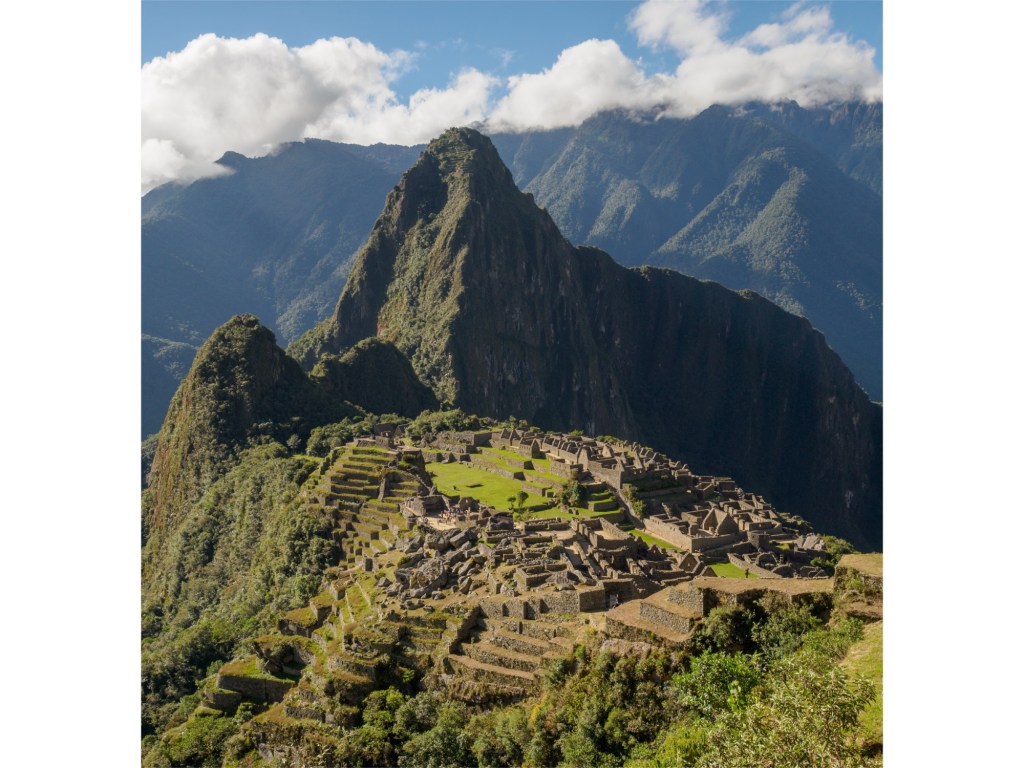
I had a good time. We got to see and do a lot of things we’d never seen before: three nights the Amazon River, two days climbing through Machu Picchu, higher elevations than either of us had ever experienced, and for much longer than we had ever experienced, many really great hotels and a couple of merely good ones, lots of amazing, friendly and helpful people in our guides and drivers, and all of the hotel and restaurant staff we interacted with.
We’ve been to Pikes Peak (14,115’) for about an hour, where I suffered from the altitude. We’ve been to the Jungfrau in Switzerland (13,642’), also for an hour or so, where I suffered. I’ve been skiing at 10,000’, and the first days were hard. But we were well above 10,000’ for all or parts of 11 days. The first few days were very difficult, both from shear lack of oxygen to fuel, well, everything, and from the symptoms of altitude sickness. We started taking Acetazolamide while we were still on the Amazon, and my altitude symptoms faded after a few days.
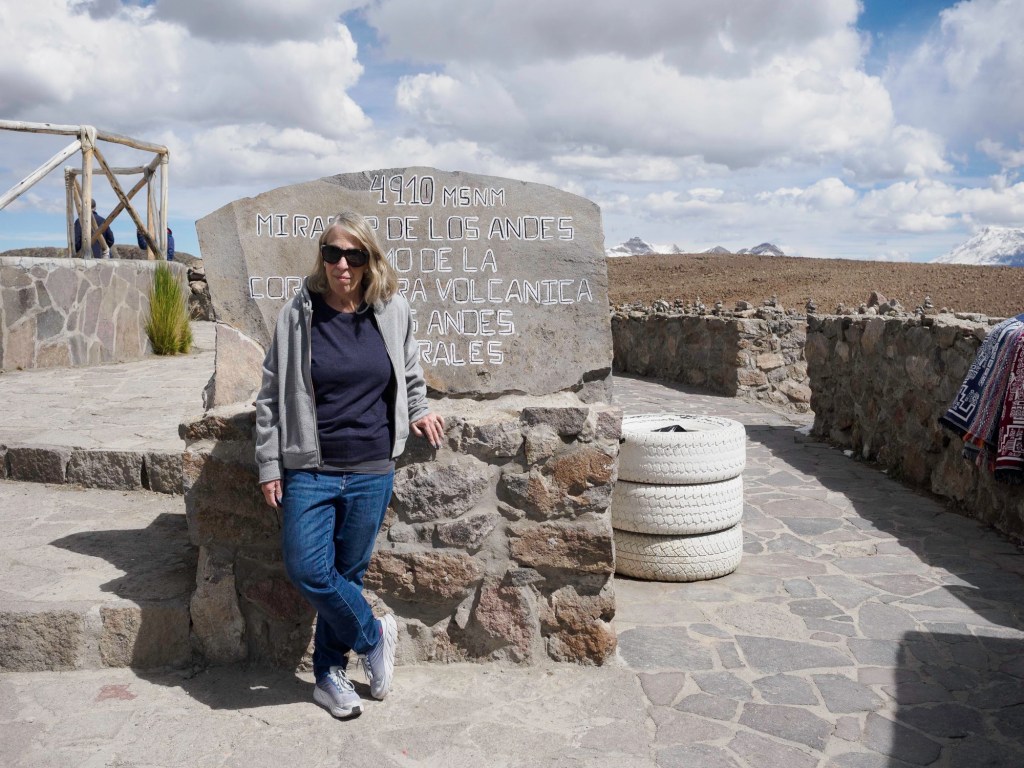
During our drive to Arequipa, we stopped at the highest elevation we have experienced: 4,910m or 16,109’. At that altititude, you are getting only about 55% as much oxygen as at sea level (4). We definitely felt the altitude – it was with us all the time, especially while climbing at Machu Picchu or even walking uphill or up two flights of stairs to our room at Titilaka (3).
We had one really big problem during the trip, and one small one. The big one was having to take two flights and drive two hours to Titilaka for reasons that are still fuzzy to me. That turned a long day of looking at mountains and scenery into a long day of sitting in airports and airplanes.
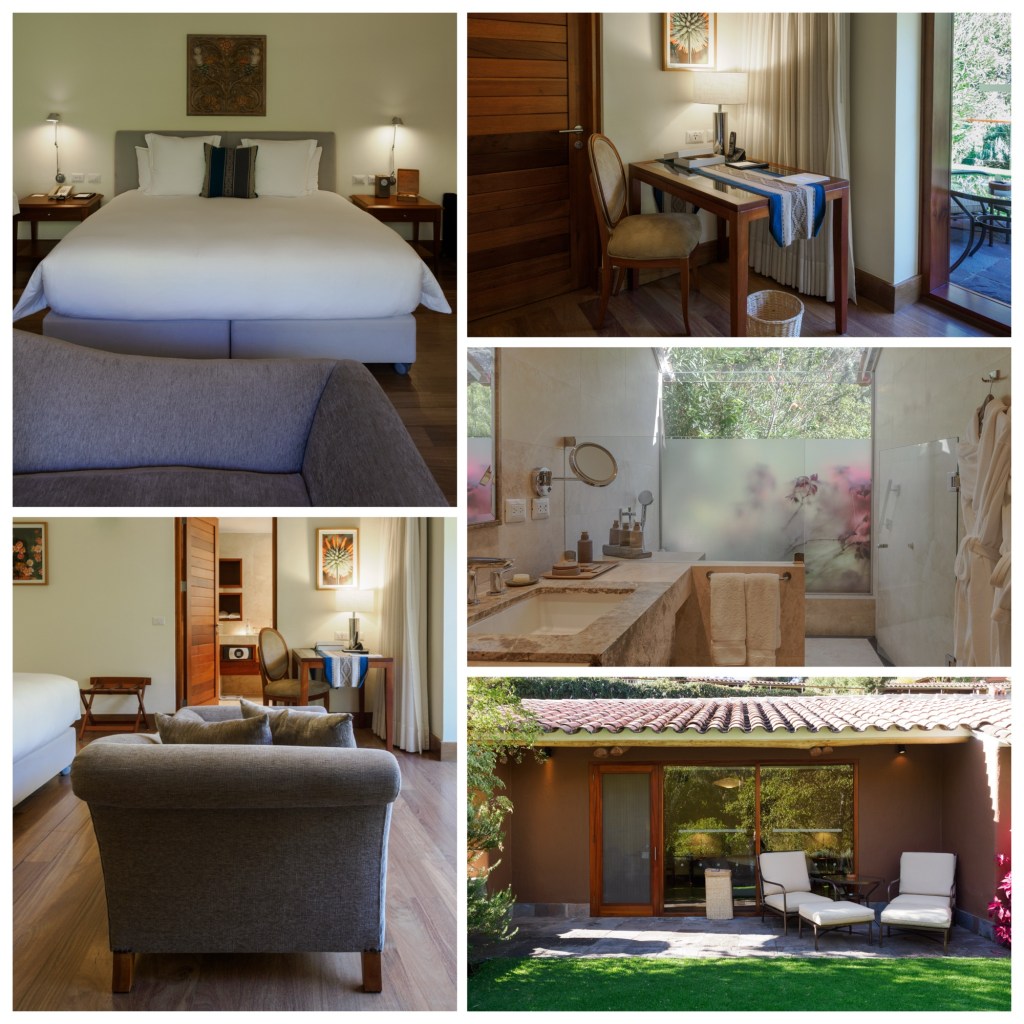
The smaller one was the screwup with our room at Rio Sagrado, where they put us in a really small room by mistake (haha), until we complained and our guide got involved. In addition to bumping in to each other all the time the one night we were in the small room (1), it meant yet another day of packing and unpacking in a trip that made us experts at that activity.
But those were accidents, and stuff happens on a trip this complicated. The structural problem was a bigger deal: too many moves, too many times packing and unpacking, no down time to relax and enjoy several of the excellent accommodations we had or even to see the area we were visiting. Our last four stops went like this:
I’m exhausted just writing it down. Only three days of this eleven day stretch did not involve packing and unpacking. Now clearly, we knew what the schedule was before we left, but we didn’t realize how long the transfers were, and of course, the extra “move” on May 20 and the flights rather than drive on May 25 only made things worse (5).
We’ll learn from this. Next trip, fewer and longer stops, and fewer total days (6).
We saw lots of llamas and alpacas, and Sally got to feed some baby alpaca. We also saw vicuna and guanaco, the wild ancestors of the domesticated llama and alpaca.
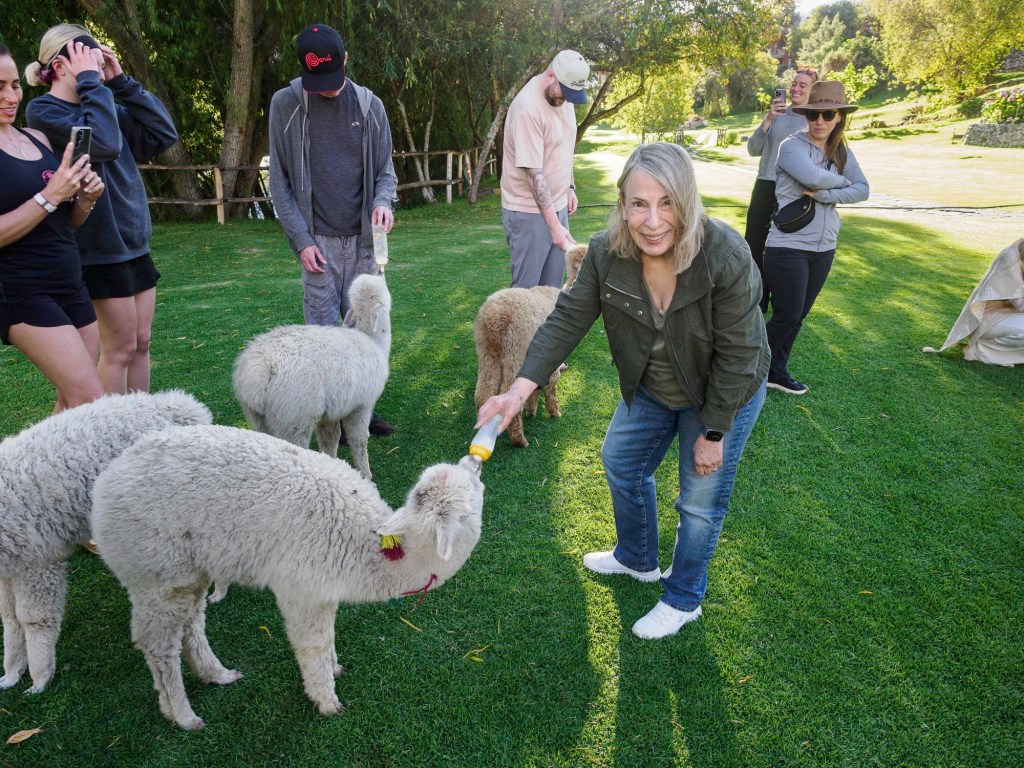
Sally would say that her favorite part of the trip was the Amazon cruise. She built the trip around it, and was not disappointed.
I’m not sure what my highlight would be. The hotels were, by and large, very comfortable and the service was excellent. I liked the two cities (Lima and Cusco), and I liked driving through the mountains.
I will say the biggest surprise to me was that I could actually get a clear picture of a bird in flight. I’d like to say it was my skill, but I’ve done nothing to practice that craft. I have to give credit to the unbelievable subject tracking ability of my camera (2), combined with the size of the birds, and how relatively close they were.
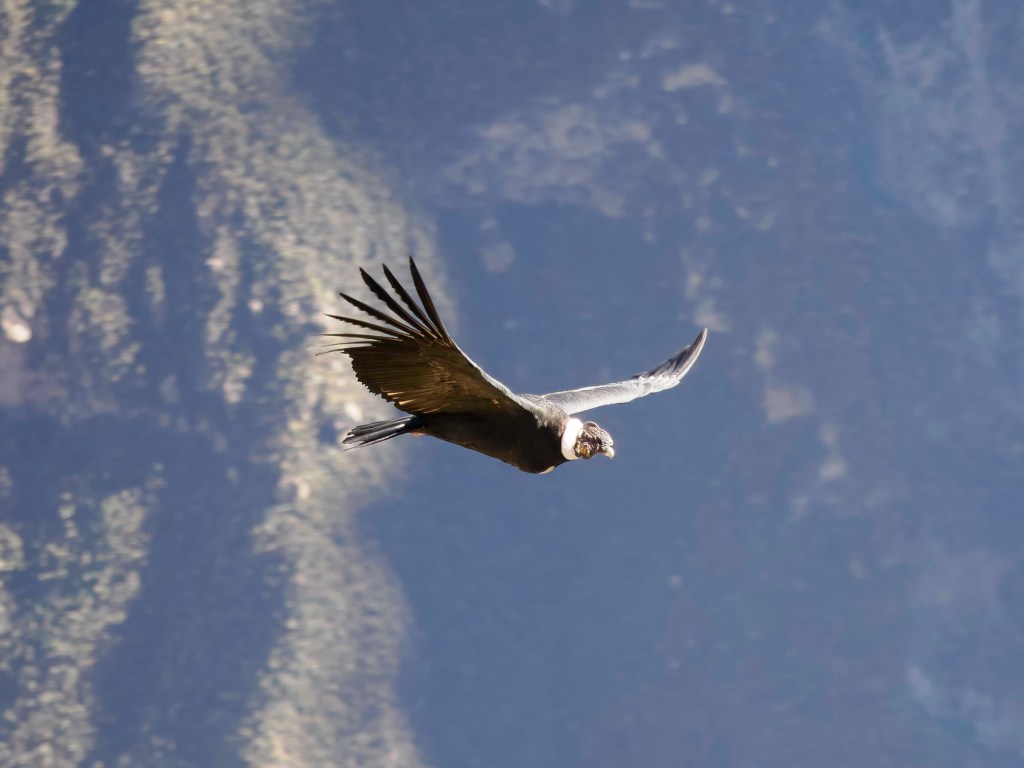
One Day of the Condor, May 2026
As far as the stuff I actually brought, I used pretty much everything as planned – no extra clothing, no extra camera gear, just a few emergency medicines which I’m glad we didn’t need. We wound up with three carry-on sized suitcases, knowing we would have to check at least one but unwilling to risk loosing stuff with all the transfers. In hindsight, the checked bag should have been a little bigger – it would have made the packing easier, and the bags we kept with us easier to move.
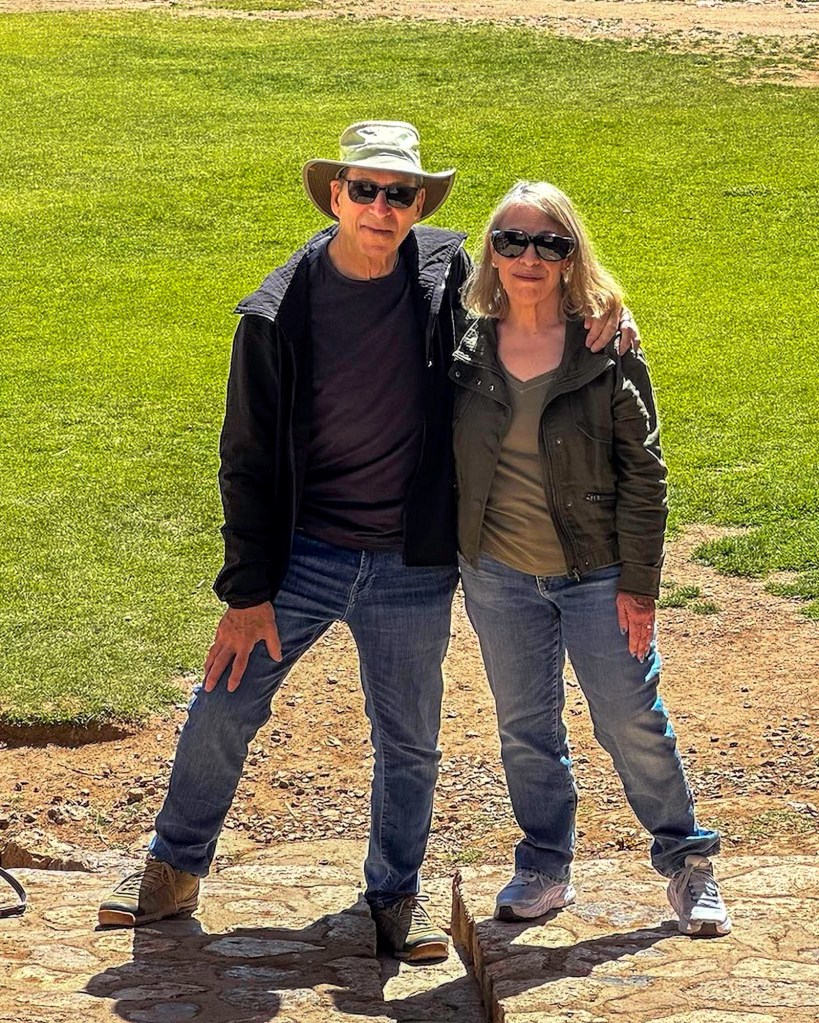
But overall, it was a great, if exhausting, trip.
(1) I usually rather enjoy bumping into Sally 😁.
(2) For the geeks amongst you, I was using an OM Systems OM-1 Mark II with a 40-150mm f/4 lens. I had to watch 40 hours of YouTube videos to get it setup properly; the instruction manual for this camera is 568 pages.
(3) Who thought a multi-story hotel with no elevator was a good idea at 13,000’ ?
(4) When we were at Lake Titicaca, our guide measured our blood oxygen at 70% and 75%. I don’t believe these measurements; we would require hospitalization at those levels.
(5) The care required to pack for a car trip is different than that for flying – you can just throw stuff in the trunk rather than have to fit it in your suitcase.
(6) Sally’s suggestion: exactly one stop.
The reason we drove to this area was to explore the Colca Canyon. This is an enormous canyon in the Andes, about 43 miles long and ranging from 3,300 to 6,600 feet deep – perhaps deeper than the Grand Canyon, but not as long. Of particular interest was the opportunity to get a closer up view of Andean condors that live in some areas of the canyon.
I’ve never had much luck at getting pictures of birds in flight, but these are very large – wingspans range as large as 7 – 9 feet. The prime viewing point, “Cruz del Condor” is 3,900’ above the canyon floor. The condors fly on the air currents that rise up, and they go high above where one stands. When we were there,perhaps 50 people were hoping for a look at the birds, and they were not disappointed.
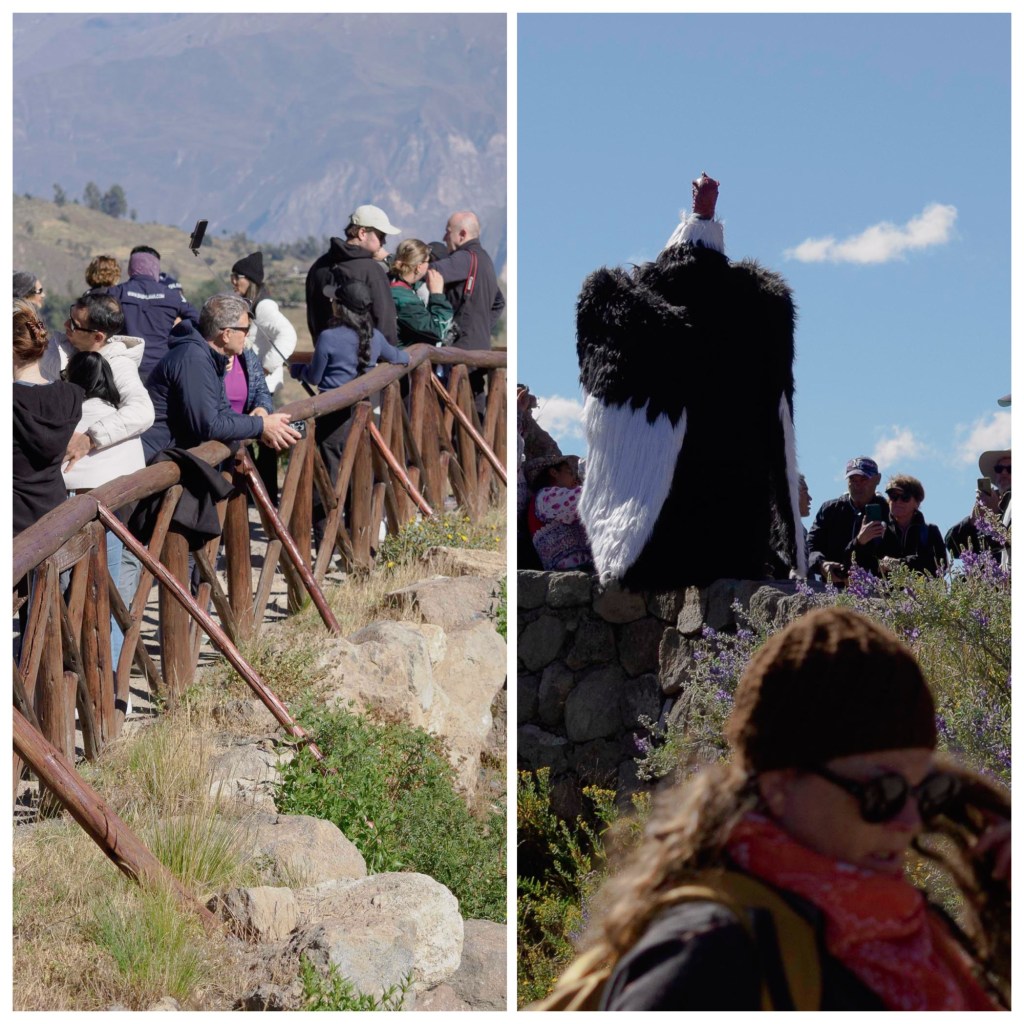
Because the birds live in the canyon and we were standing at the top of the wall, it’s a rare opportunity to see the upper portion of the bird in flight – usually, you can only see the underside as they fly by.
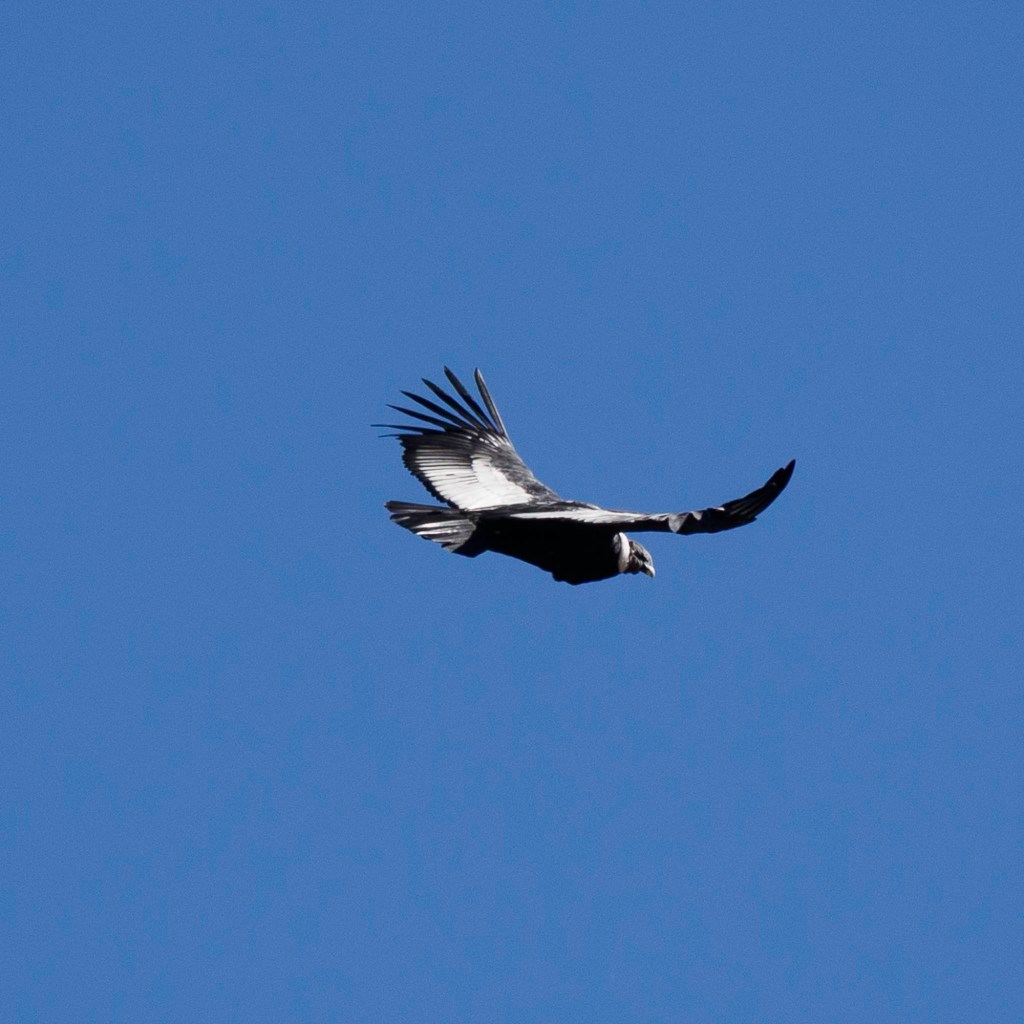
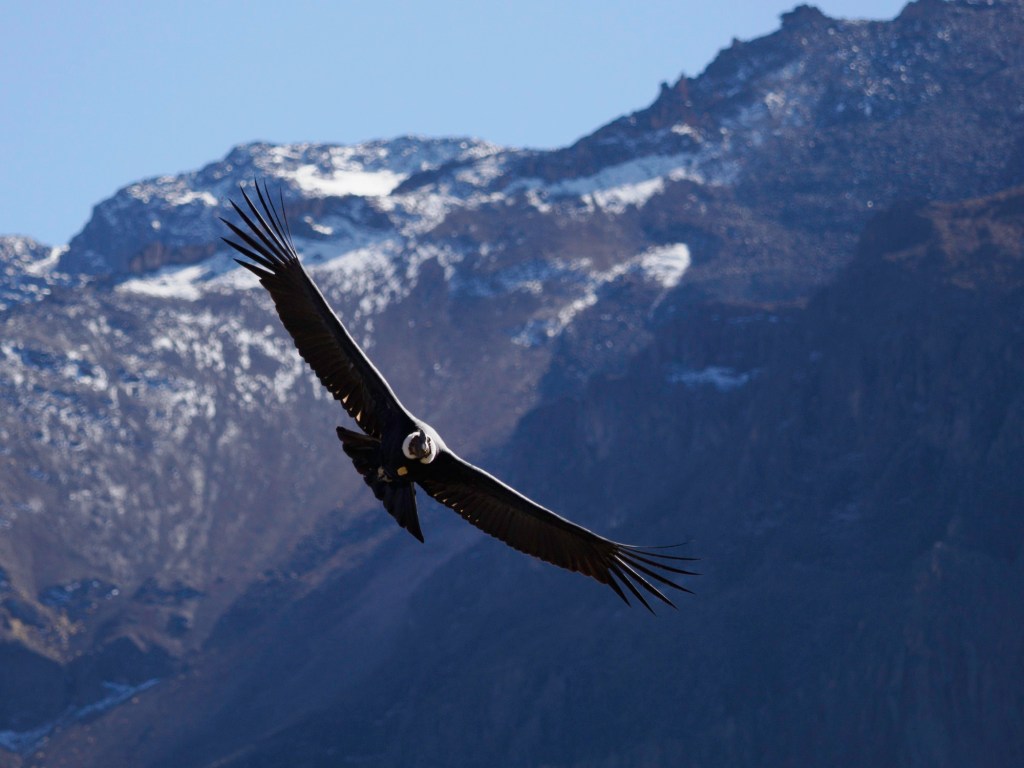
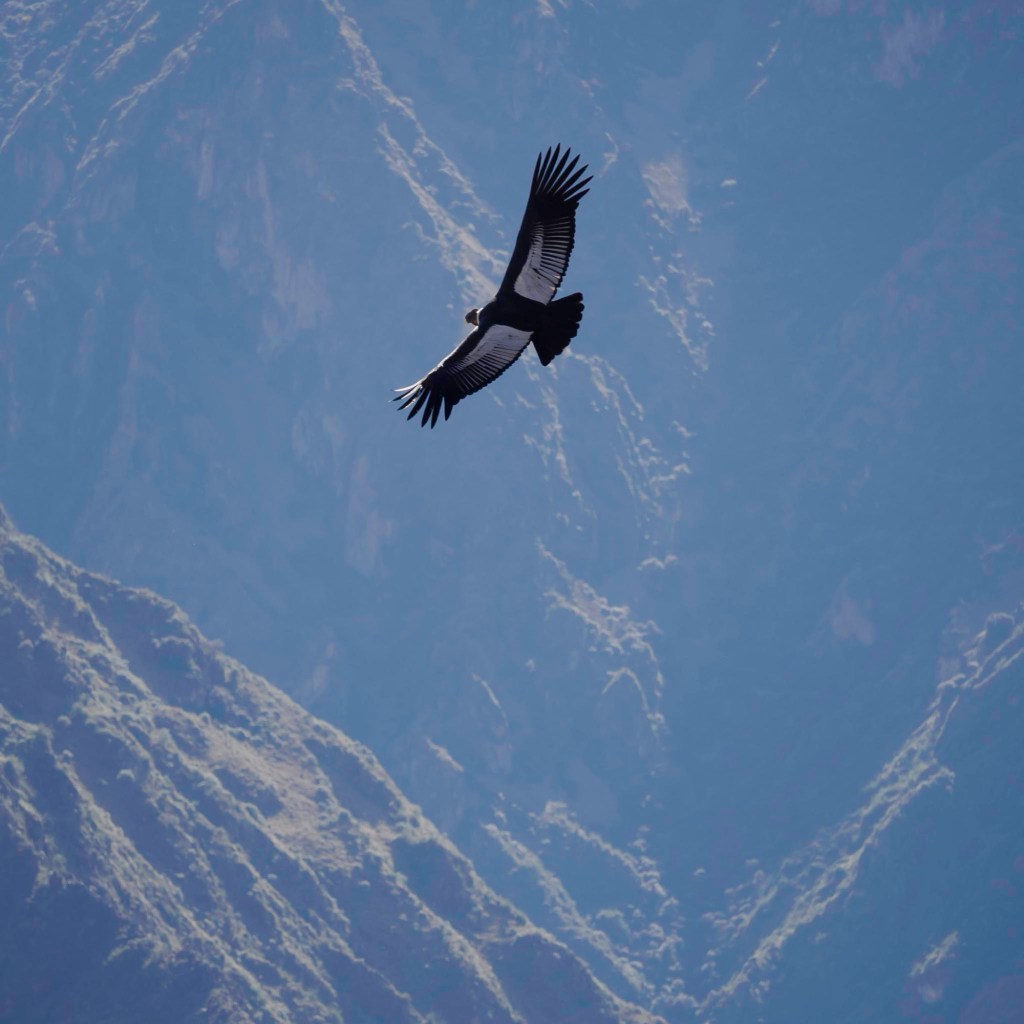
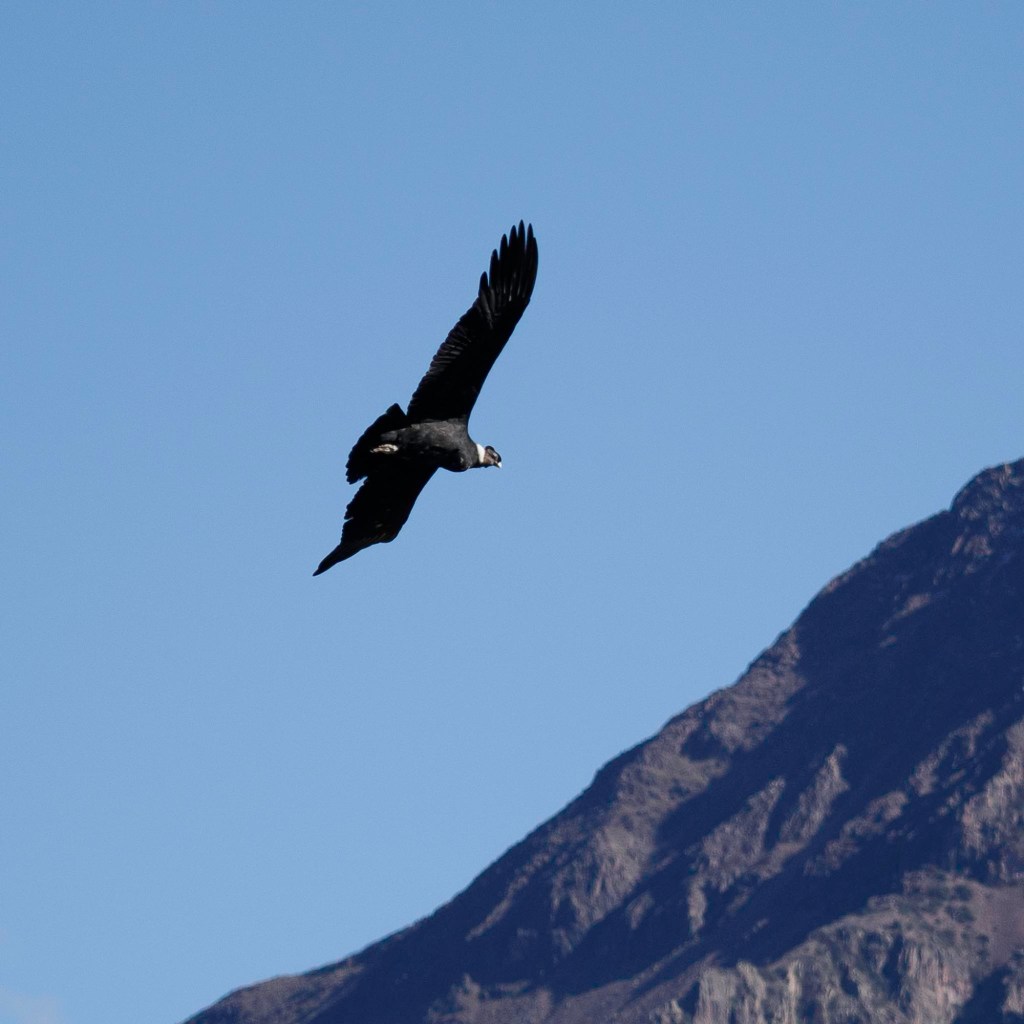
Capturing birds in flight might be the most expensive photographic genre for hobbyists – you can easily spend $10,000 or more on a single lens with enough magnification and resolving power to capture the fine feathered detail on a relatively small bird that’s far away. I had an $800 lens I bought for this trip with less than a third the magnification enthusiasts might like, and adequate but not outstanding resolution at its maximum extent. I was saved by how relatively close the birds are, and how big they are.
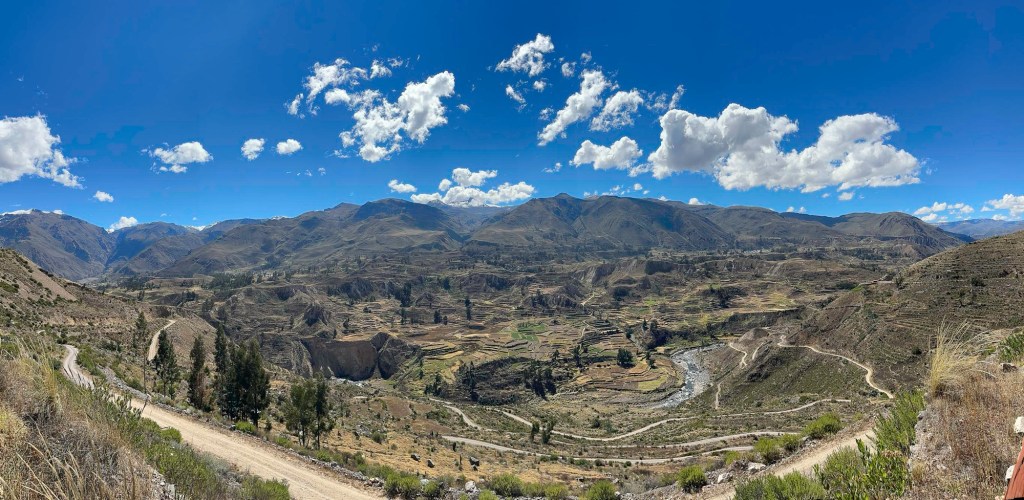
We stopped a few times as we drove through the canyon; the landscape was impressive. The Incas and their predecessors had lived here hundreds of years before the Spanish arrived, and many still do. You can see the terraced farms that they still maintain. There are trails that run through and past the farms – the hikers consider them a challenge, the farmers consider them the way they go to work.
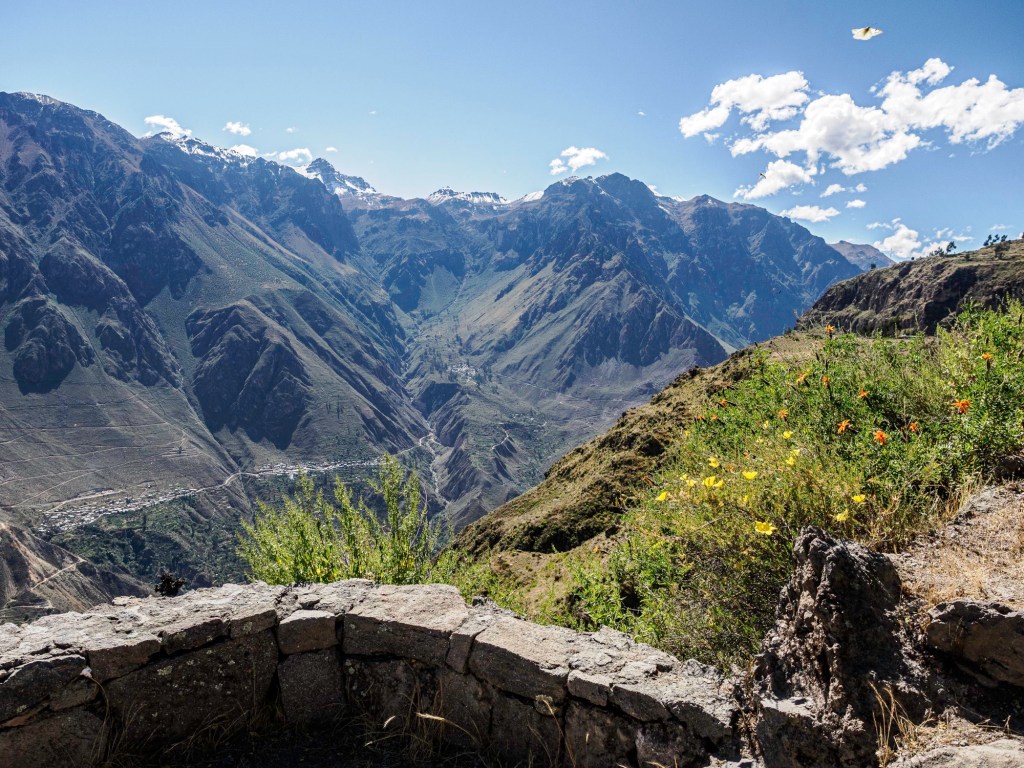
That evening, Sally & I shared another pizza at the hotel. While we were waiting, we got invited to a Welcome Guest cocktail hour, so drinks were on them.
I woke up this morning about 5:30am. We hadn’t actually set an alarm last night; we figured if we woke up, we’d see the sunrise, and if not, than not. I opened the shades and it was clear that it was going to be a nice sunrise. So I waited 10 minutes, then woke Sally to join the festivity.
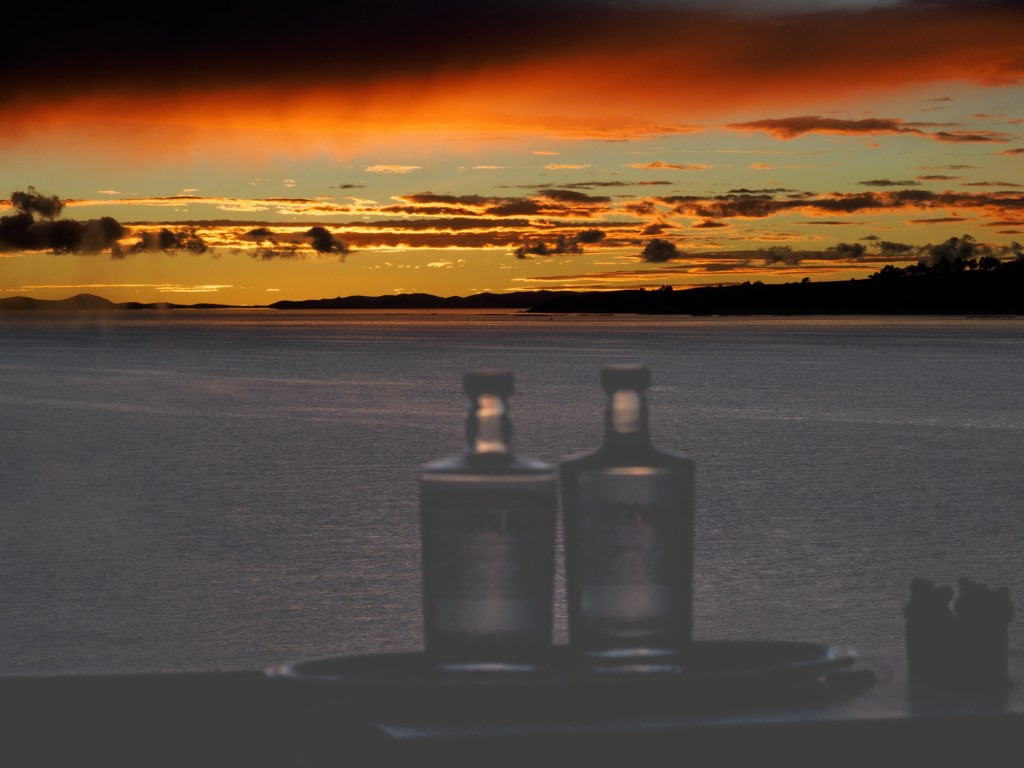
It’s kind of cool lying in bed and watching the beautiful sunrise through a window at your feet.
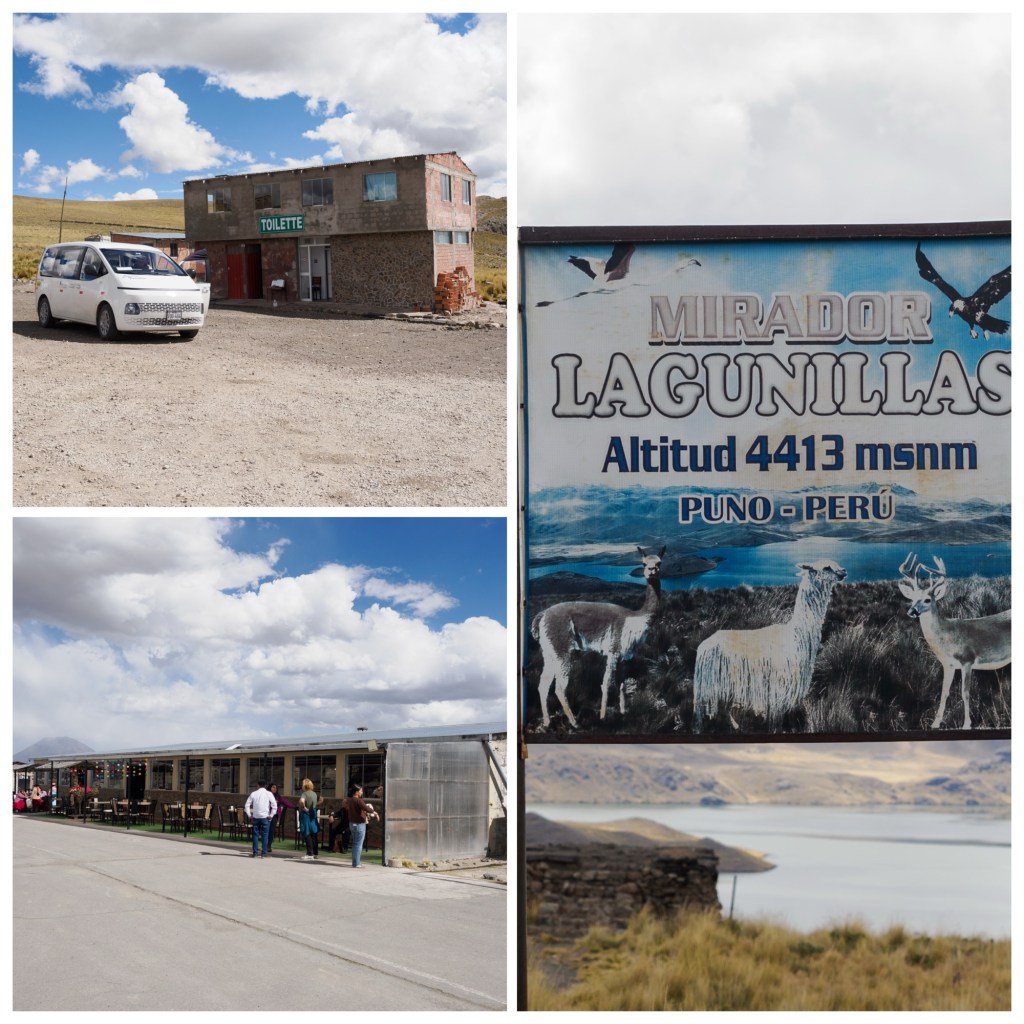
As I mentioned (1) in yesterday’s blog, we left Titilaka this morning for another six hour drive to our next stop. The drive was good enough, if you like looking at mountain scenery and driving mostly on poor roads. We made three stops that I recall: one rest break, one lunch break, and one to look at a lake from 4,413 meters above sea level.
Our last hotel is the Las Casitas, in the Colca Canyon (more on that later). It’s another Belmond property, I think the sixth we’ve been at during this trip and it’s really nice. As with every Belmond property we’ve ever been to, the staff and service at extremely good.
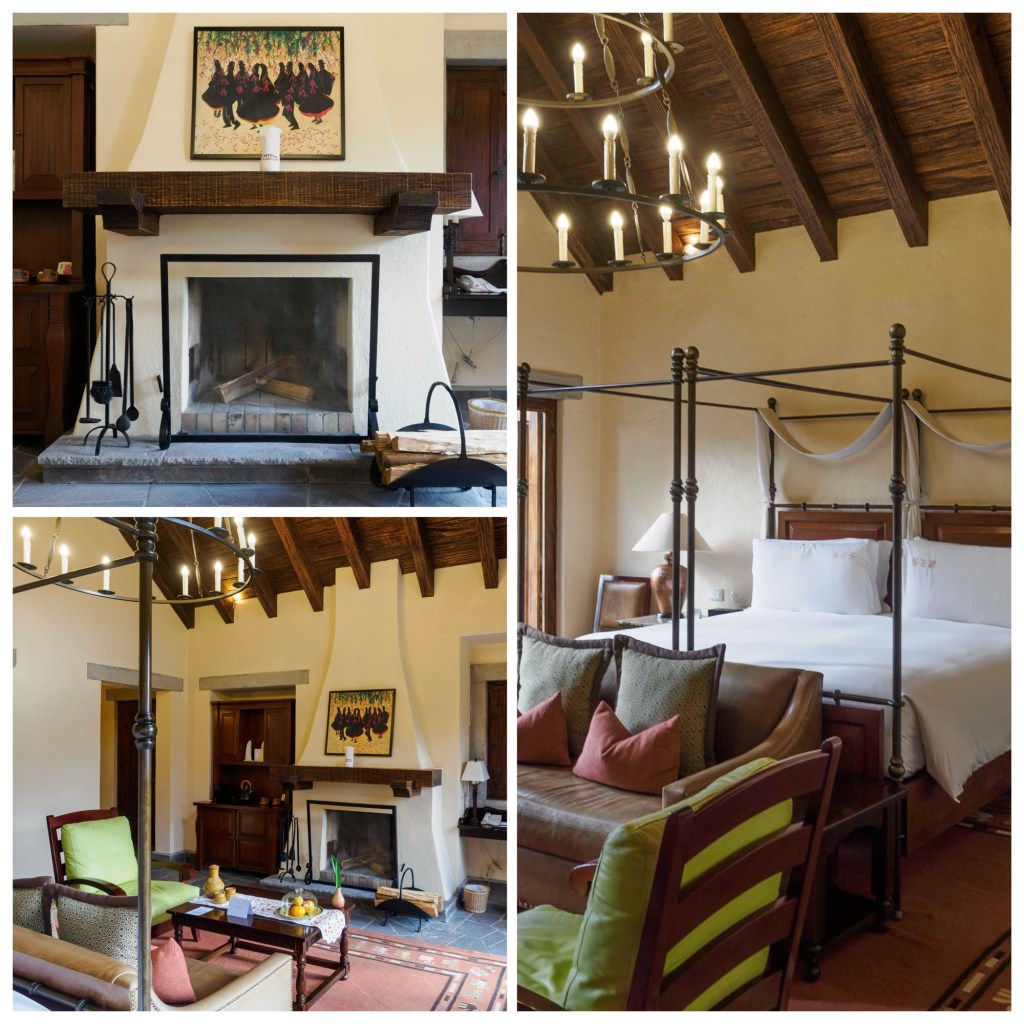
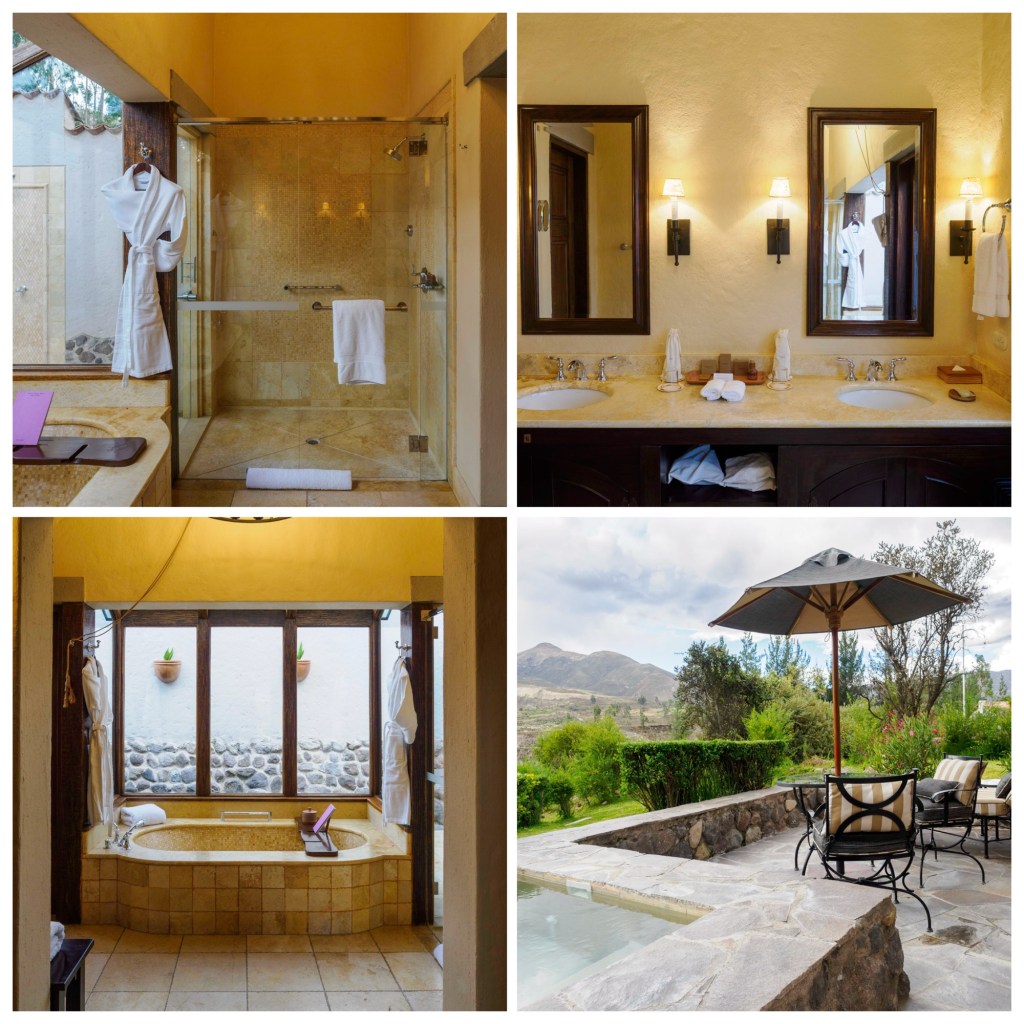
After we unpacked (there’s plenty of room in this room), I went for dinner. The property is on a steep hill, so you need to call for a golf cart anytime you want to go up to reception, the restaurant or to leave the place.
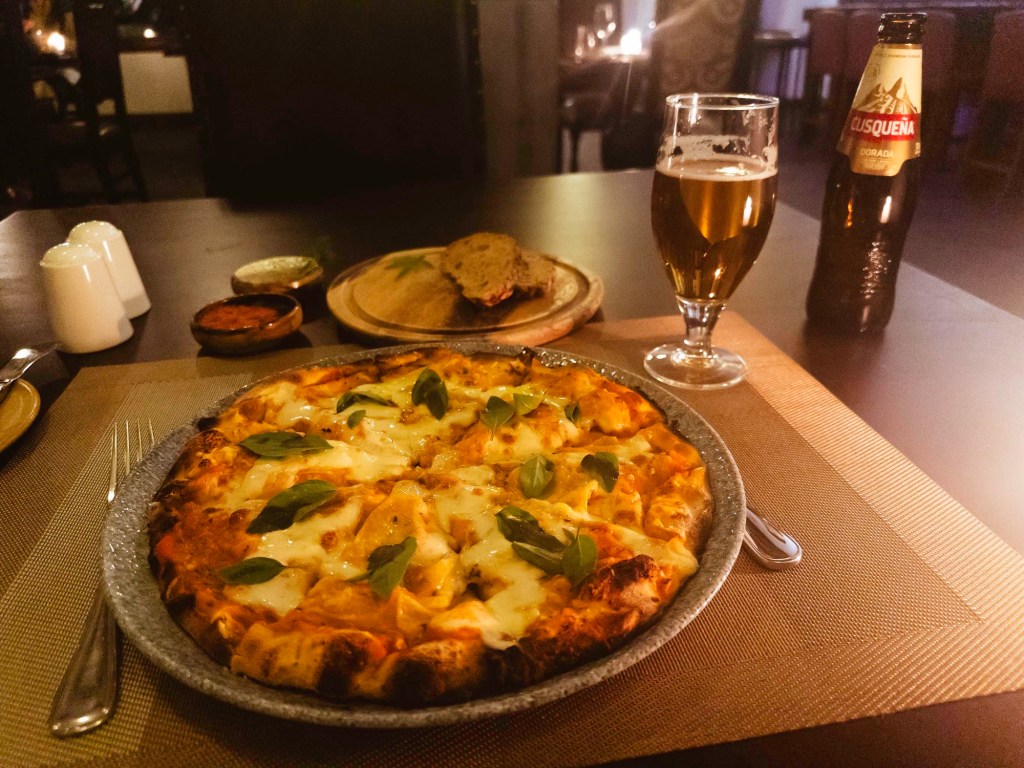
As an unfortunate aside, Sally ingested something she was allergic to last night and wasn’t feeling 100%. So I went to dinner by myself. I took a look at their typical fancy dinner with lots of courses that I wouldn’t really enjoy, so I asked if they had a bar menu or something. Turns out they hand-made fresh pizzas, from fresh ingredients. So I gave it a try. It was delicious.
Today is our day to enjoy the hotel Titilaka, and Lake Titicaca. We arrived yesterday late in the afternoon after two flights and a lot of driving, and basically settled into that room and had dinner.
{/rant on} Our travel agent insisted that we only needed two nights in each of the last three stops: Cusco, Titilaka and Culca Canyon. That might work if, for instance, you leave one location after breakfast and arrive at the next shortly after noon for lunch. But the transfers between each of these, plus the one to Cusco from MP, consume the entire day. Thus you have a single day in each location before having to pack and leave again. That is not enough time to enjoy any of them, let alone enough time for relaxation.
We discussed this with him several times, but he consulted his advisors and insisted it would be fine. It’s not. {/rant off}
The food at this hotel is adequate.
Our room faces east overlooking the lake, with a huge picture window. So our plan was to wake early and watch the sunrise over the lake. So we woke about 5:30am – sunrise today is 5:50 (1) – and found the sky was grey.
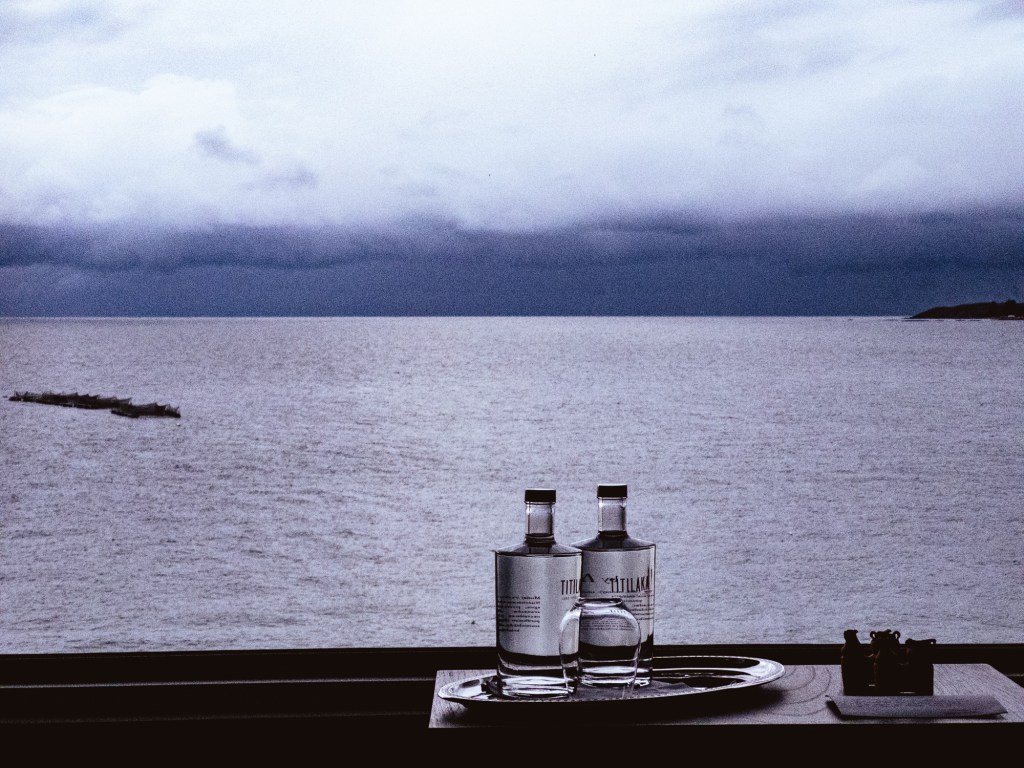
There are a number of activities at the hotel. Perhaps the most unique one is to visit two islands in the lake – one a set of man-made floating islands, and the other a natural island with a very primitive pre-Inca culture. We didn’t want to spend the entire day away, and the second island included a one mile uphill walk (2), so we selected the three+ hour trip to the floating islands.
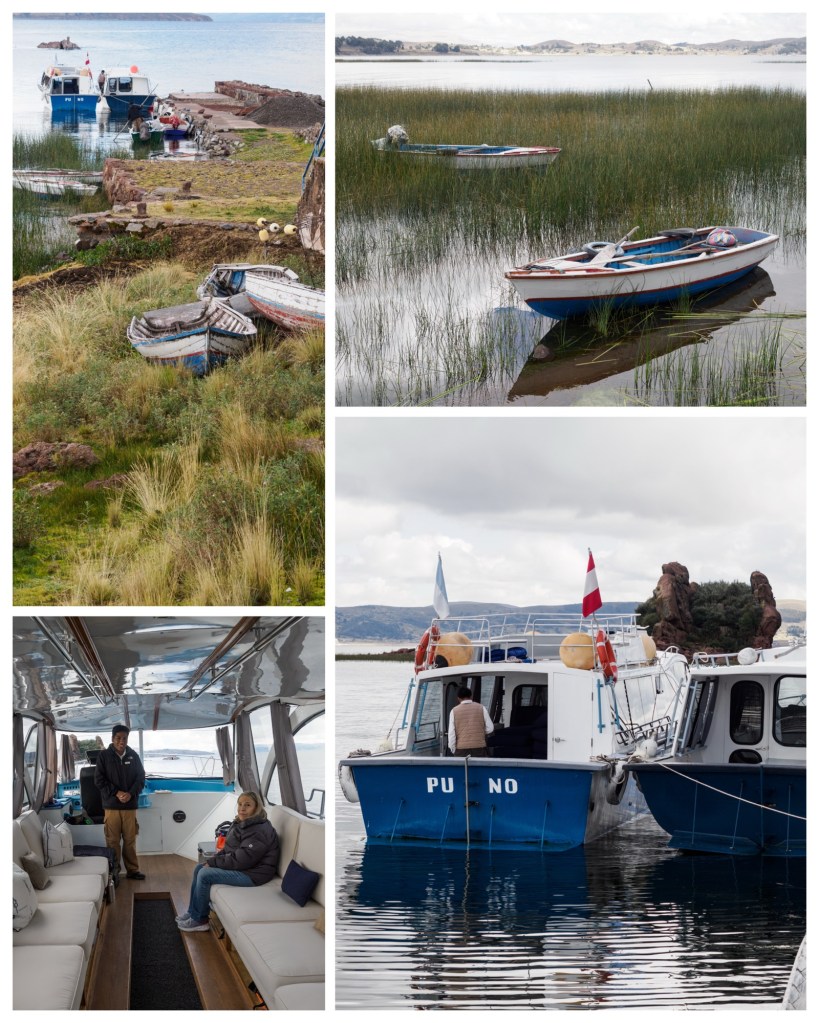
We didn’t really know what to expect with “floating islands”. The ride out in the launch was comfortable enough, and took about an hour and a half. While it was still cold outside it was comfortable in the cabin. On the way, our guide explained about the cultures in and around the lake and gave us some insight of what to expect. But we were still surprised as we approached our island.
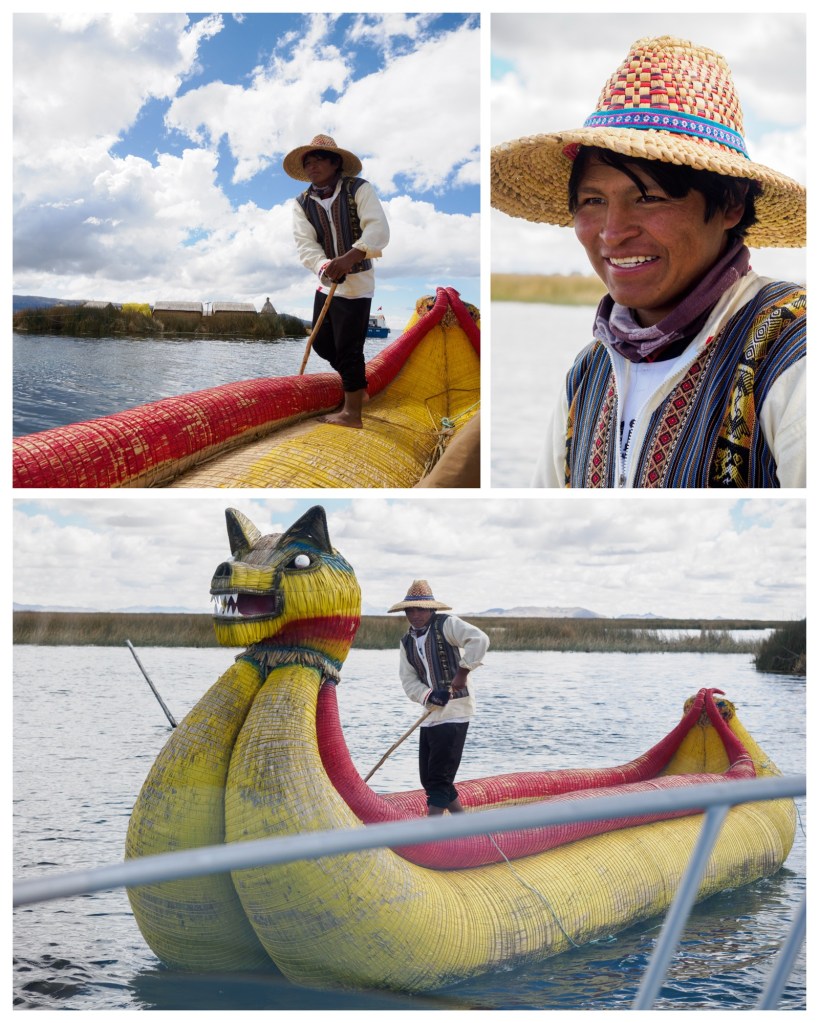
A large ceremonial gondola approached our launch, being poled by a member of the island we were visiting. This was to take us to the island. The structure of the gondola is entirely made from reeds that grow in this shallow part of the lake and are harvested for everything. The body of the gondola is filled with empty plastic bottles – reuse at its best.
The picture in the upper left was taken once we were all loaded into the gondola.
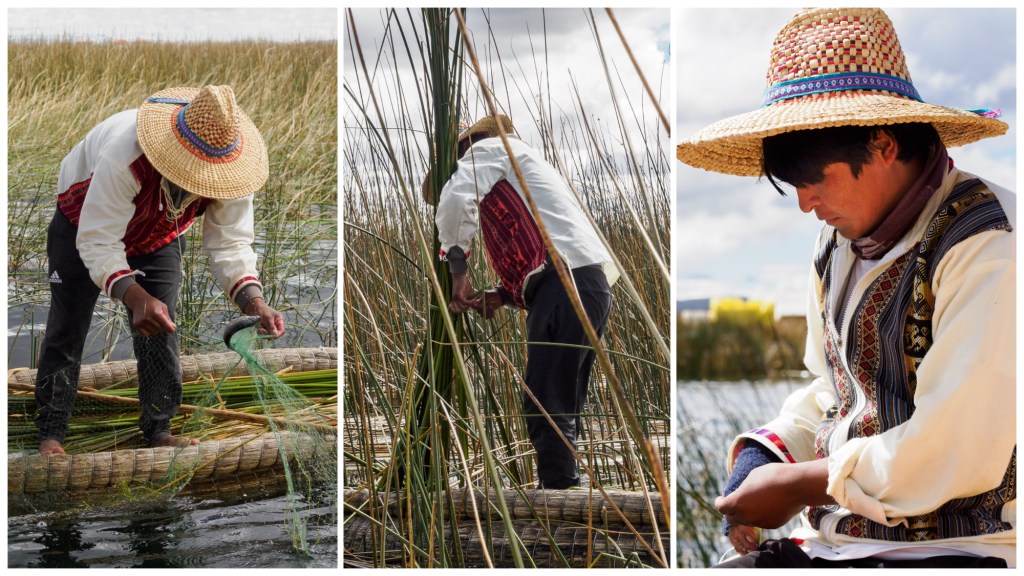
The next part of the program was a second fellow who came out in his work boat – same construction as the gondola we were on – and showed us how they harvest the reeds, and collect fish from their nets.
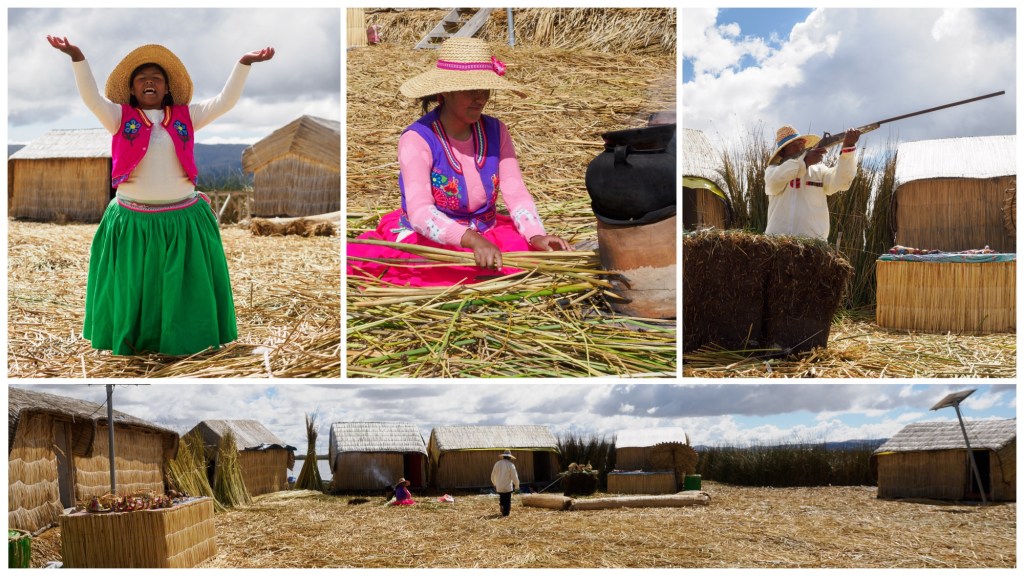
We were then invited onto the island itself. It’s hard to believe, this entire structure reeds and filled with empty plastic bottles – is floating. Its ties to five stakes tethered in the lake bed. This one is one of a group of five islands in this area; there is a much larger group several miles away with perhaps 20 islands. This island has five families, all related. We got to look into their living quarters, and see brief demonstrations of some of their daily activities. Sally bought some bracelets for gifts (and one for herself).
While it might seem that they are wearing costumes, Sally asked one of the women and she said this is her everyday dress. That’s borne out by the fact that we saw women all over dressed like this. I’m pretty sure the men don’t normally dress like this, but most of the men we saw were either laborers or hotel staff.
Then it was back to the hotel.
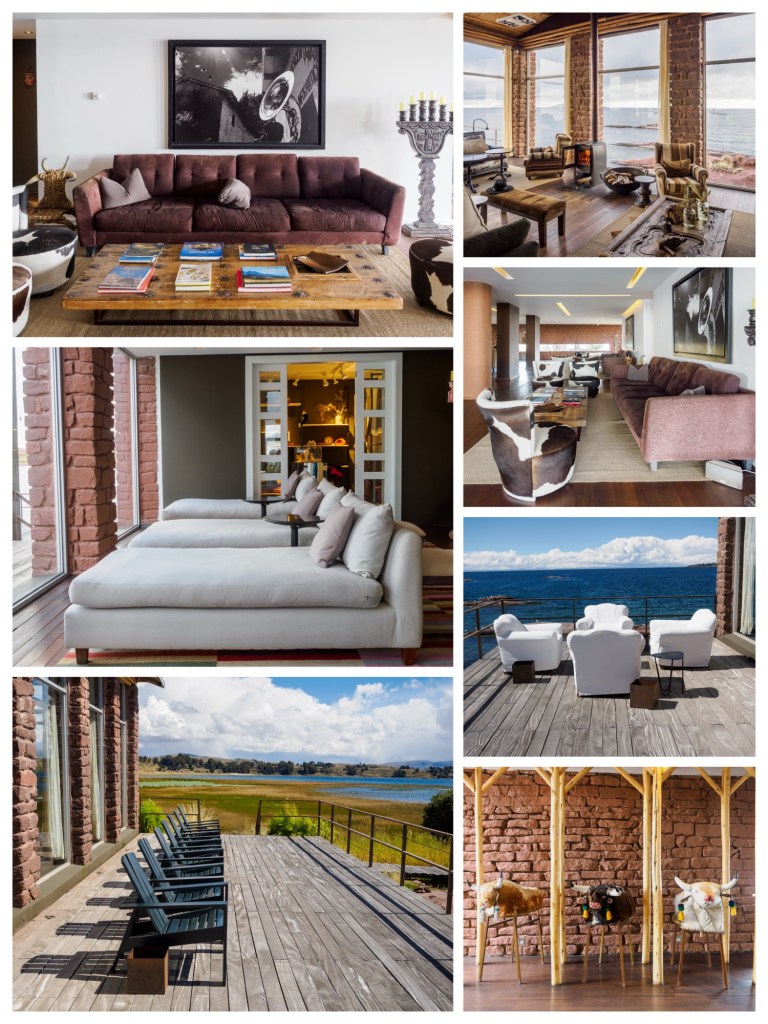
The public areas of the hotel were funky and had lots of interesting sitting areas for quiet contemplation or reading, or just looking out at the lake.
I went out for a walk, while Sally relaxed in the room. Then we had another average dinner, and went to sleep early. Tomorrow’s another opportunity for a beautiful sunrise in bed.
(1) We are about 13 degrees south of the equator, so the daylight ranges from 11 to 13 hours all year round. Today, four weeks before the winter solstice, there were 11 hours 18 minutes of daylight.
(2) We’re still at 12,500’, and the oxygen is scarce.
The plan for today was to drive through the Andes on an nine hour trip from Cusco to the Titilaka Hotel. But that was not to be.
About 9:30 last night, we got a call from our local travel coordinator. It seems that labor strife with the possibility of violence or a complete shutdown of the roads (1) along our route from Cusco to Titilaka made driving inadvisable. They suggested that we fly instead, first to Lima and then to Juliaca, “only” two hours from our destination.
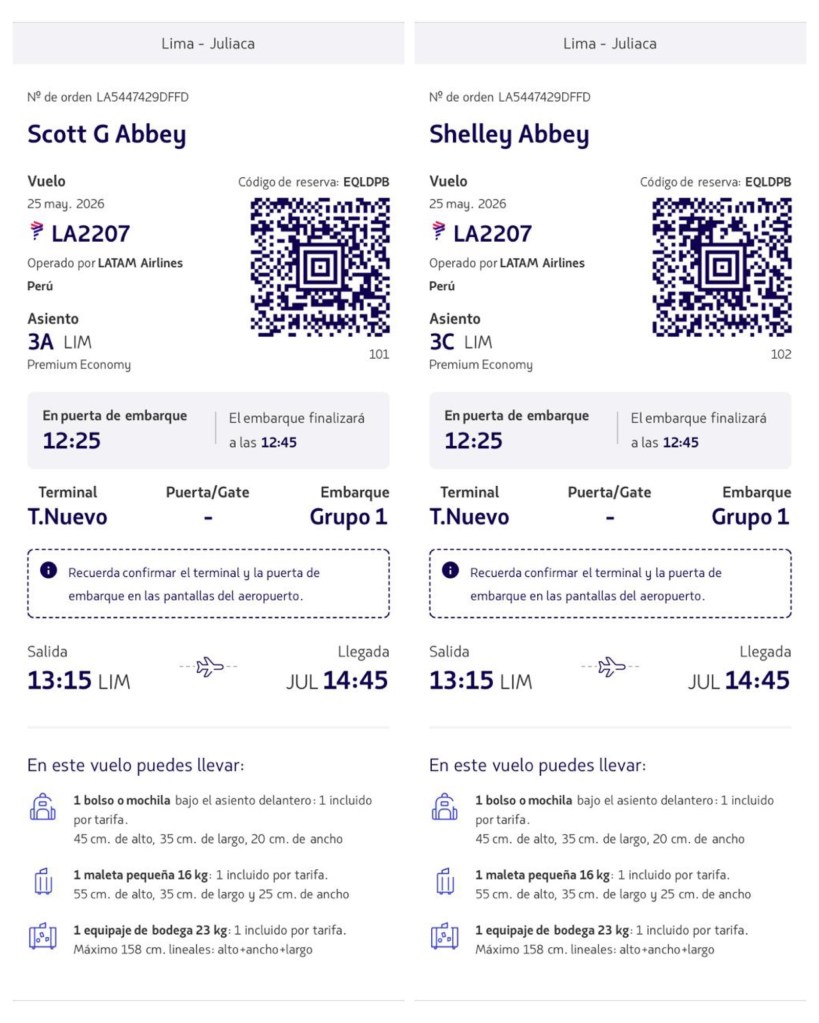
Sally and I discussed rearranging the itinerary to skip Titilaka, but we were informed that the reservations were not cancellable. After an hour of back and forth, we agreed to the new plan. So we packed last night until 1:00am, then got up at 5:00am for another marathon travel day.
In hindsight, we made some mistakes in planning this trip. The first was one too many stops. The second was too many two-night stays, with a full day of travel in between. Not only was the travel tiring, but we had no time to relax in between the travel days.
The transfer went smoothly, despite the last minute arrangements that needed to be coordinated. We left the Monasterio in Cusco at 6:30am, reached our destination around 5:30pm – the nine hour plan turned into eleven hours. Instead driving through the Andes, we spent most of the time in airports or airplanes.
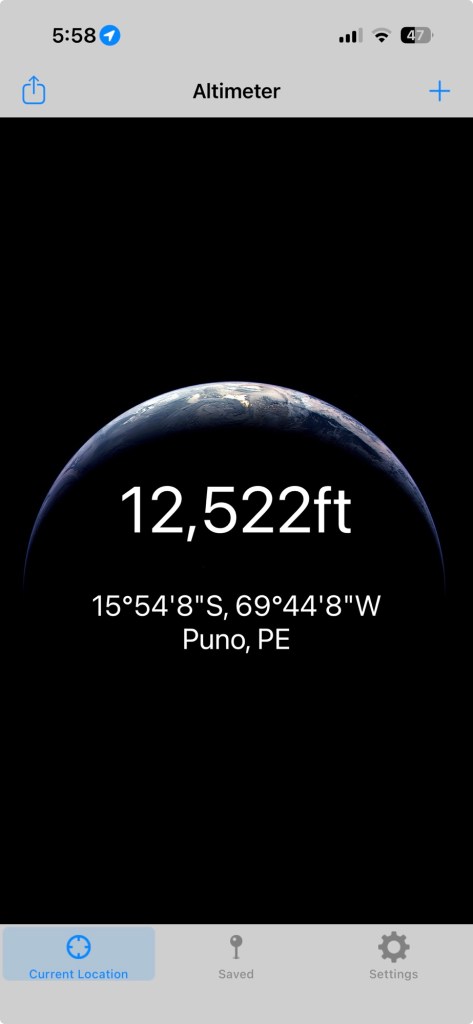
The Titilaka hotel sits right on Lake Titicaca, the highest navigable lake in the world (2). We are at 12,500’ now, and I can feel the effects. The place is beautiful but small; thirteen rooms. Ours faces east over the lake with a large picture window, and we plan to wake up early and see the sunrise over the lake.
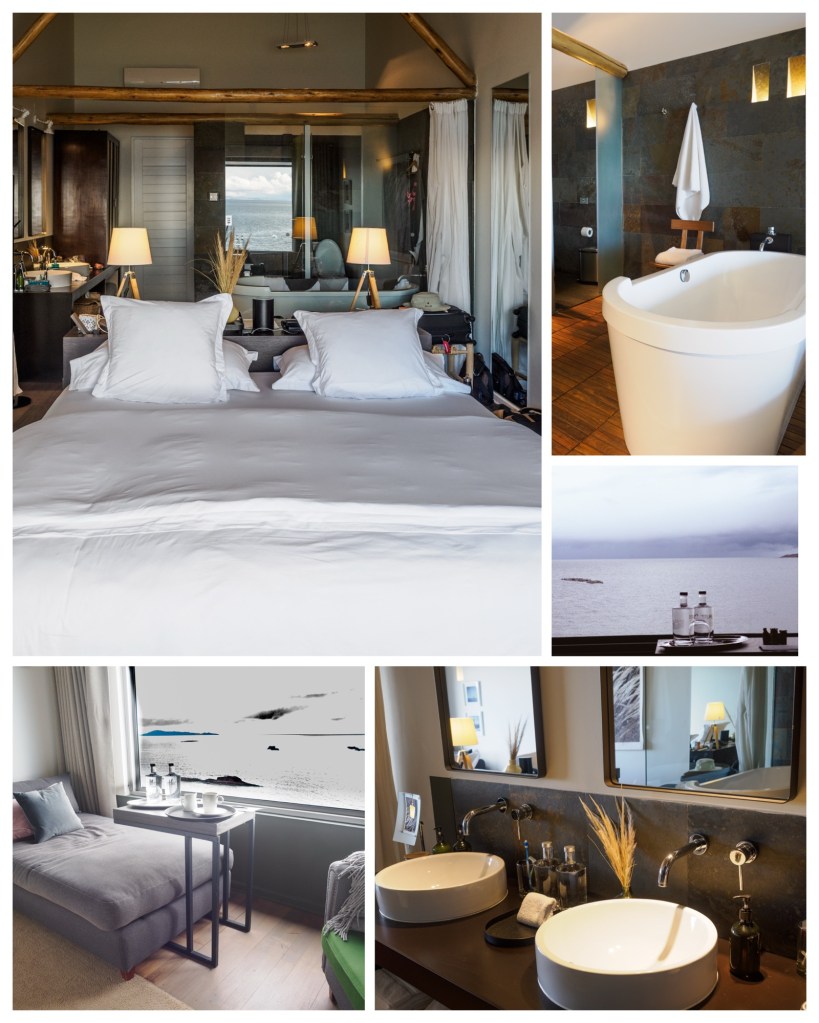
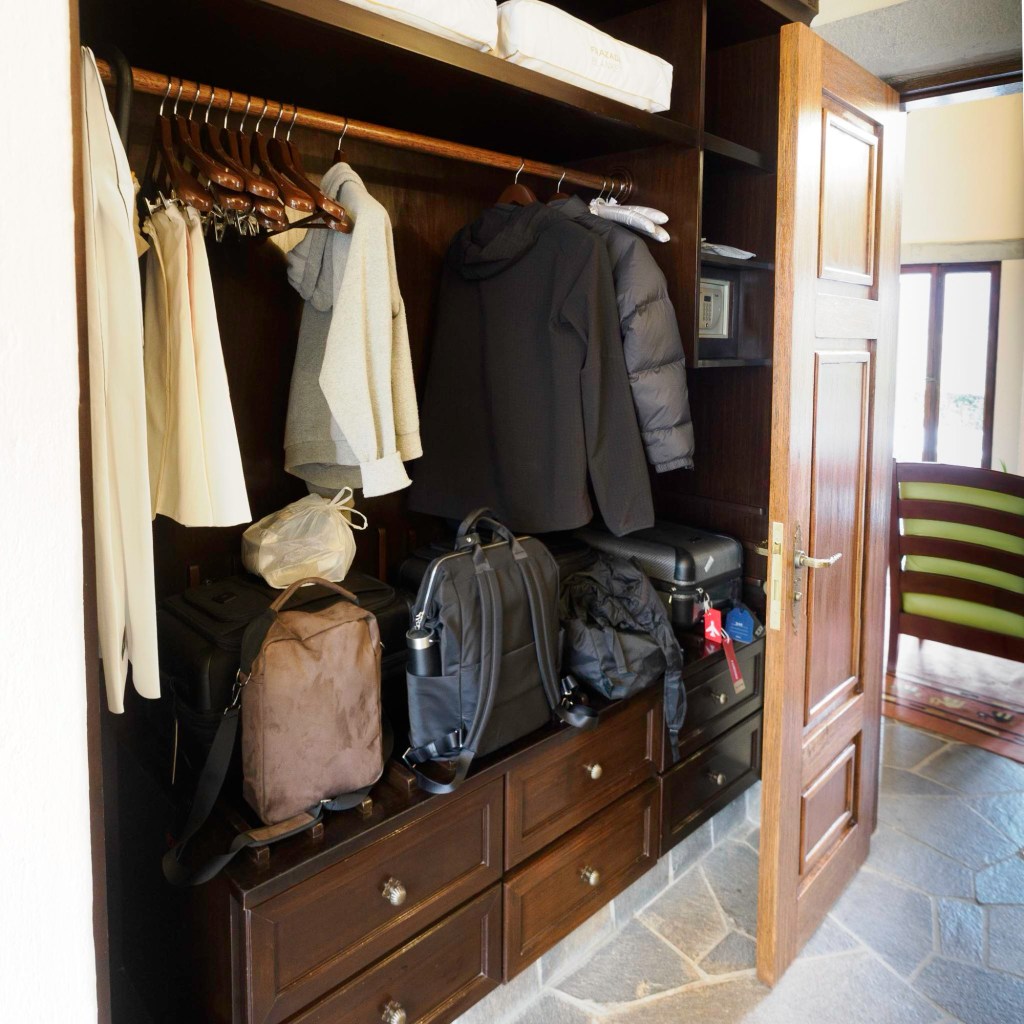
The room itself is small but comfortable and well appointed. It suffers from one of my pet peeves about hotel rooms: no space for unpacking (3). I mean none. Not one drawer or shelf. A closet with room for six hangers. So we’re living out of the suitcases, which is inconvenient. We look out over the lake to the east, so we plan to get up early for a change to watch the sunrise from our bed.
Everything is included here: food, activities, excursions. We had dinner in the beautiful dining room, but the food wasn’t great. Oh well.
(1) We got confusing and conflicting explanations from different people. We’ll probably never know the truth.
(2) There are all kinds of of caveats to this claim.
(2) My other pet peeve is lack of accessible or functional power outlets. Titilaka is okay in that regard.
We got here really late last night after our long train ride from Machu Picchu.
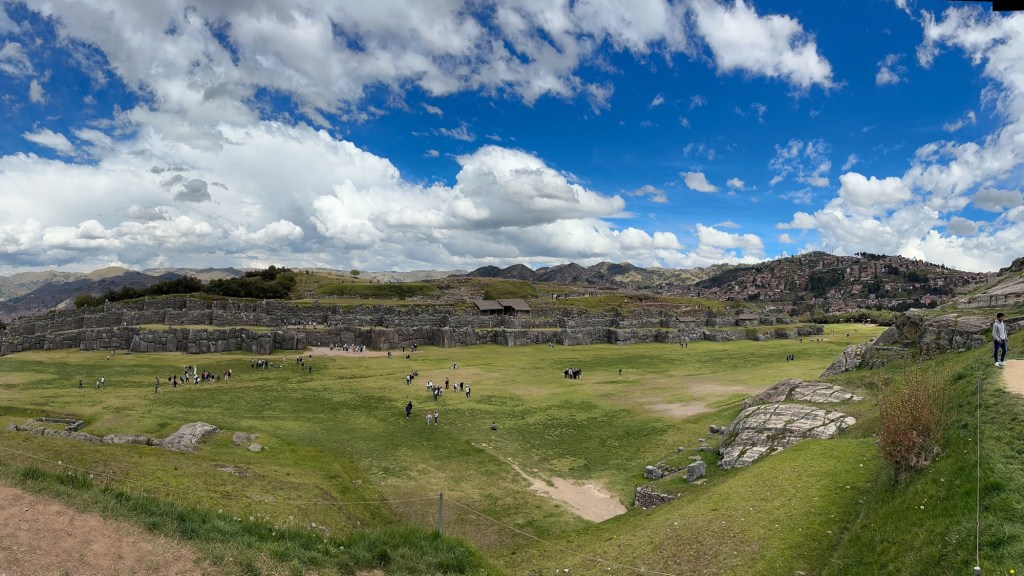
This morning Marisol, our guide, basically threw out the itinerary because one of the attractions was closed. So Jorge drove us out of town to Saqsaywaman, an archeological site containing a fortress built by the Incas in the 15th century. Where Machu Picchu was about 8,000’ elevation, this site is 11,700’. We were already dealing with way less oxygen than we were used to, and this took it to another level. While there wasn’t any extreme climbing, walking up a simple set of stairs was an effort.
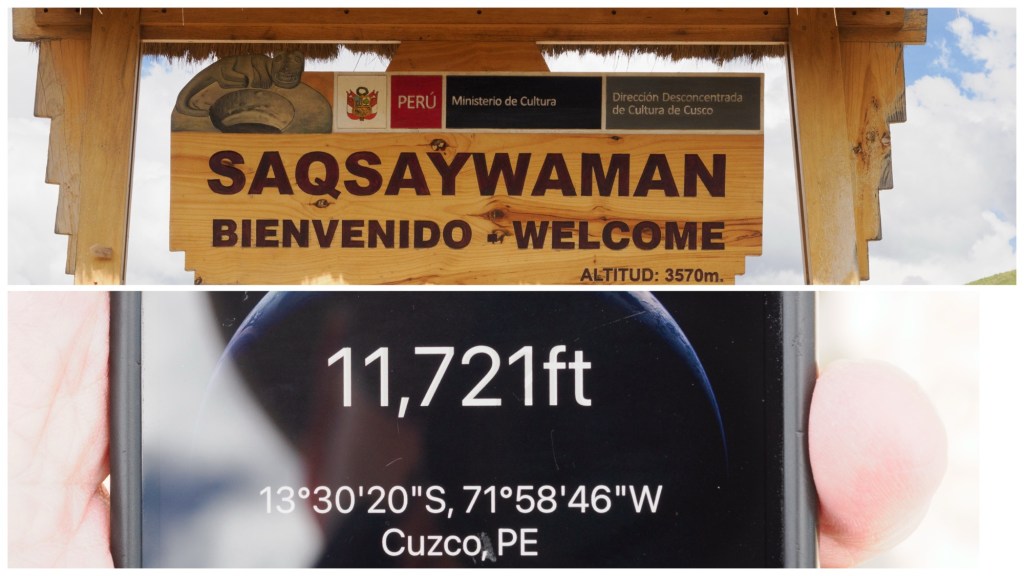
On top of the lack of oxygen, the thinner atmosphere makes the effect of the sun much stronger. Almost everyone outside of the cities wears a hat, and Marisol was wearing a hat, a hood and gloves to cover as much skin as possible.
Saqsaywaman was designed by the Incas to withstand any attack. And it probably did withstand direct assaults by the Spanish; but it fell after the Spanish laid siege to Cusco and continued with their conquest of the Incas. The Spanish took many of the stone blocks to rebuild Cusco after the conquest, but some of the walls are still standing. They are impressive.
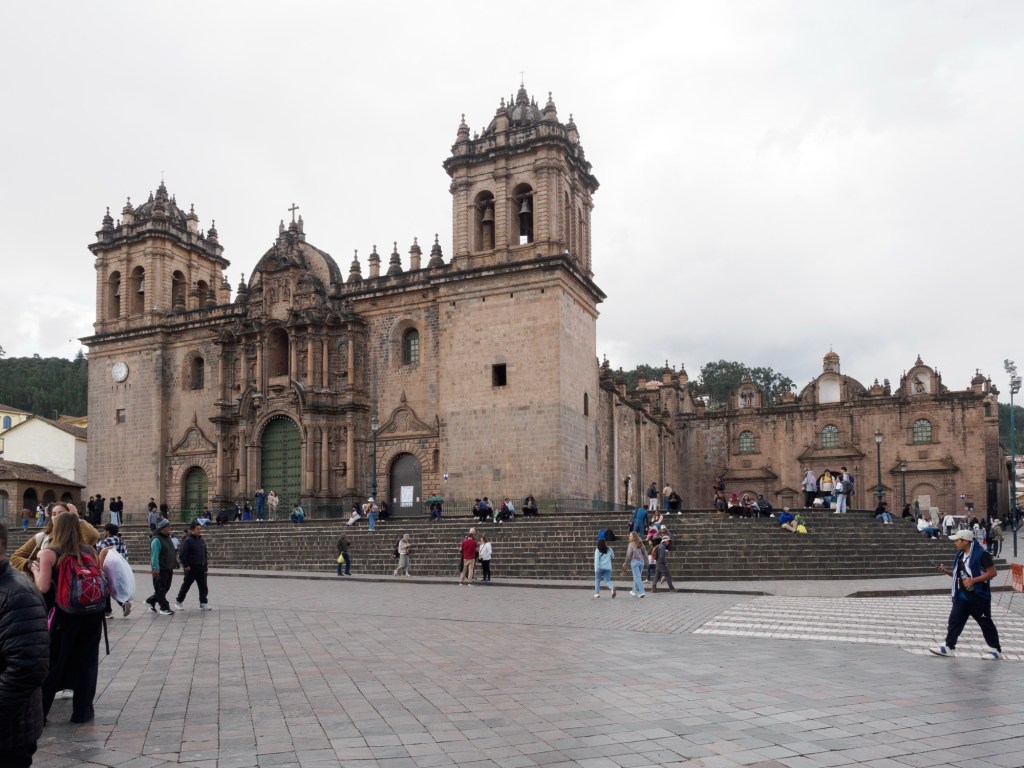
We spent about an hour there, and then went back into Cusco center and visited the Cathedral. No pictures are allowed in there, so I can only show you the outside. It’s a typical European style Catholic cathedral – lots of alters, lots of gold leaf, lots of enormous paintings of religious scenes. The only part about it that was interesting to me was how the Peruvians have blended their tradition pre-Spanish beliefs and symbols with those of the Catholic Church. But we spent two hours listening to her go on and on about this painting and that one; our bad for not cutting it short. We both thought it would end very soon. But it didn’t.
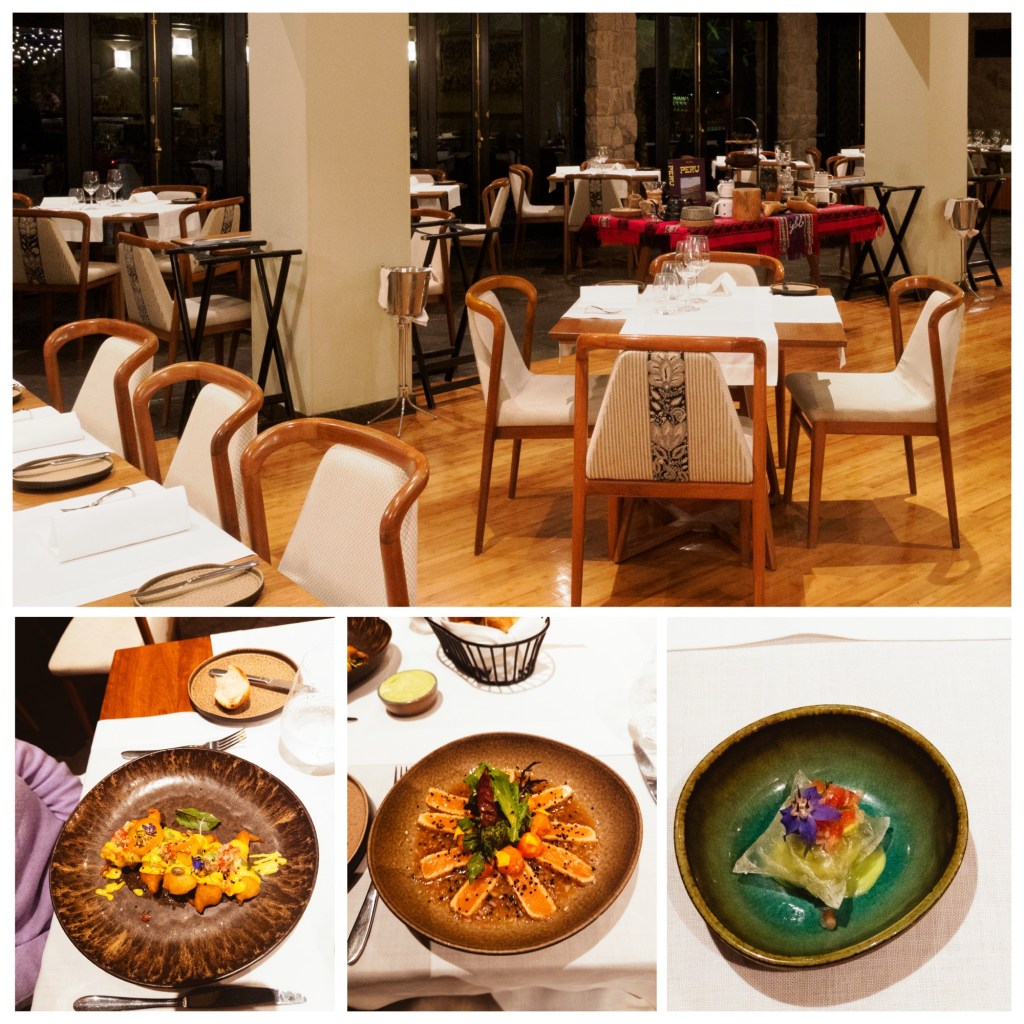
Our travel agent had arranged for a lunch for us at a place that seemed too fancy, so we got them to switch the reservation to dinner and took a suggestion from Marisol for a casual Italian restaurant, which turned out to be really good. We both were able to get pizzas that we liked.
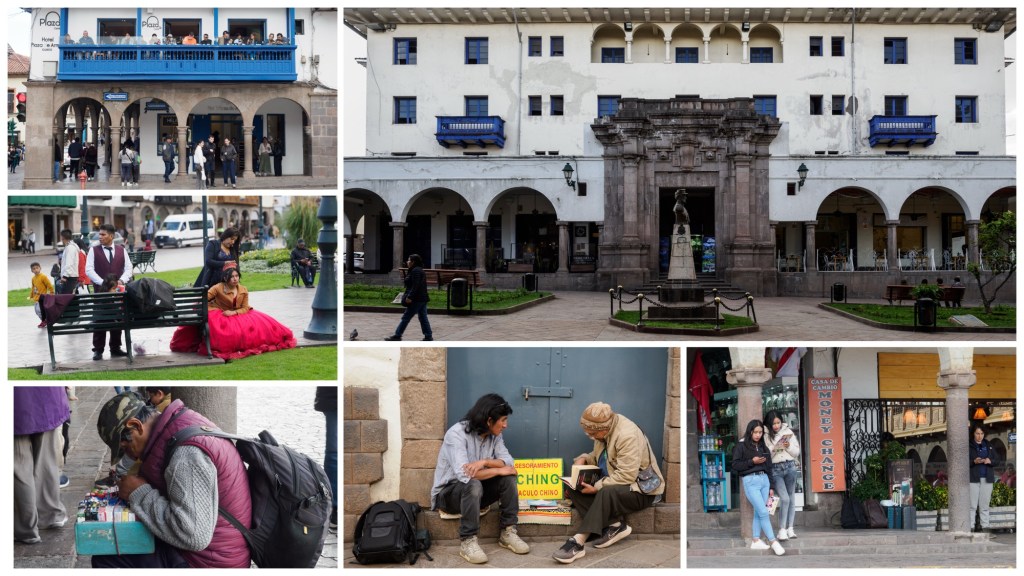
After that we walked back to the Monstario Hotel, which was only a few blocks away, and then I went out to wander around the center of Cusco. Being Sunday, it was very busy, but I had no idea of how busy it was going to become.
One interesting thing I saw was professional photographers, all waiting to take your picture with your family or friends. I haven’t seen much of this since phone cameras ate the photography business.
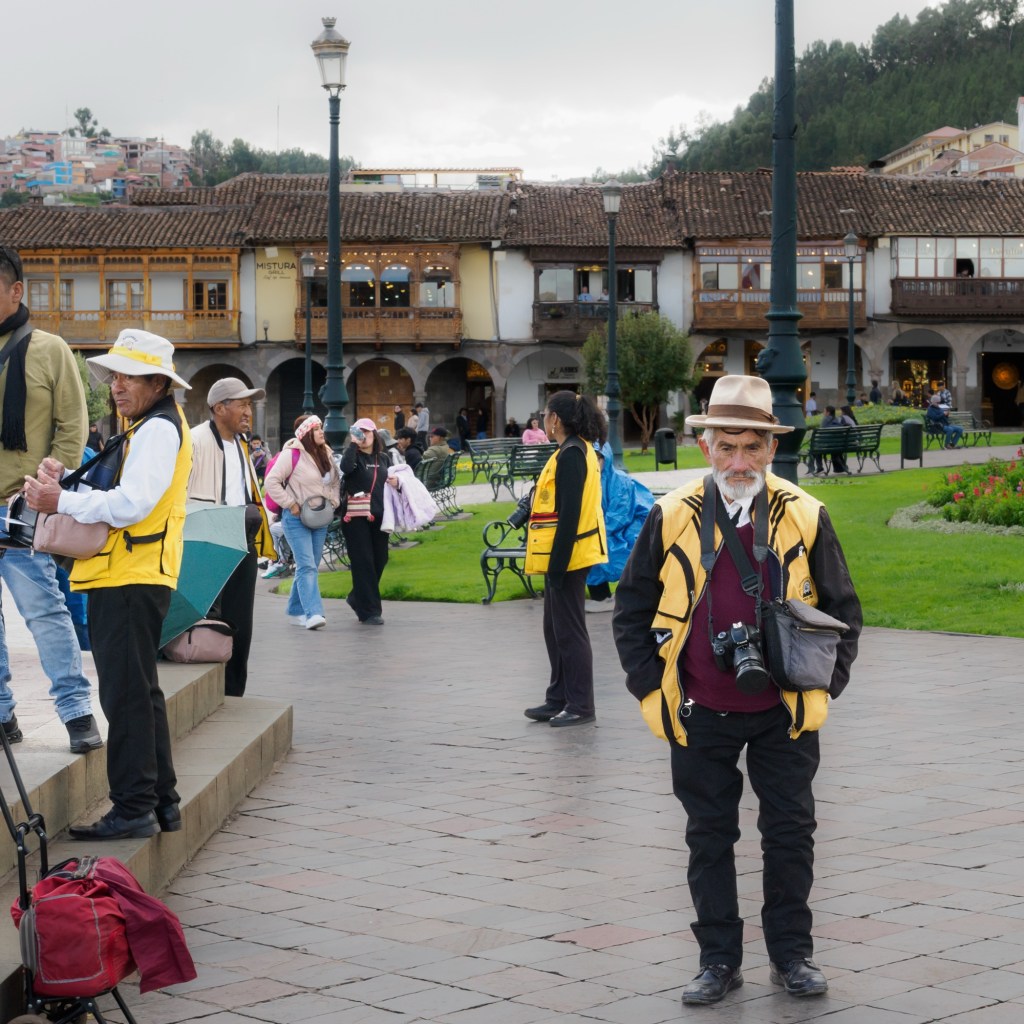
I wandered around for a while, first circling the main square and then branching out into side streets.
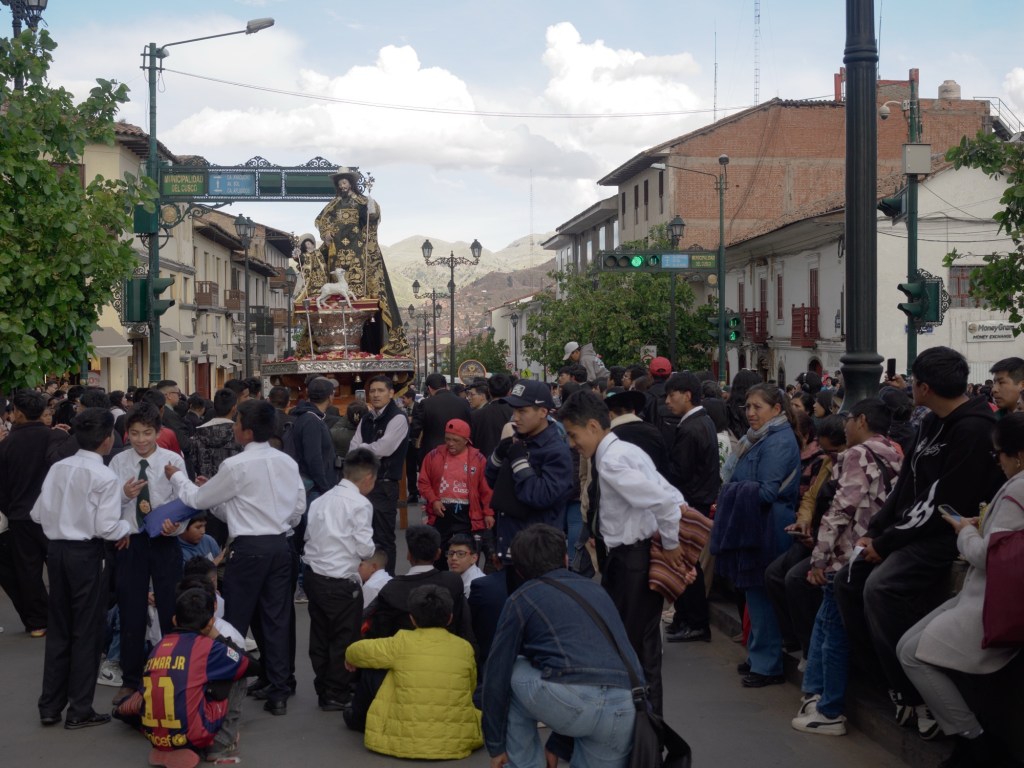
I was a few blocks away when I heard music coming down the street. I pursued it and discovered a parade carrying giant statues of Jesus and Mary. When I caught up with them, everyone was just standing around, and the group closest to me consisted mostly of boys, all dressed in white shirts and ties.
A few minutes later the parade resumed. I couldn’t see what happened to Jesus because of the crowd, but apparently the men lifted the statue off the table it was sitting on, and the boys’ job was to pick up the table and carry it to the next rest stop a couple of blocks away.
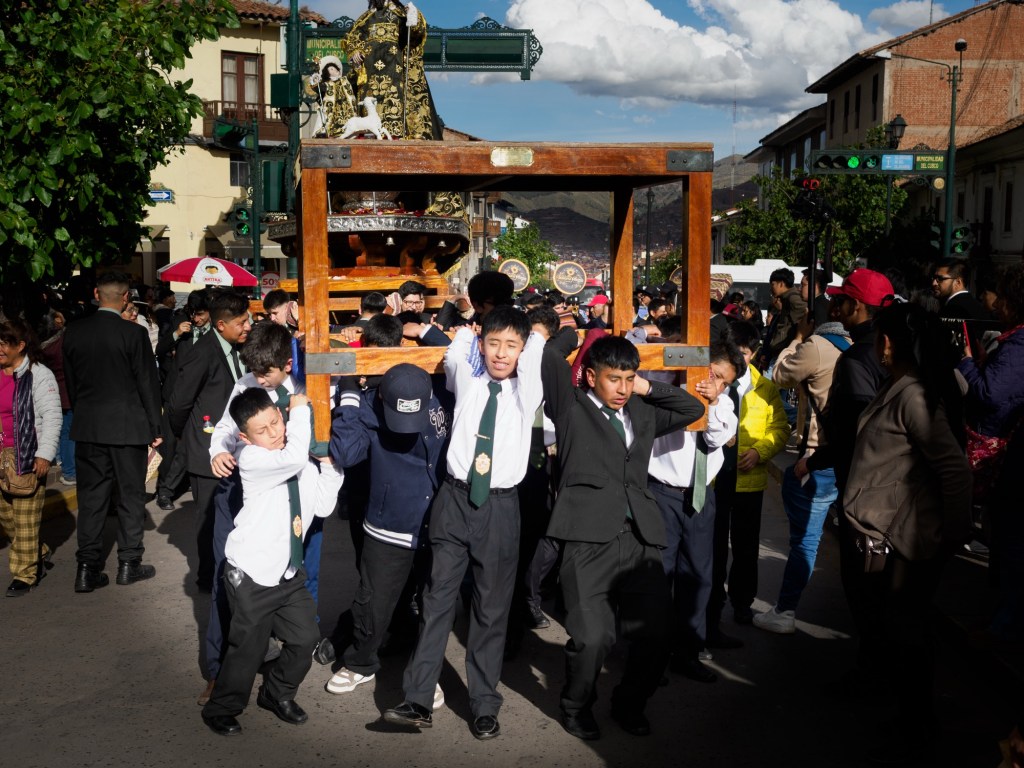
It’s hard to say how heavy the table was, but ten or so boys were struggling to carry it. It needed to be heavy, to support the weight of the Jesus statue. Sure enough, a few minutes later the young men carrying Jesus came along.
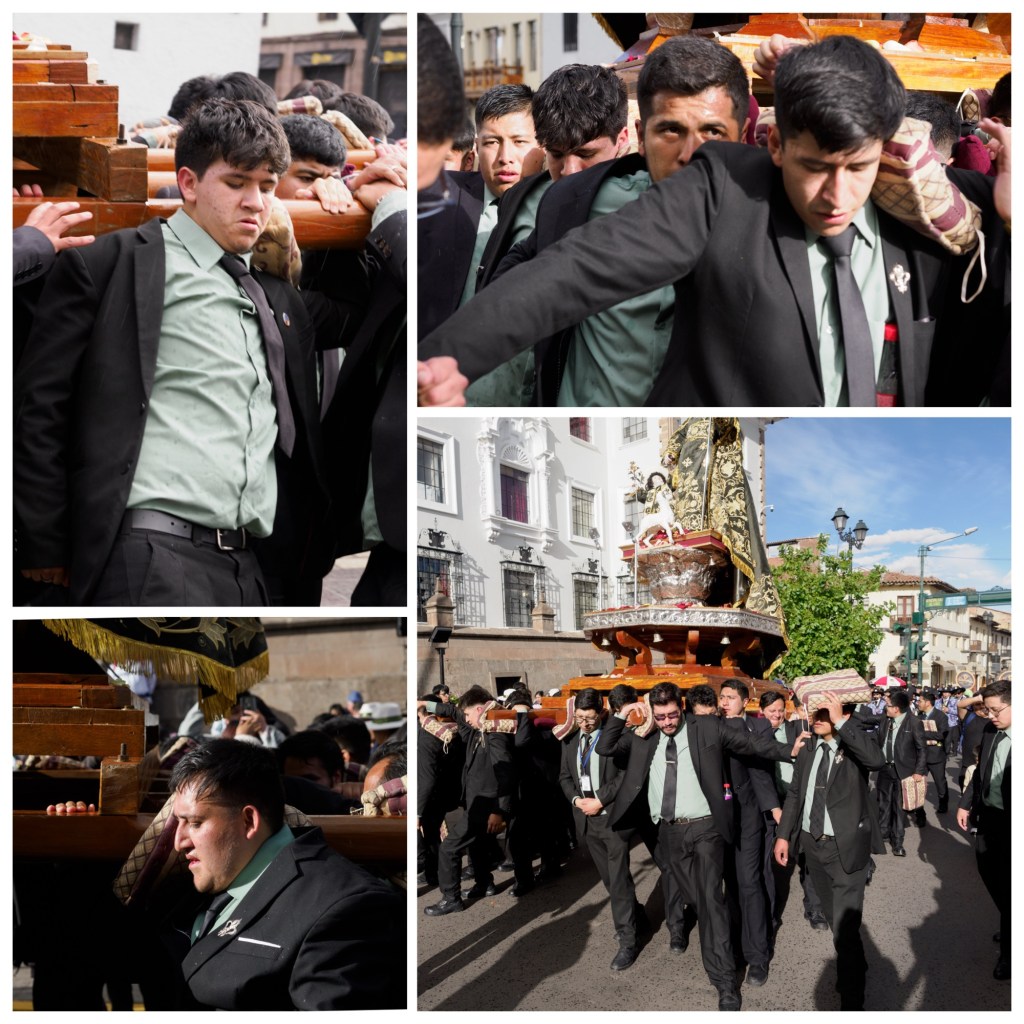
It’s clear that these men were not having “fun” in any traditional sense. But they must have volunteered for this job, and probably considered being chosen to participate an honor.
Let us not forget Mary. She was also attended to by a bunch of kids carrying the table, and young men staggering down the street carrying her.
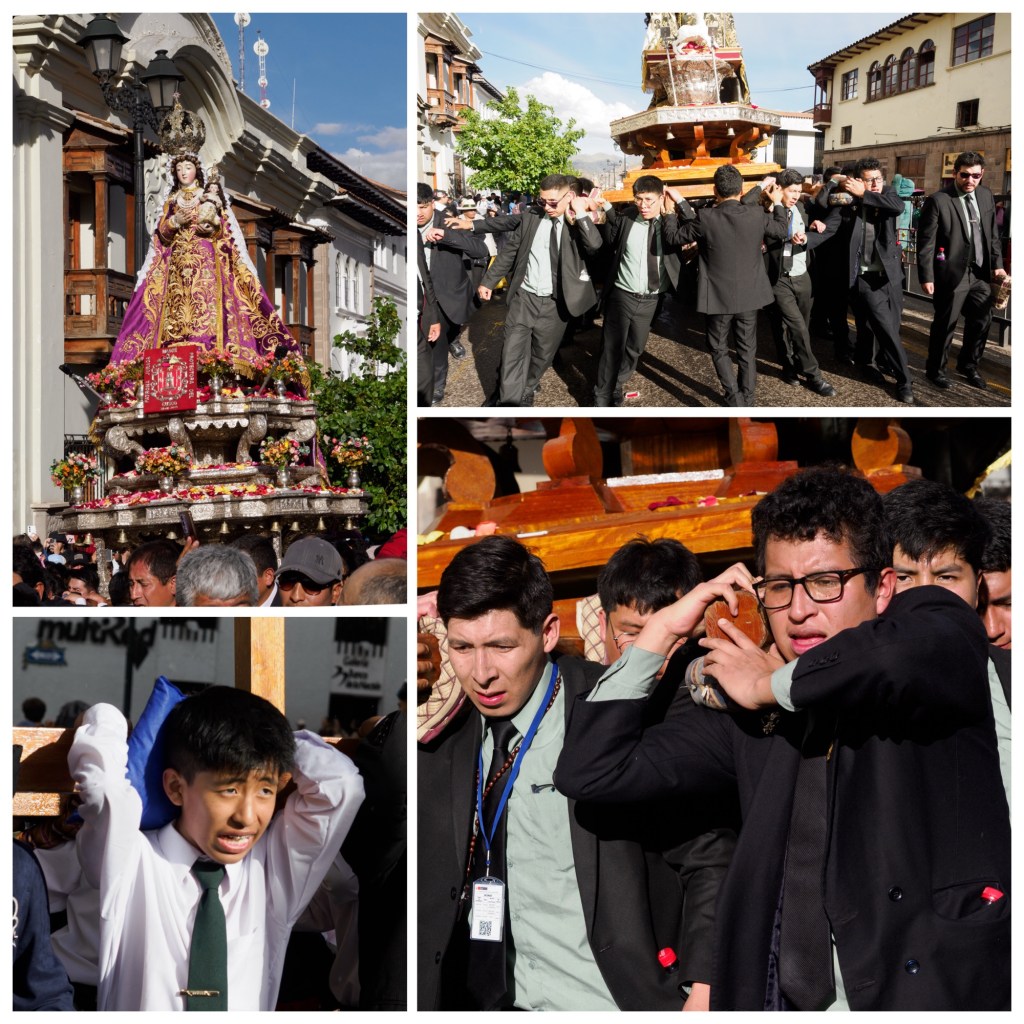
After each of the statues were marching bands. I didn’t recognize any of the tunes they were playing, but they sounded pretty much like every marching band I’ve ever heard.
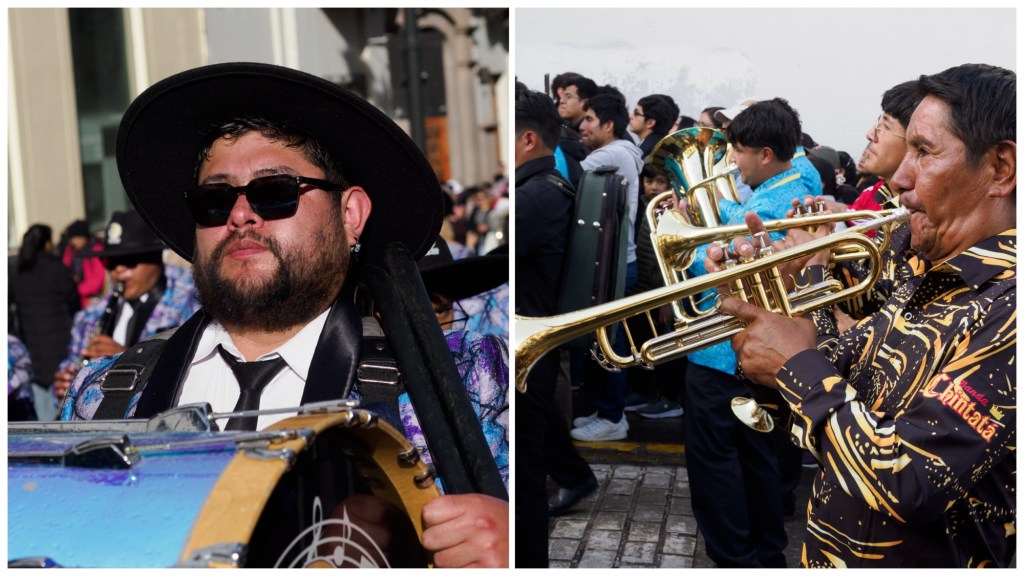
By this time the crowd had swelled so much that it filled the space from building to building across the street. I had fallen back to the end of the parade taking pictures of the band, and there was no way for me to make my way forward. So I walked a couple of blocks out of the way and found my way back to the room.
That evening, after some more conversations with our travel agent, we went to the restaurant that had originally been our lunch reservation and had dinner. We were both skeptical, as it was billed as Japanese / Peruvian – not two of our favorites. But we were pleasantly surprised with the food, which was tasty. As a bonus, we had a window table overlooking the main square, where yet another parade was happening. This one consisted of marching / dancing groups that came pretty much in front of the restaurant and then did a performance for us (and everyone else). Tres cool!
Then back to the hotel to do a some packing before our 9:00 departure to drive to our next stop at Lake TIticaca. On the way, we walked a few blocks to a convenience store to get some snack for the nine hour drive.
Yesterday Sally and I did Route 1, which gave us the classic overview of Machu Picchu (MP). This morning we went into the heart of the sanctuary, which involved relatively little climbing (1).
We had agreed to meet Marisol at 7:00 (2), so we grabbed some early food.
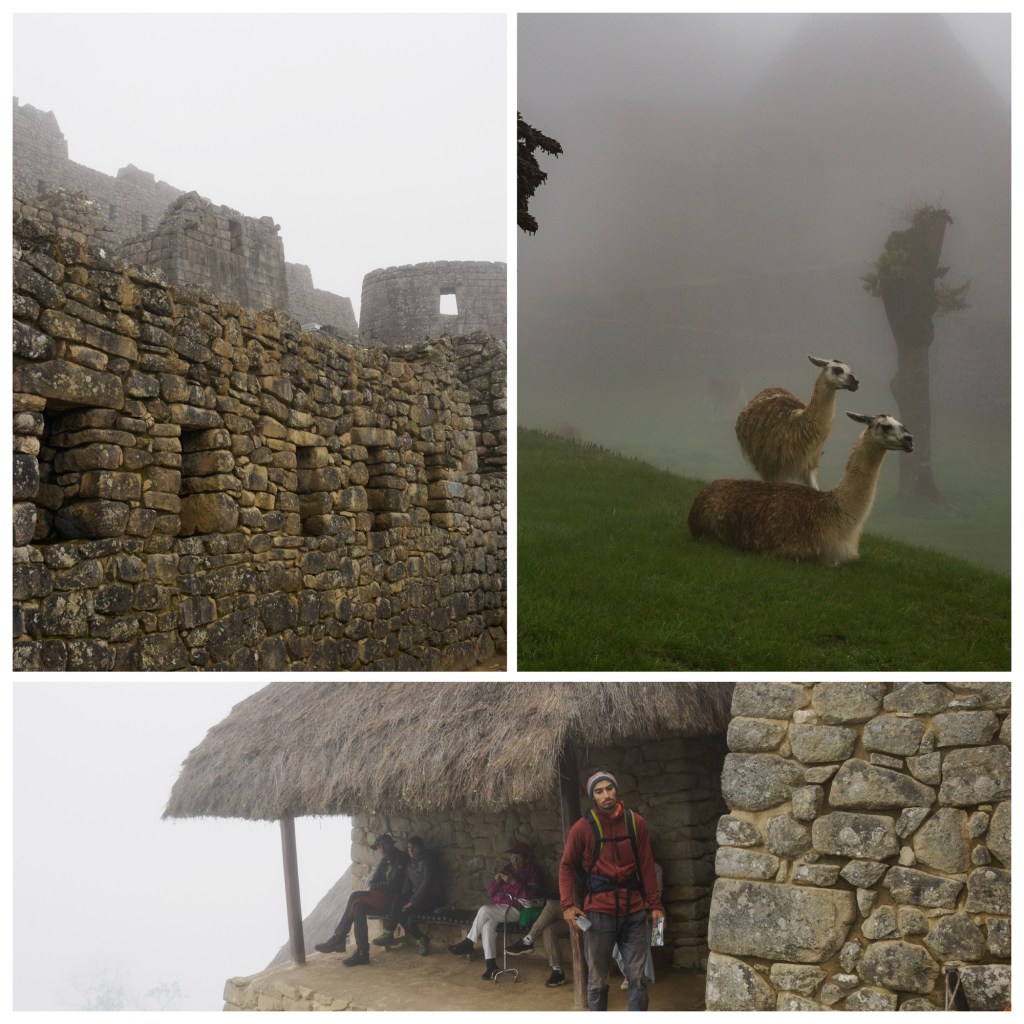
Where yesterday afternoon the skies were bright blue, this morning started out cloudy with fog and a chance of rain. It had rained overnight, and the ground was wet. Our hotel room comes with ponchos, so we threw those in the bag and headed out.
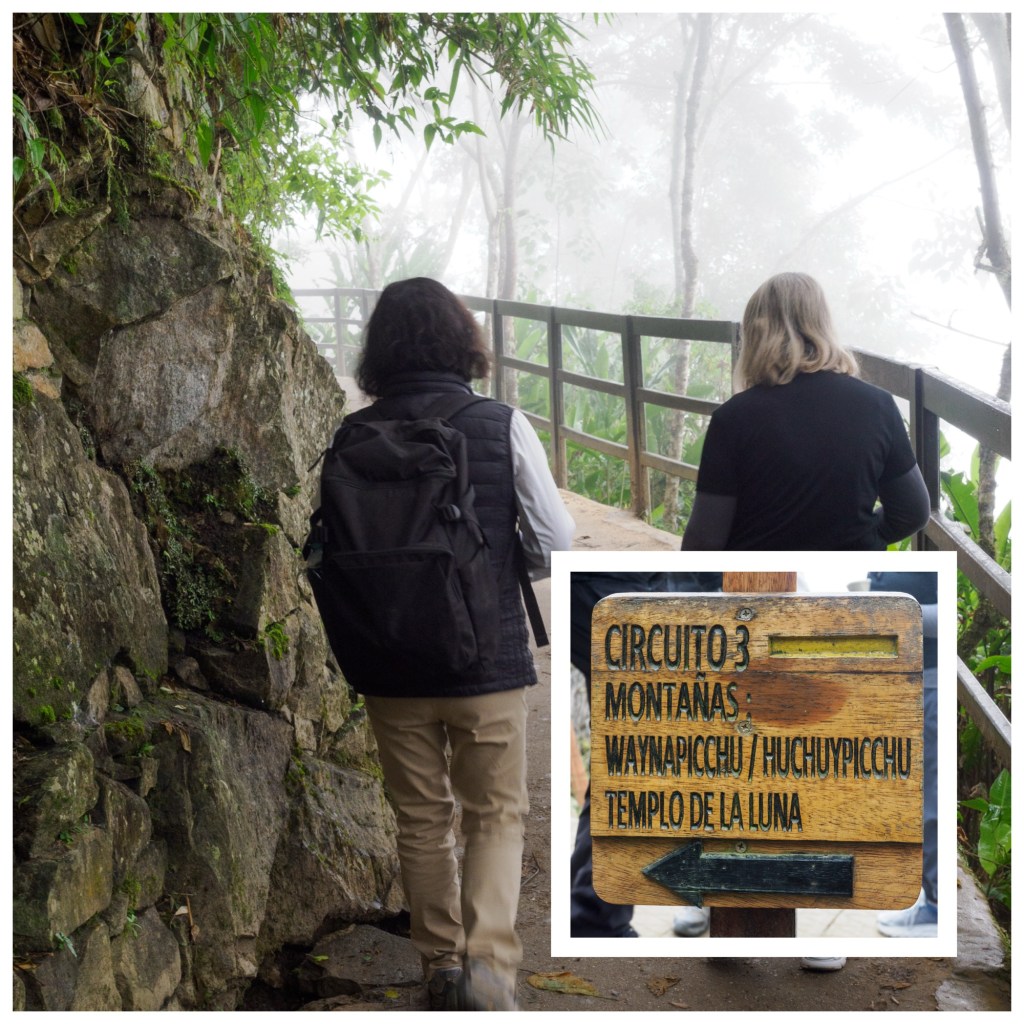
You’ll see in many of the pictures that the rooms have very few windows. What may appear as windows at first are simply niches, which could be used for storage. As MP was a sacred sanctuary built by and for the Inca king, the stone work is fastidious. The stones are polished and often fitted together without any mortar. And they are standing 500 years later.
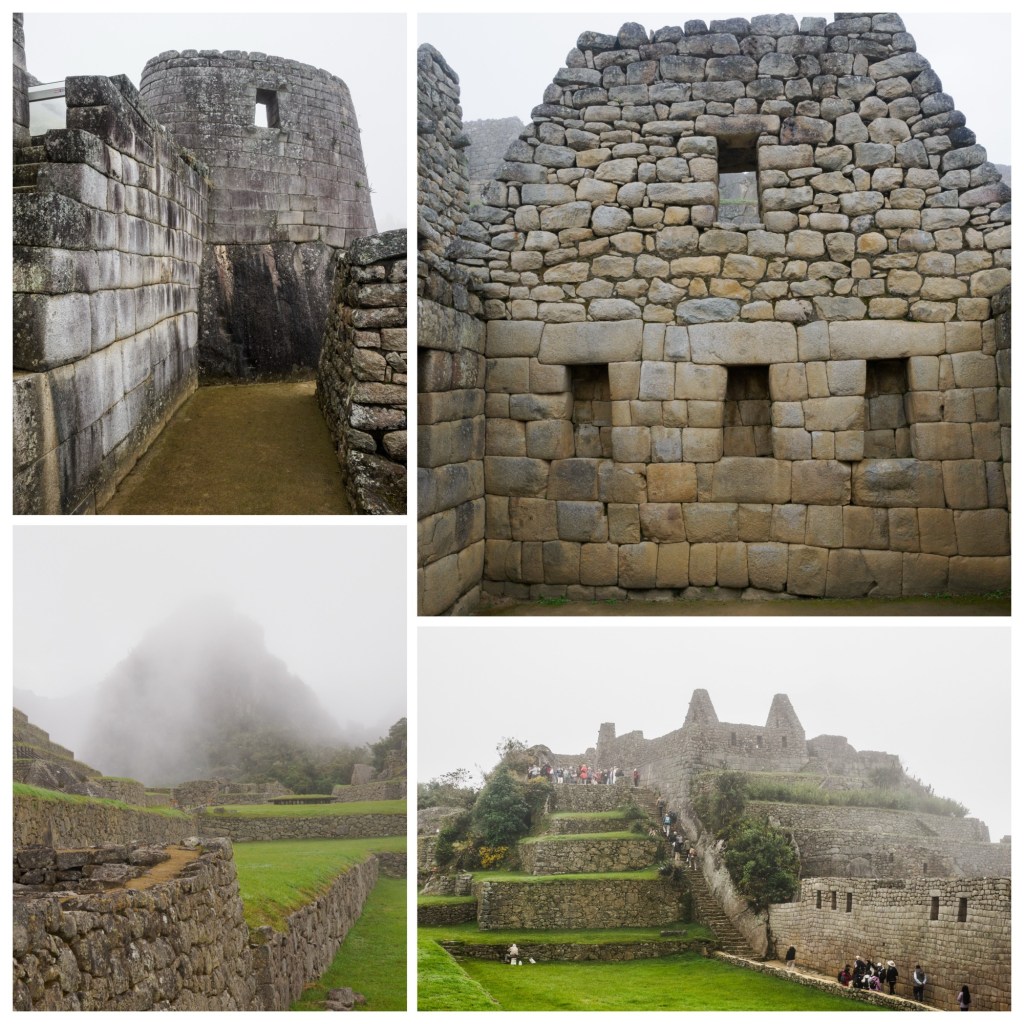
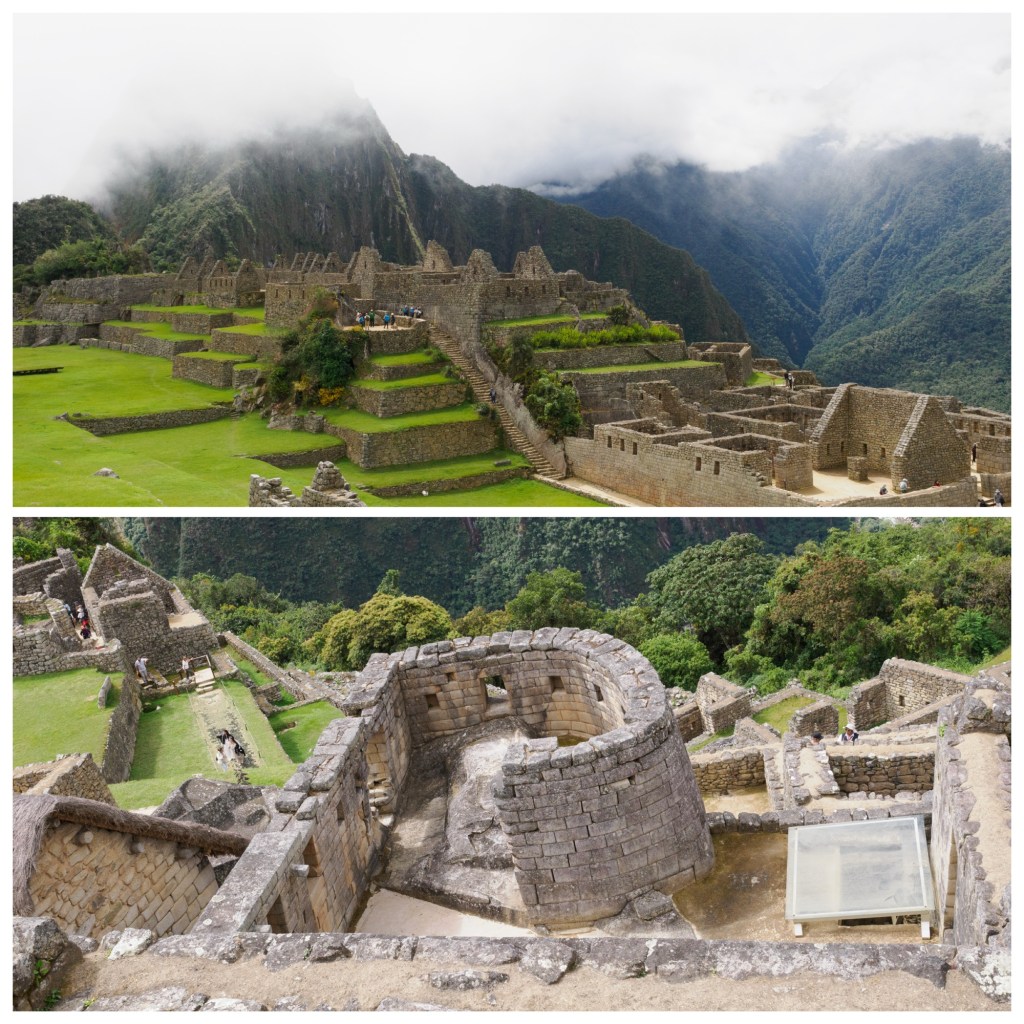
By 8:30, the fog was starting to lift. In the upper right of the next group, you can clearly see three niches in the wall and a single window above them. The circular building at the upper left is the Temple of the Sun. It has two windows which are aligned to the summer and winter solstice. It’s believed that this temple was used for offerings and ceremonies dedicated to Inti, the Inca’s god of the sun.
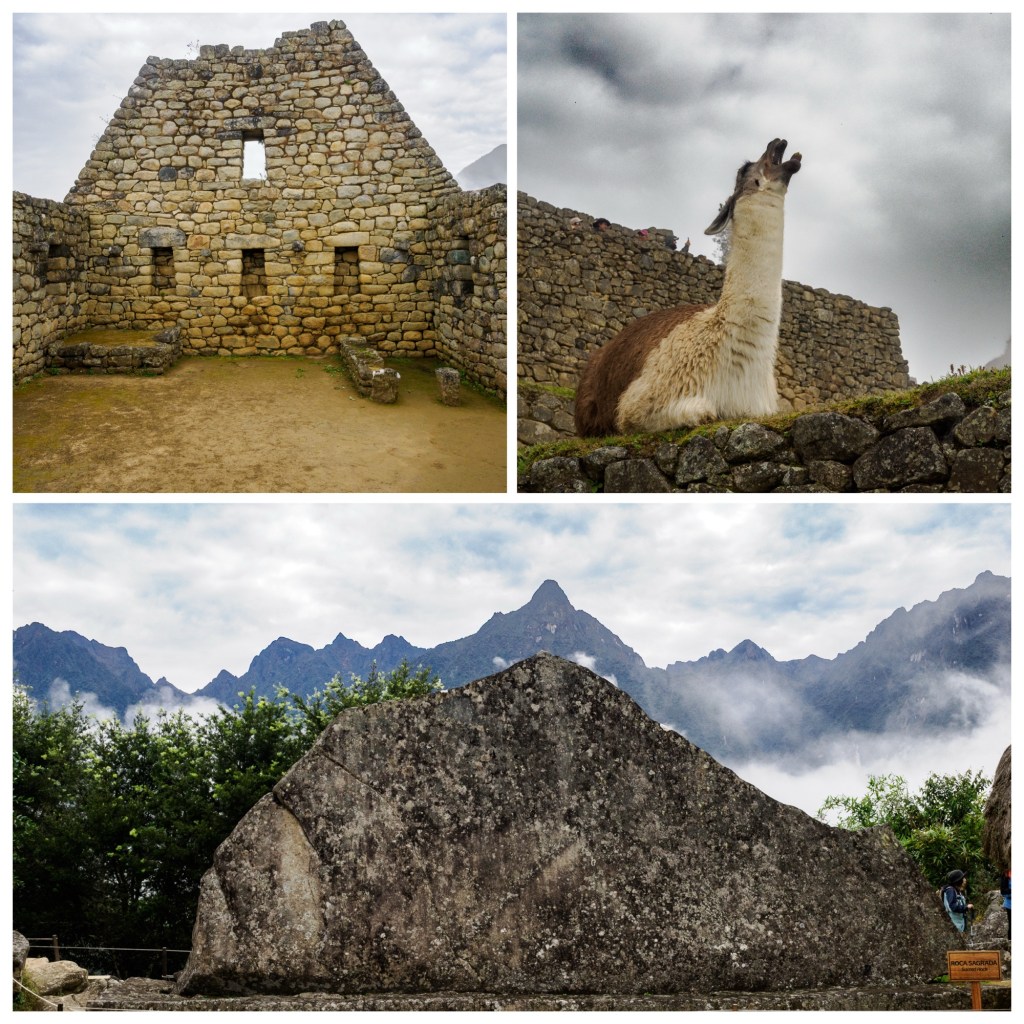
The fog and clouds continued to come and go as we started on the return trip. In the bottom image, you can see a huge rock carved to a shape and placed to mirror the mountain peak and range behind it. While the Incas did have metal tools, much of this sculpting was probably done with hard stone.
My plan was to have breakfast when we returned before going out for the last route, but we got back to the hotel just after 10:00, and the breakfast room closed at 10. They offered us a snack menu, which wasn’t very appealing, so I just had a granola bar in the room.
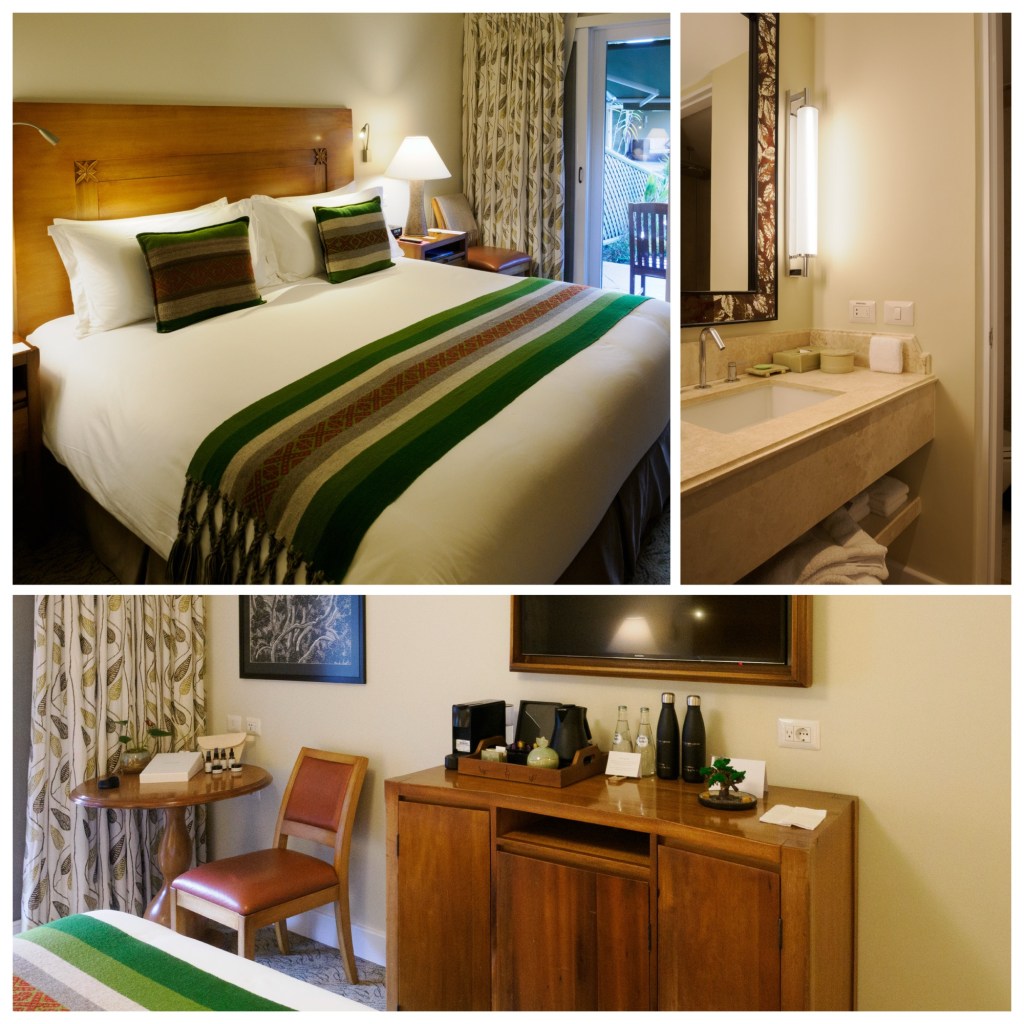
Now’s a good time to talk about the room. As I wrote earlier, the Sanctuary Lodge is the only hotel right at the entrance to Machu Picchu; all of the other hotels are in Aguas Calientes and require the 20 minute bus ride (plus queuing) each way. It’s also the second most expensive room we’re staying in on this trip. It’s 161 sq ft, and very poorly laid out.
The clothes closet shares a 3’ x 6’ space with the sink and tiny vanity (3). That is, if someone is using the sink, there’s no room for someone to get to the suitcases, drawers or hangers. And two people can’t access the closet simultaneously. This space is open to the entry area.
Once you pass through this tiny space, you come to the water closet with is divided half for the 3’ x 3’ shower, and half for the toilet. Turning on the light in the bathroom area also turns on the fan, which sounds like a jet engine. To get out of the water closet, you open the door into the sink/closet area – but you can’t see if anyone’s standing there until you knock them over.
The service is great, the food was great (not withstanding being closed from 10 to noon), but the facilities are poor.
Okay, back to MP. Sally called it done, but I went back at 11:00 for the third try, Route 2. Route 2 climbs almost as high as the Route 1 that we did yesterday, but then descends into parts of the sanctuary that the other two routes don’t include. I have to say, this entire operation is very well run. It’s crowded, but the crowds are controlled by assigning people 30 minute entry windows, and having rangers located all throughout the site (4).
Here are two views of the Temple of Three Windows. They represent heaven, the underworld and the present day. I’m sure the Incas didn’t call it by that name.
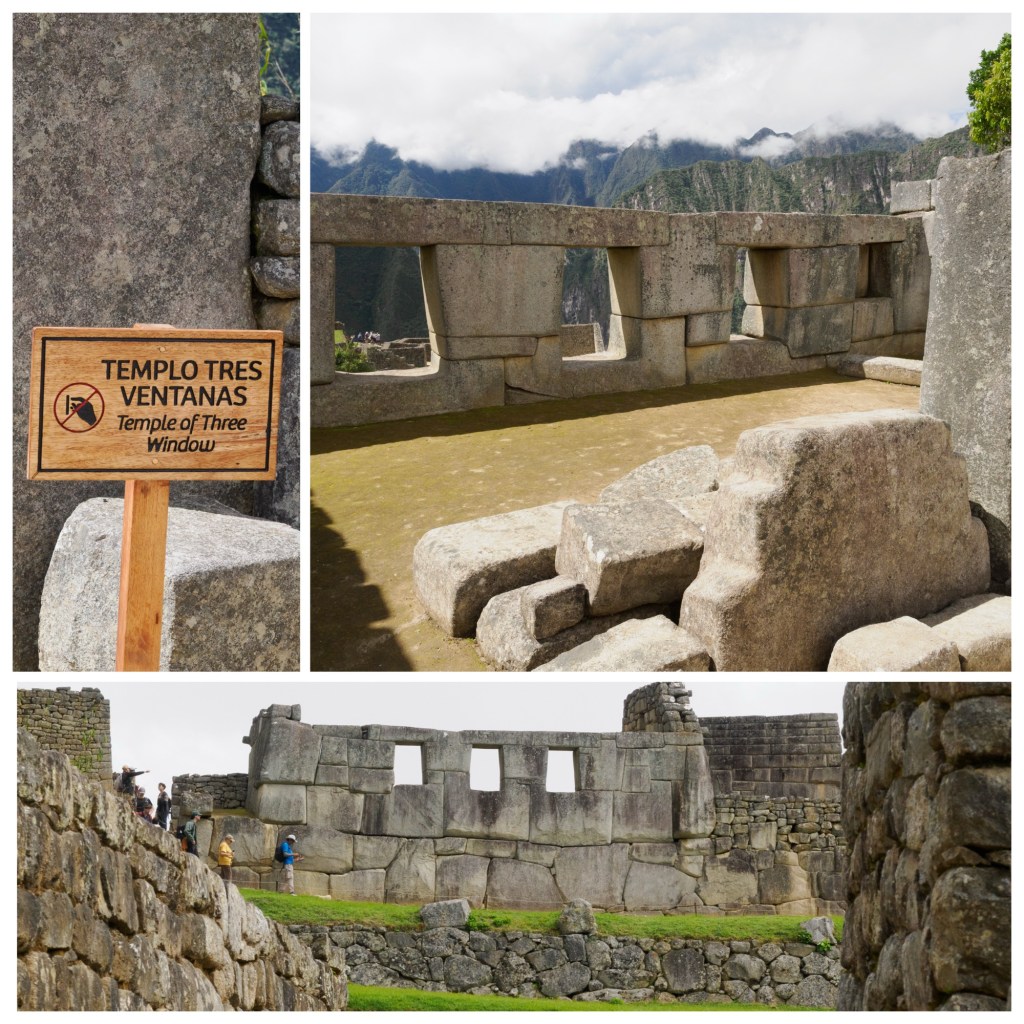
And finally, another view of the Temple of the Sun (the circular structure) and an overall look at this section of the sanctuary, including the mountain Huayna Picchu, still shrouded in the clouds.
After this, it was back to the hotel to clean up, have lunch, pack and relax, and then catch the Hiram Bingham train to our next stop at Cusco. This ride took us 3-1/2 hours, so we didn’t even get to the hotel until almost 10:00pm. And we were pretty tired by then.
(1) “Relatively little” doesn’t mean “none”, and we still don’t have enough oxygen.
(2) Each admission ticket to the site has a designated time to enter, with a 30 minute window. So you need to be timely – if you miss your window, you can’t enter.
(3) There’s no room to take any more meaningful pictures than the ones I have in yesterday’s blog.
(4) I never saw the rangers do anything, but then again I almost never saw anything that needed doing.
Friday was a split day: we transferred from our hotel in the Sacred Valley to Machu Picchu, and we did our first circuit hike at Machu Picchu.
From now on I’ll write MP to refer to the site.
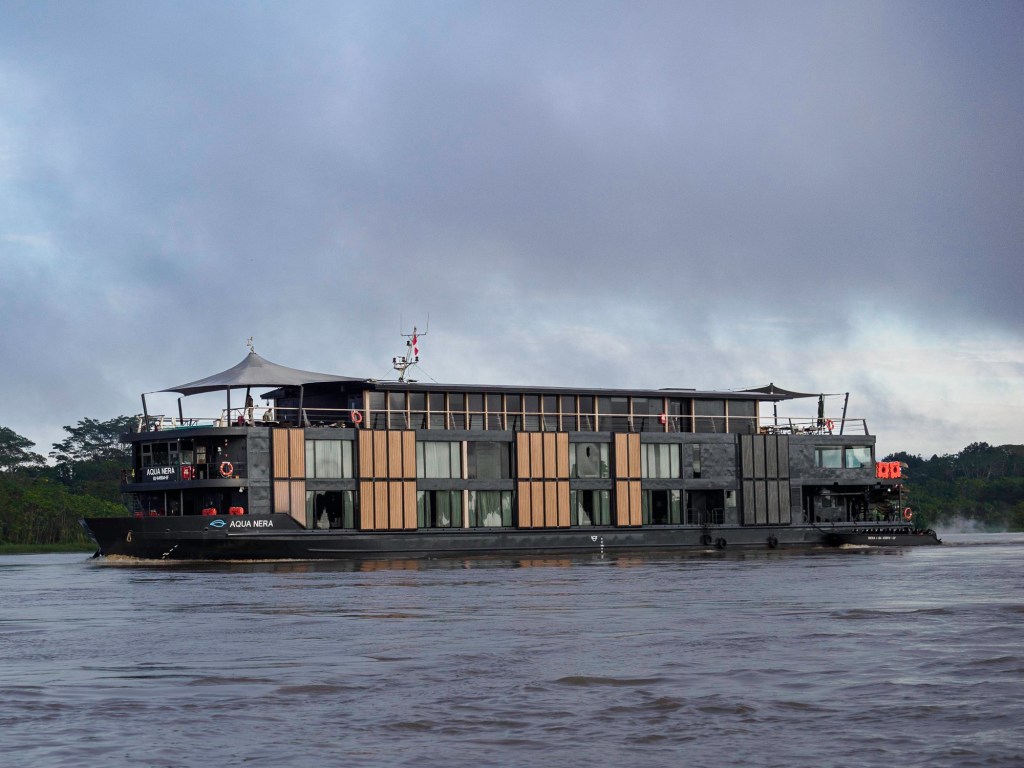
Sally and I had joked that this trip was cars, planes, trains and boats. We already did many cars and four flights, we spent three nights on the Aqua Nera. This morning we completed the set by taking a luxury train, the Hiram Bingham (1), from the Sacred Valley to Machu Picchu.
If you picture the kind of old-fashioned luxury train epitomized by the Orient Express, you’ll get the idea. Well furnished booths with white tablecloths, uniformed wait staff, a kitchen that actually serves good food (which they are happy to customize to your taste). Food and beverages are included.
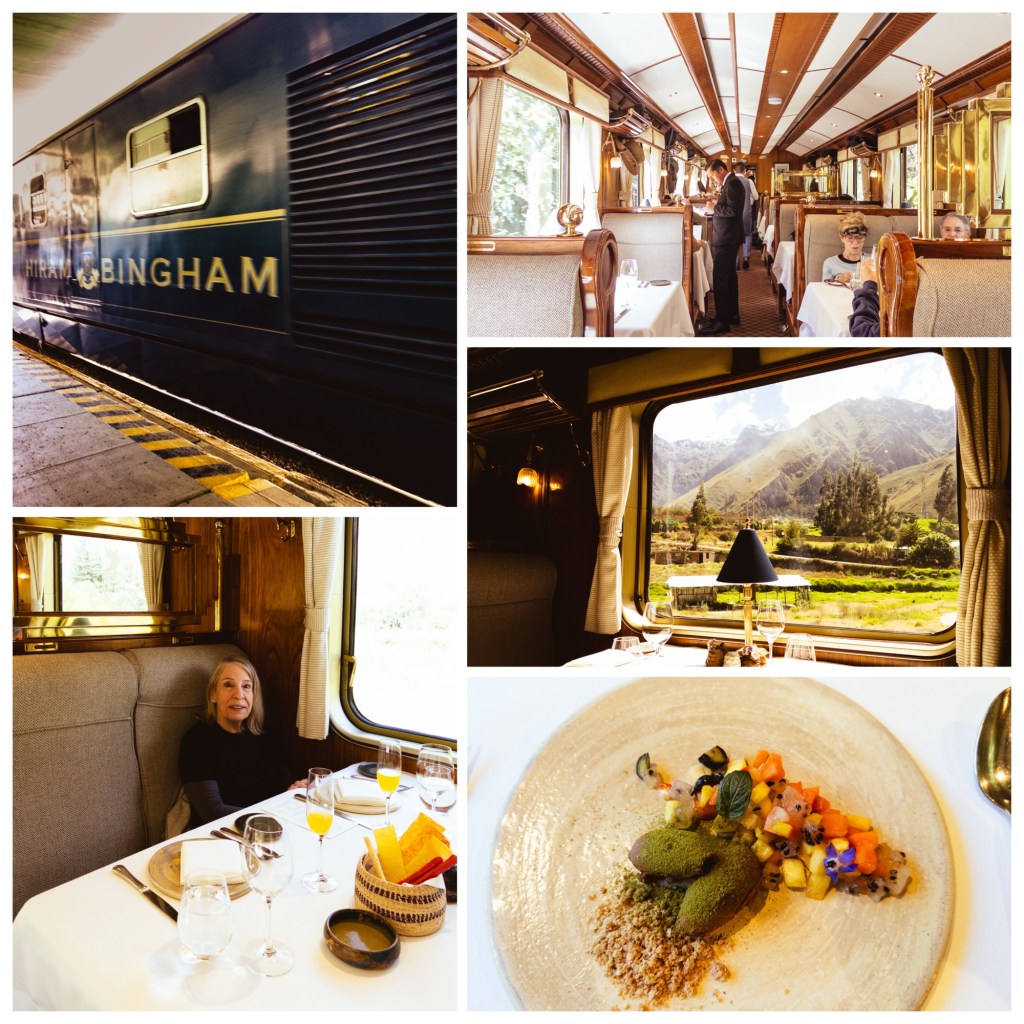
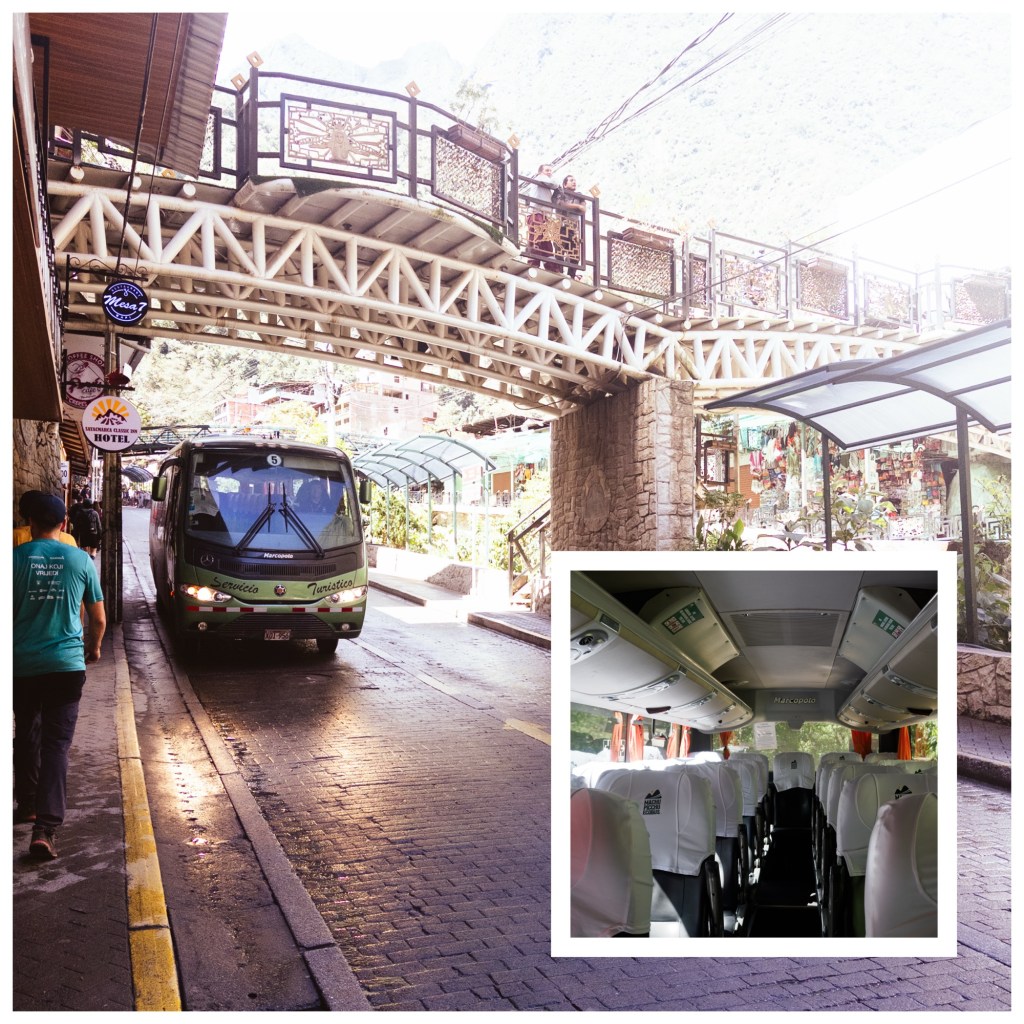
The train ride from Sacred Valley takes about an hour and a half, so we ate an early lunch and arrived around 1:00. You arrive in Aguas Calientes, and everyone has to take a 20 minute bus ride to get to the sanctuary. We were surprised when a huge tour bus pulled up, which had been hired just for us. Apparently no other vehicles are allowed, so it’s either a tour bus, or walking.
After quickly checking into our room, we went to see MP. We stayed at the Sanctuary, which sits right at the entrance to the site. All of the other hotels are in Aguas Calientes, and you take the bus ride up and down each day.
You experience MP by taking one of three routes through the site. Our first hike was Route 1, which took us up to the viewing platform where you get the classic view (and photograph) of MP. I took lots of photographs during the hike, but don’t really recall what most of the individual things we saw were.
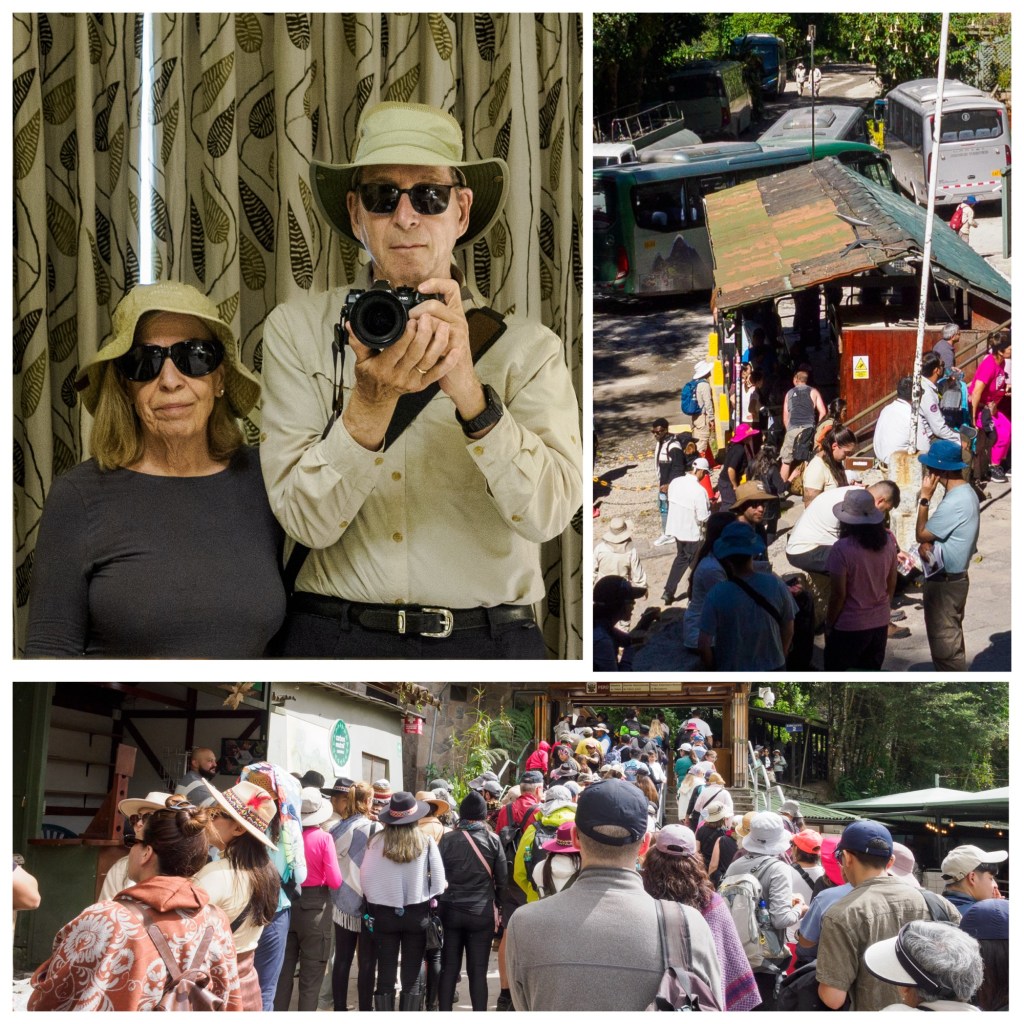
But before you go, you have to suit up for the adventure and deal with the chaos of the buses and the entry lines to enter the site itself.
MP gradually reveals itself as you hike up Route 1. The first part of the hike is mostly a series of uneven stone steps. We’re now at about 8,000’. The two days we spent in the Sacred Valley (along with daily doses of acetazolamide) helped us with altitude sickness, but don’t help us with the lack of oxygen feeding our muscles. We needed to stop frequently to rest. You see some of the surrounding mountains, and then Huayna Picchu, a distinctive peak right behind the sanctuary, reveals itself. On one of the routes you can climb it, but we didn’t (2).
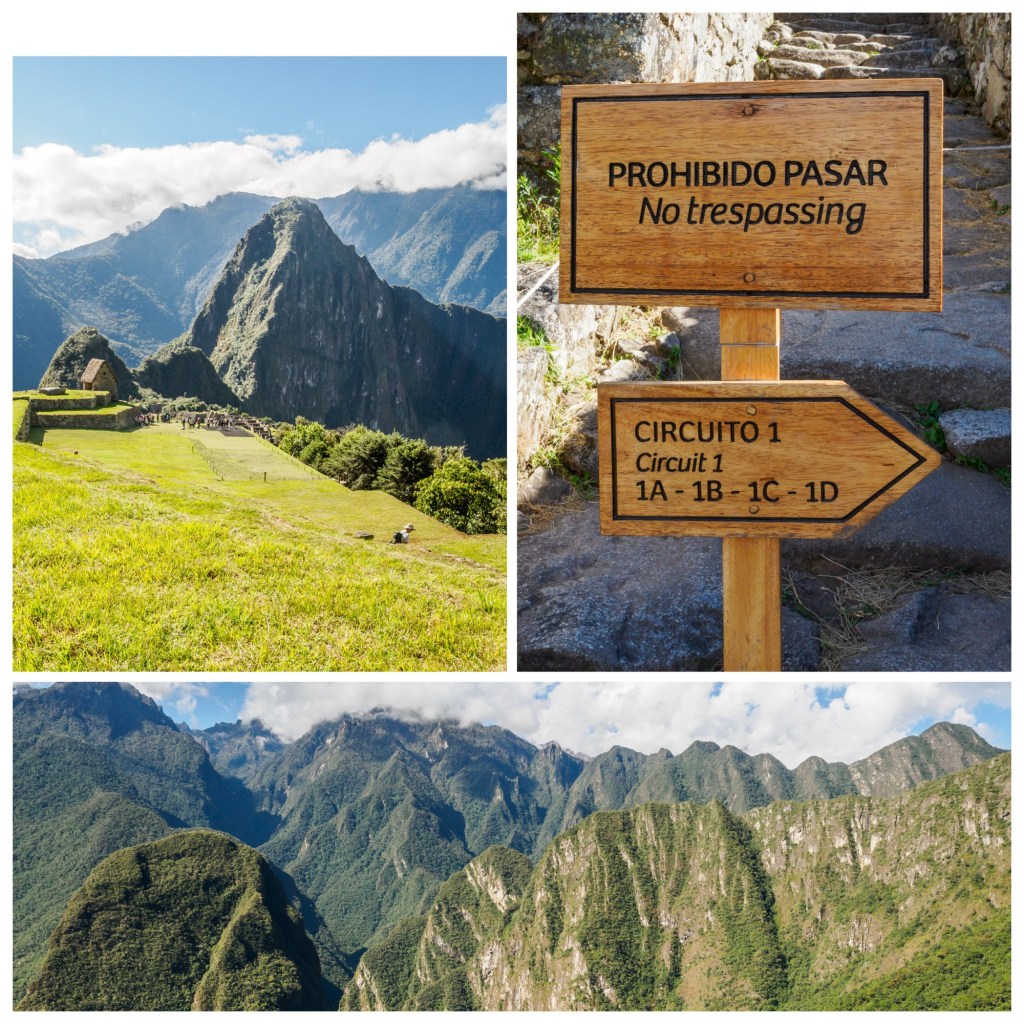
By this point you’ve reached one of the popular viewing platforms. But you’re not done yet.
We needed to climb a little more. At a few spots there are lines going through difficult areas, but overall the crowds were pretty reasonable. There are also some llamas living in and around the site, and we passed them resting in the sun. Now you can see some of the city itself.
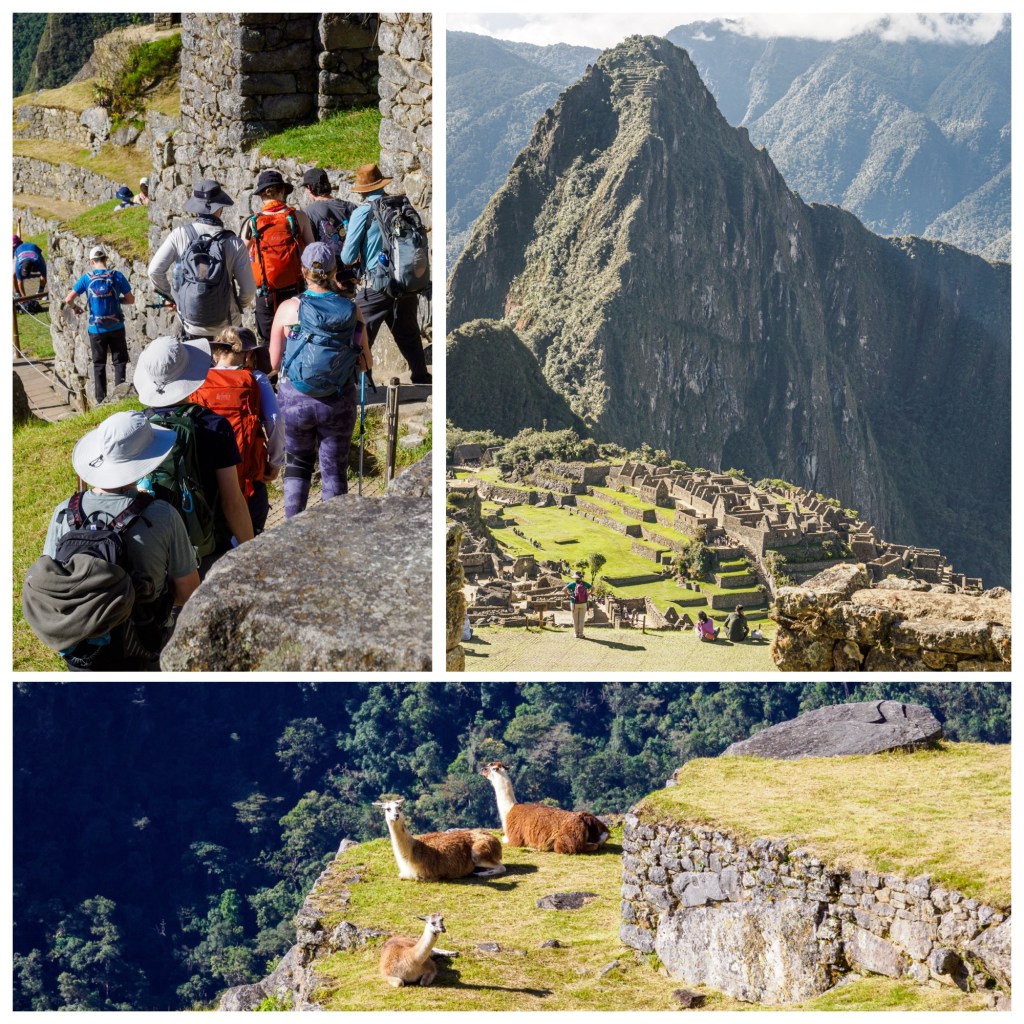
Finally you get to the spot where you have the classic view you came to see.
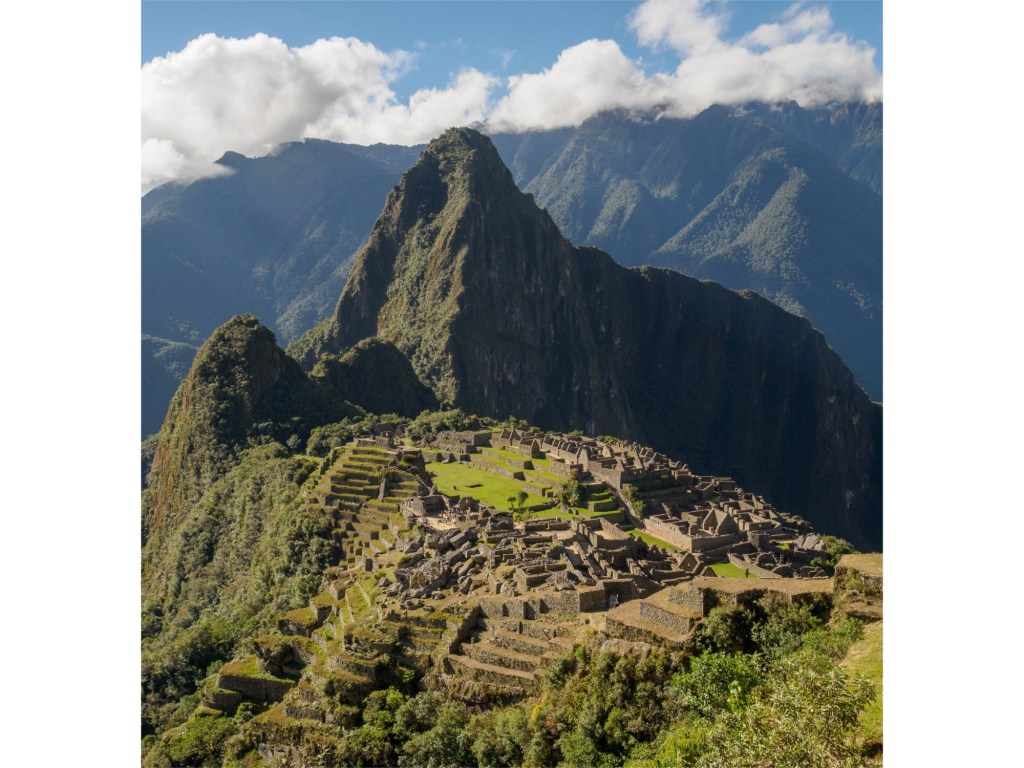
I could write all about the historical significance of MP; our guide, Marisol, explained it all to us as we went along. But it went in one ear, and out the other. So feel free to look it up.
We got back to our room about 4:15, glad that we didn’t have to face the lines to board the buses for the 20 minute ride down to Aguas Calientes. Instead, we relaxed a bit, unpacked a bit (we’re only here one night), cleaned up and went to dinner in the hotel restaurant. Which was very good.
(1) Hiram Bingham was an American archeologist who “discovered” Machu Picchu in 1911. His discovery required lots of deep and arduous work: he asked a local farmer where the Inca city was, and was taken there.
(2) The way up and down is about a 1,000’ climb on uneven stone steps, often with no railing.

