Today we went out with our guide, Kamal. Kamal met us at the airport yesterday with our driver, and he will be with us throughout our trip. This has advantages and disadvantages. When we were in Southeast Asia four years ago, we had a different guide in every city. So we had to get to know him/her, and vice versa. We will know Kamal very well by the end of this trip, for better or worse. It also means that we won’t get multiple viewpoints, as we did in Vietnam. As you could imagine, our guides in Hanoi and Saigon had a very different perspective on the current government.

Anyway, today was the Fes City Tour. Along the way we came across many other groups on the Fes City Tour, most of whom were quite large (one was a couple like us). What all the groups shared, whether large or small, was exhaustion at the end of the day and a limited ability to remember exactly what we saw. Fortunately, we have pictures.
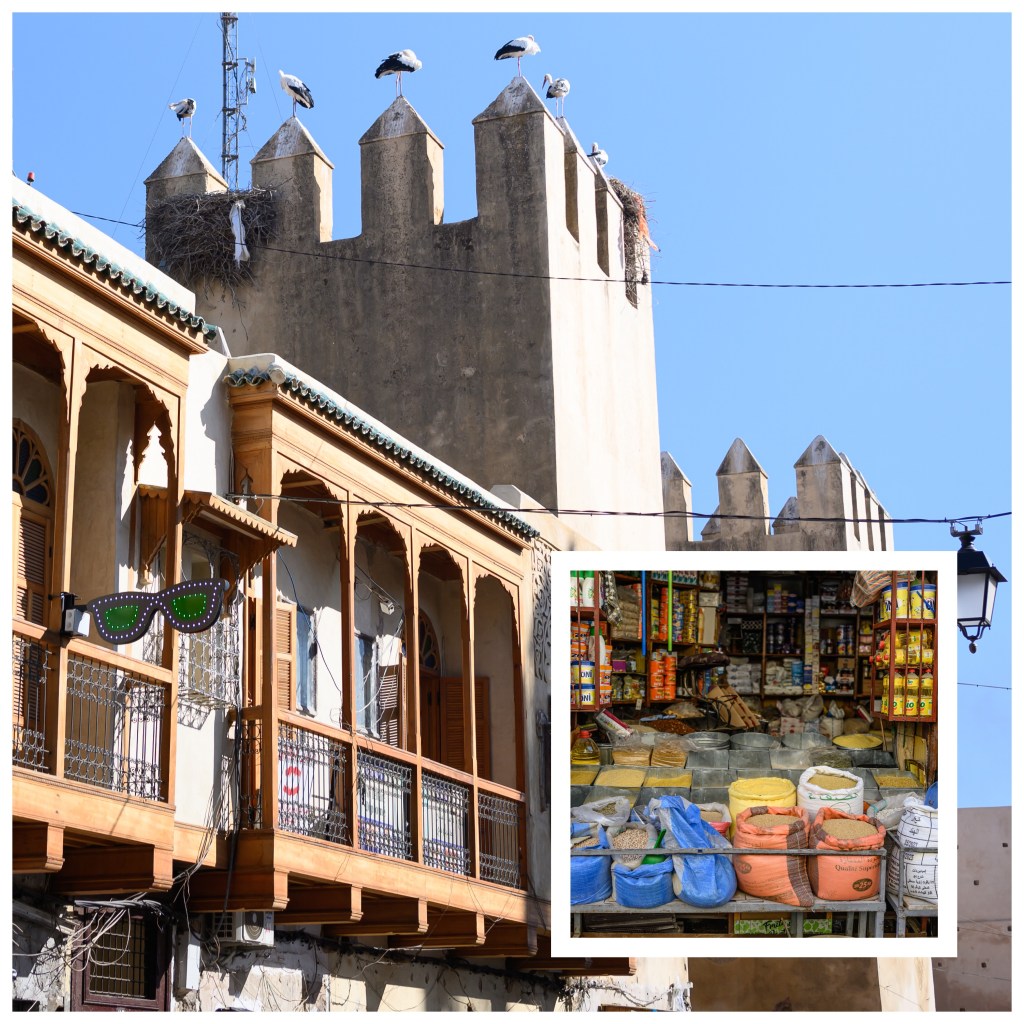
Our first stop was the old Jewish quarter, or mellah. Interesting thing about the mellah: in each city they were usually adjacent to the King’s palace; reputedly because (a) the Jews were rich merchants, (b) the King counted on the smart Jews for advice, and (c) the King needed to protect them. I’m not sure I believe any of these. Second interesting thing: the only difference we could see was the outside balconies, as opposed to the inner courtyards of Muslim homes – the Jews didn’t mind their woman being seen in public, while the Muslims didn’t much like that. Other than that, it looked like many other streets in Fes. Only about 2,500 Jews still live in all of Morocco. If we saw any, they looked the same as everyone else.
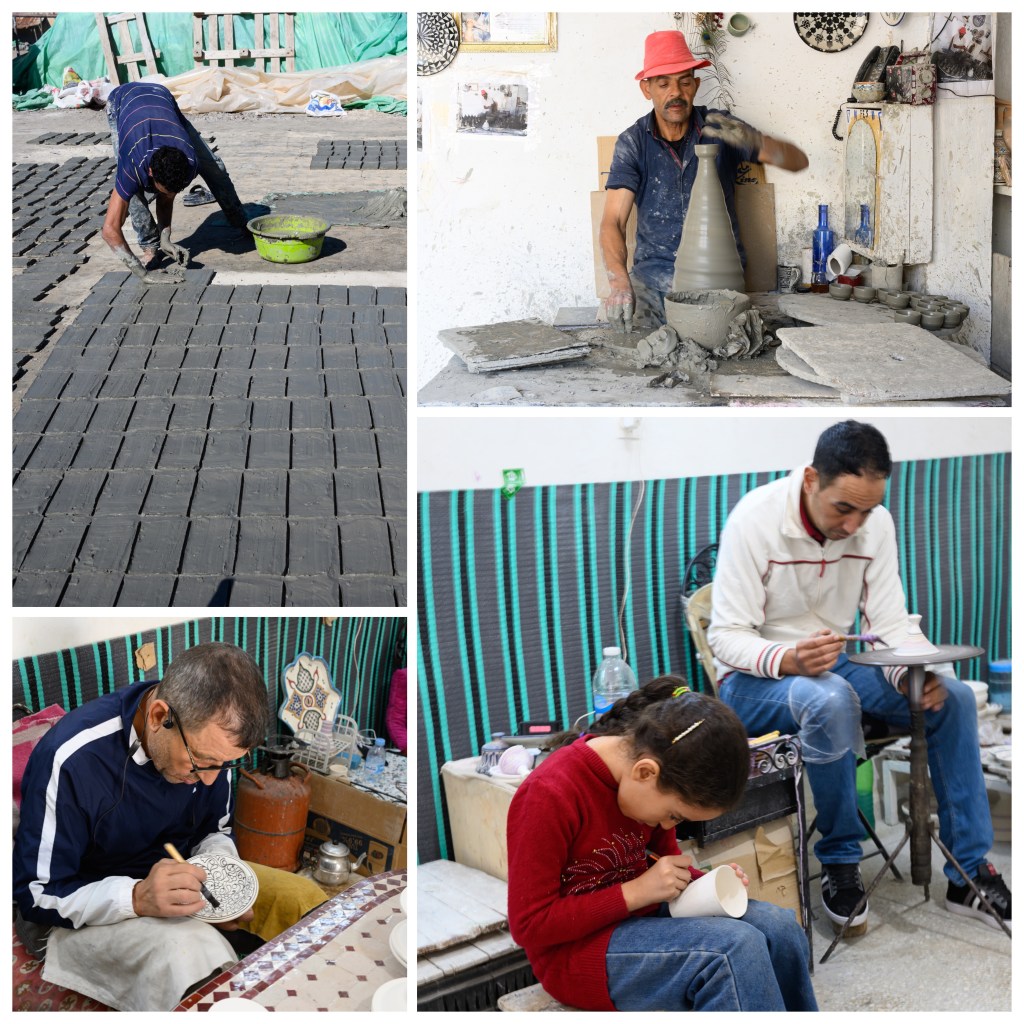
From there, we made our first sponsored stop (1) of the day: a mosaic factory. The gentleman who showed us around was quite enthusiastic about the whole thing, including why we would be smart to buy some of his product. I have to admit, the stuff was really very nice looking. And the manufacturing process, which starts with baking the wet clay in molds set in the sun through to hand painting designs on some of the finished products, was very interesting.
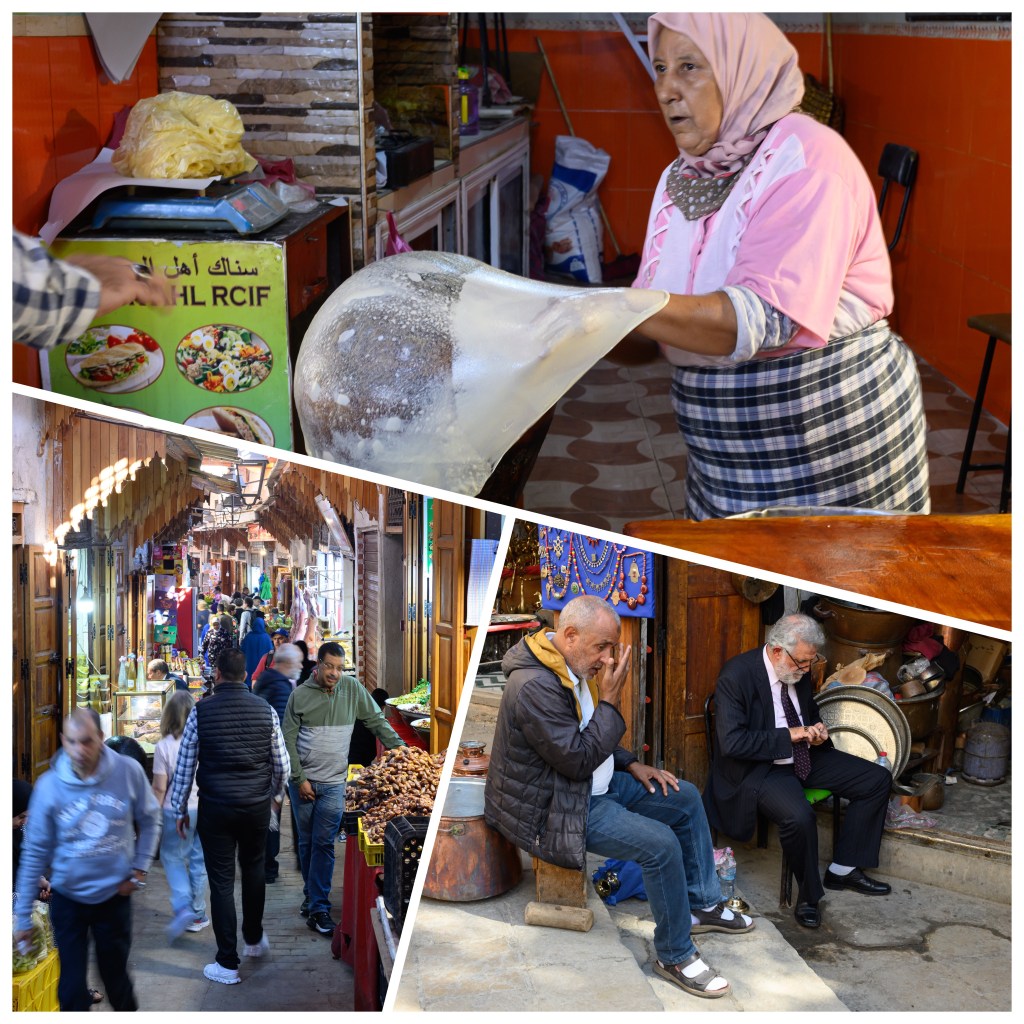
From there we embarked on a long and tiring walk through the Medina, looking at the souqs, or street markets. This is a warren of small, often crowded streets with hundreds of tiny stores (and a few bigger ones) that sell everything from fresh produce and meat to fine silver and jewelry. But mostly they are just like the street markets you see around the world. Given the extremely small size of the streets, there are no cars here. Goods are transported by hand carts or donkeys.
At this point we stopped for lunch. The restaurant was nice enough, although the food – which included some choices with no garlic – was not great. Interestingly, every table was filled with tourists, in groups big and small (2).
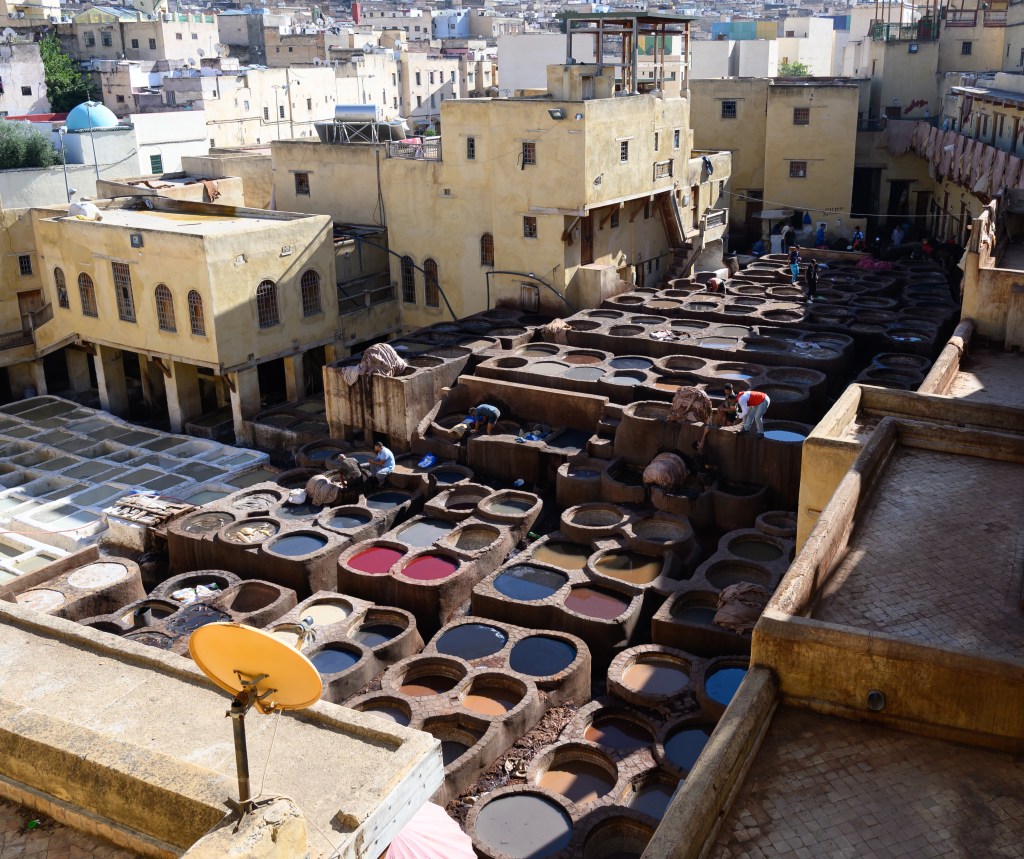
Our last (4) sponsored stop was at a leather factory. Our guide warned us repeatedly that the smell would be bad, and I would say it wasn’t good, but I’ve smelled much worse. After climbing an uncountable number of flights to the top floor, we could look out over the yard where the camel skins were being prepared and dyed. Again, it was interesting. But I really didn’t want to buy a leather jacket or ottoman.
At this point we were pretty exhausted, so we made a quick stop at an overlook for a photo of the city (3) and then headed back to the hotel.
(1) I generally find these sponsored stops distasteful at best, and a time waste at worst. The stops we made today were at least interesting on their own, although I’m sure our guide would get a commission if we bought anything.
(2) I’m sure lunch was also sponsored.
(3) The picture is not worth the electrons to include here.
(4) We also had a sponsored stop at a very high-end antique store with many Jewish artifacts. We didn’t buy anything there, either.
 The Bassman Blog