
We arrived at the Lion Sands Tinga Lodge a few minutes after noon and were greeted by a herd of elephants walking along the river just below the main lodge. This was very exciting, as it was the largest group of elephants we had seen yet on this trip. And it echoed Sally’s and my experience from our first trip to Africa, when we arrived at the Singita Boulders Lodge and were greeted with a herd of elephants walking along the river just below the main lodge (1). There were also buffalo wading in the river. Needless to say, this distracted us for a while and we just stood there watching from the deck where all of our meals would take place.
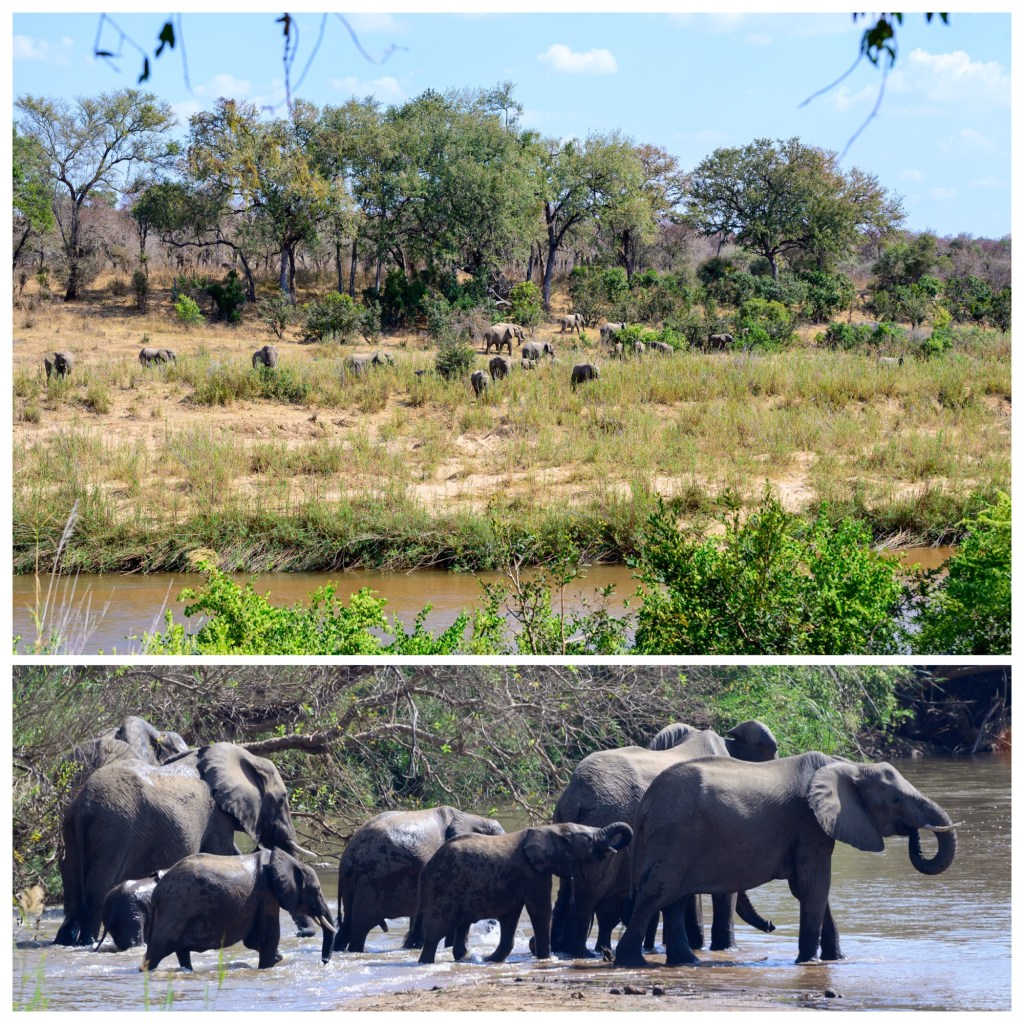
After lunch, we settled into our cabins for a bit and then met our ranger (2) and tracker for the next three days, Hugh and Rix.

Lion Sands follows roughly the same schedule as Phinda did, although their morning drive starts at 6:30 rather than 7:00, and the afternoon drive at 3:30 rather than 4:00. While no one liked getting up earlier, this put the beginning of the morning drive closer to sunrise, and then end of the afternoon drive closer to sunset.
The rangers always ask us what animals we’re interested in seeing; my guess is that 90%++ of the guests answer the large animals: lions, leopards, elephants, giraffe. I suppose a few say they’re interested in exotic birds, but not us. And the rangers usually respond with something to the effect of “then let’s go find some”. And while the rangers and trackers at each camp work as teams connected by two-way radio, the animals gonna do what they want, which is not always to be available for viewing. And then sometimes, you just get lucky and stumble across something unexpected.
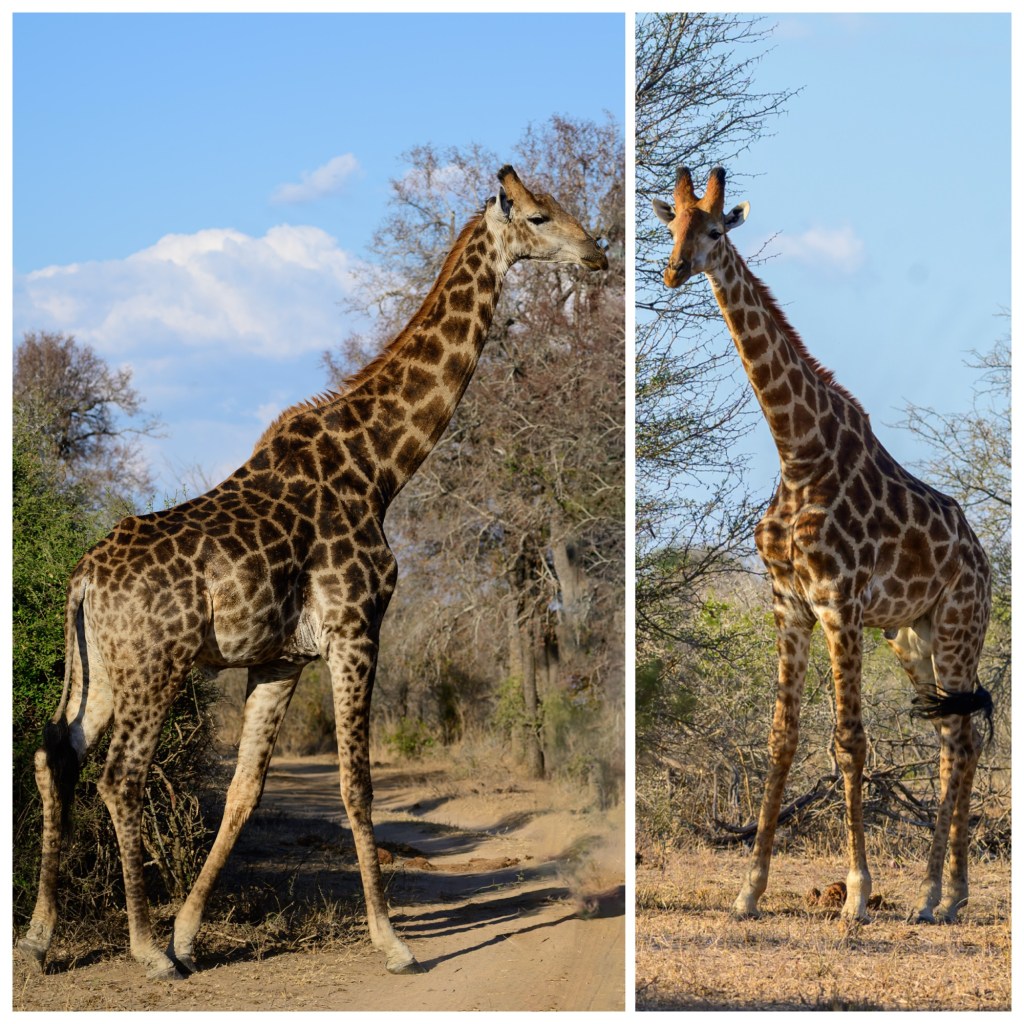
Hugh told us that he had a surprise for us, and started driving across the reserve. Before long, we came across a group of giraffes. I have to say, giraffes are extraordinary animals. Despite being so tall (the males average 15-20’), they generally move at a deliberate pace and they are very graceful. Like the other largest animals in the bush, giraffes are strictly vegetarian (3). And also like the other largest animals, they can be dangerous – dangerous enough that lions would generally not try and attack a group of healthy adults. In addition to their height, they can weigh over 4,000 lbs and can run over 35 mph for short distances.
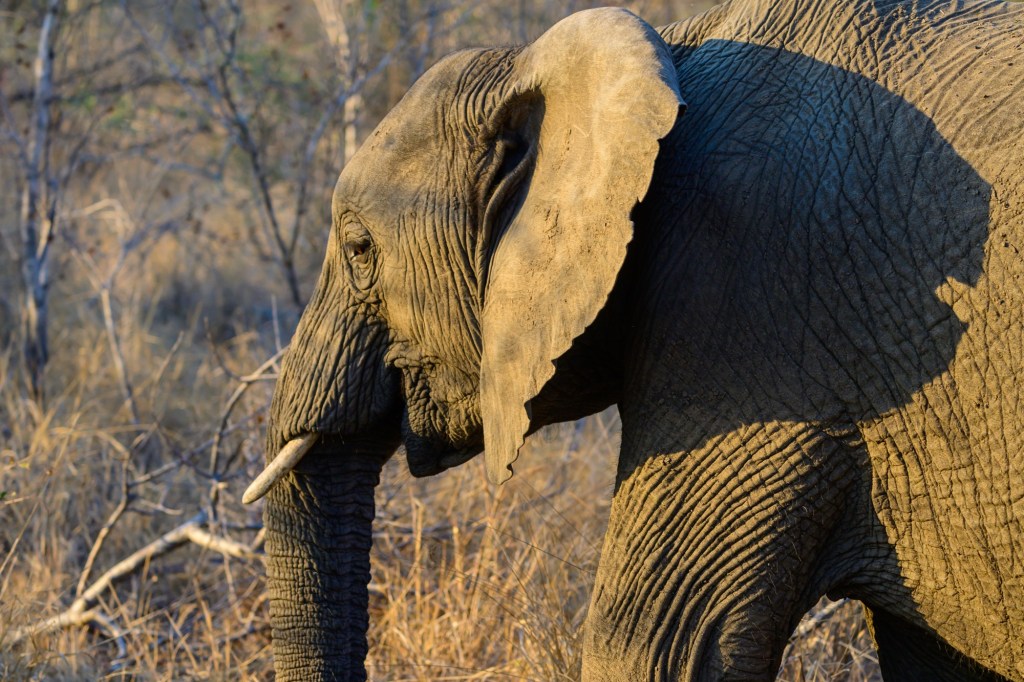
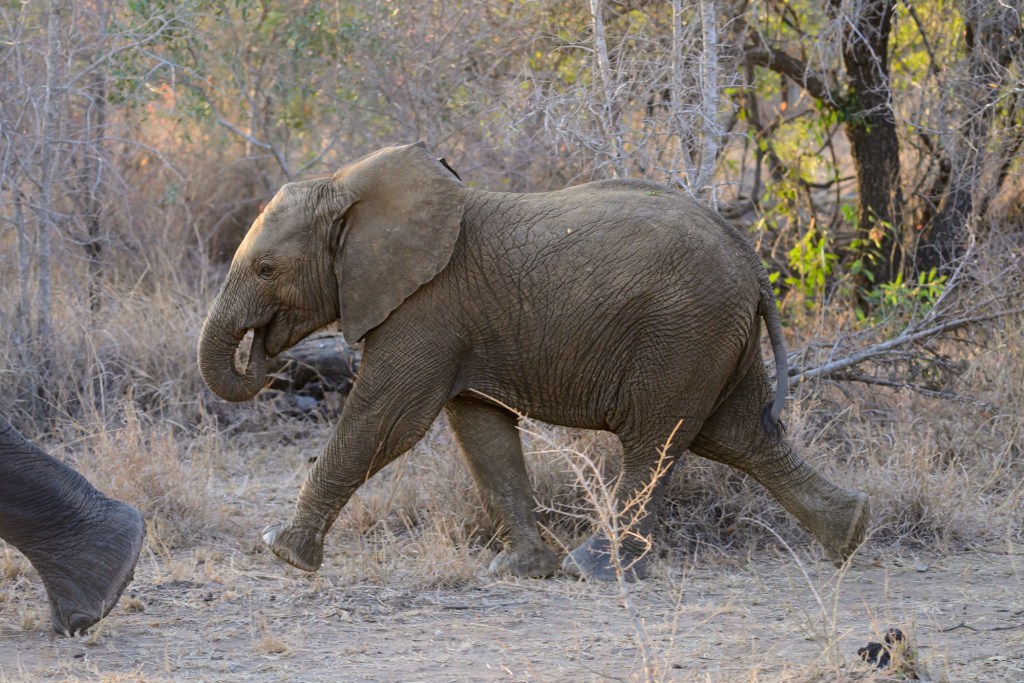
About 30 minutes later we came across another large group of elephants (4). Like the giraffes, adult elephants don’t face much risk from the predators. They are big and strong, and could easily trample even a lion, to say nothing of the smaller leopards or cheetah. Male African elephants can hit up to 14,000 lbs. and stand 13’ tall. The babies are 200-300 lbs at birth, but are still cute.
We crossed the river on a bridge which was sturdier than it appeared at first glance. And found ourselves winding our way through the bush while the Land Cruiser at times was at a very steep angle, steep enough that we had to hold on and I had to also grab my cameras to keep them from falling out (5). All the while Hugh and Rix navigated and at the same time were looking for something. They didn’t tell us what they were looking for.

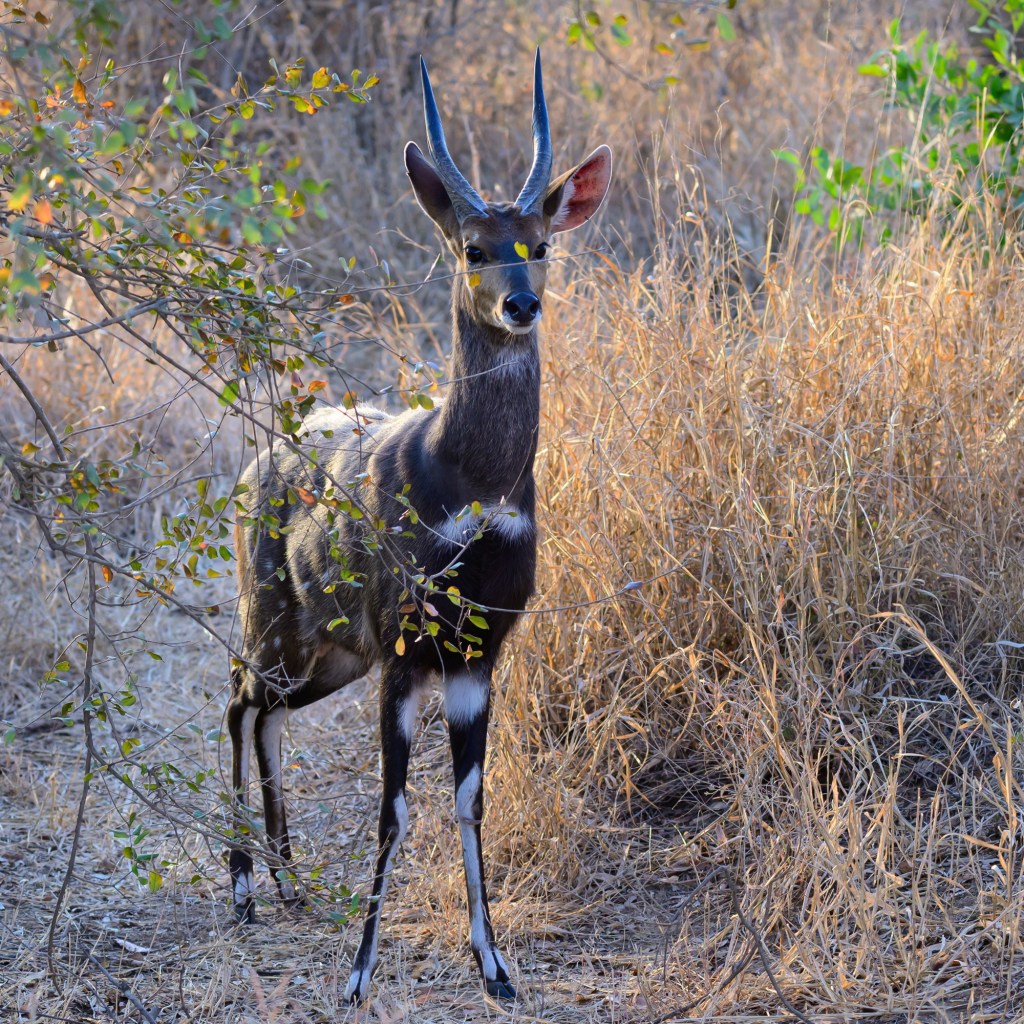
By this time it was about 45 minutes before sunset, so whenever we passed an animal with a spot of sunlight on it, the color was great. This antelope is called a bongo (I think).
Around 5:00 we saw another safari vehicle stopped alongside a very large bush, so we knew that we had arrived at the target. After a few minutes, that vehicle moved on, apparently having had their fill of whatever it was they were watching, and now it was our turn.
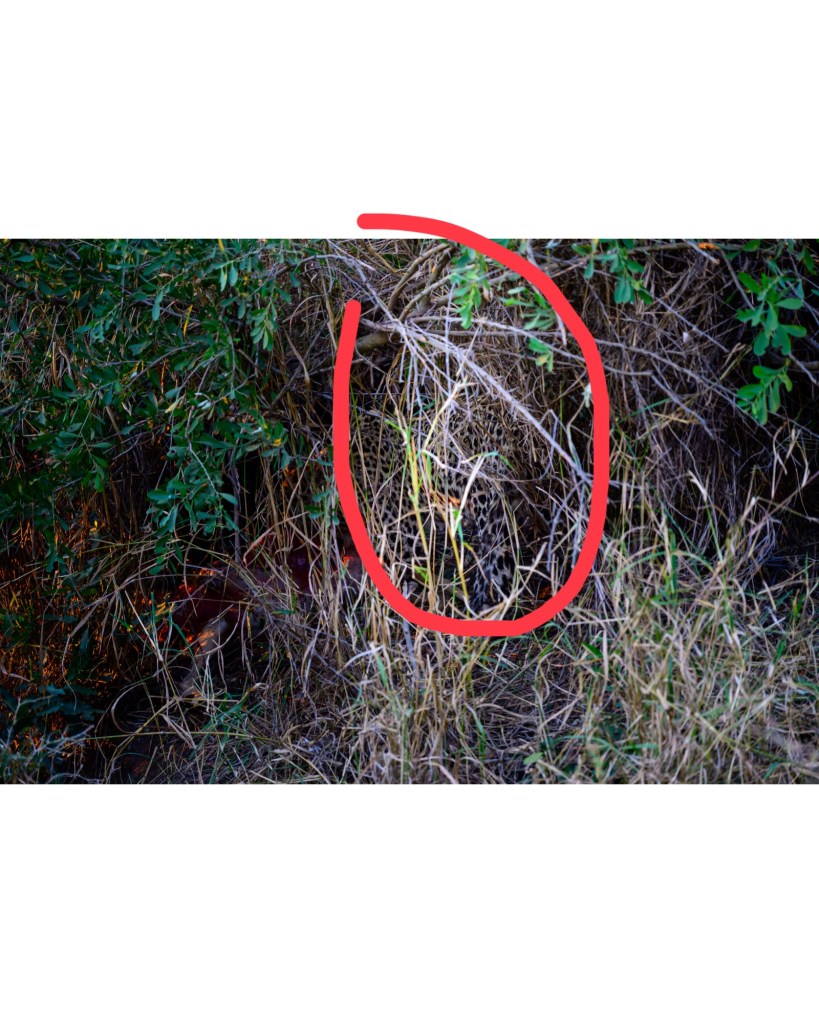
It’s hard to see; I’ve enhanced the picture and added a big, red circle to help you see the leopard that had dragged an impala it caught into the bush and was eating. We could see the leg of the impala to the left of the leopard.

After watching for a few minutes, the leopard decided to come out of the bush and lie down in the grass. As we’ve observed any number of times, these predators seem completely oblivious to our presence. It was tired from the chase, had a full stomach, and needed to rest. But there’s no way it was going to leave the impala alone; there was another meal to be had.
The sun had set by this point, so we headed home, back across the rickety bridge, for our meal.
(1) Singita Boulders is about 30 miles up the Sand River from Lion Sands Tinga. It’s about an hour drive.
(2) “Ranger” is apparently the official term, as they go for formal training and are licensed by the government. The ranger drives and talks to the guests, while the tracker sits on a small seat mounted on the front bumper of the vehicle and, well, tracks the animals. The ranger also tracks, and the better trackers also talk to us.
(3) Elephants, buffalo, rhino and hippos are all vegetarian as well. And yet they are dangerous.
(4) This could have been the same group we saw at the lodge when we arrived, but I couldn’t tell you one way or the other.
(5) At home, we won’t drive down the driveway without putting on our safety belts. Here, we ride around for hours in vehicles with no doors, no tops, and no seat belts on rough roads and steep inclines. Go figure.
 The Bassman Blog