We’ve been to a lot of places in Europe. Most of them have Roman ruins, since the Roman Empire stretched from the British Isles to the Middle East, from Gibraltar to Germany and from Morocco to Egypt.
Portugal is no exception. The ancestor of the city of Coimbra is a Roman city about 10 miles away known as Coimbriga. The Romans first arrived there around 139 BCE, and the city was destroyed by Germanic tribes between 465 and 468. At its peak, as many as 40,000 people (1) lived there. Over the next 100 years or so, the area was slowly repopulated but the center of the local society was moved to Coimbra by 589.
We were picked by by Eva, our guide for the morning and were joined by two other American women for our visit.
What we saw was very typical of other Roman ruins that we’ve seen in Italy, Israel, Sicily, Spain, Morocco and England:
- Extensive engineering and design to create stable roads, water systems and sewage systems.
- Large mansions, even by today’s standards for the very wealthy and political leaders (the governor’s house had 40 rooms).
- Large and sophisticated public spaces including an amphitheater, a forum and temple, and multiple public baths.
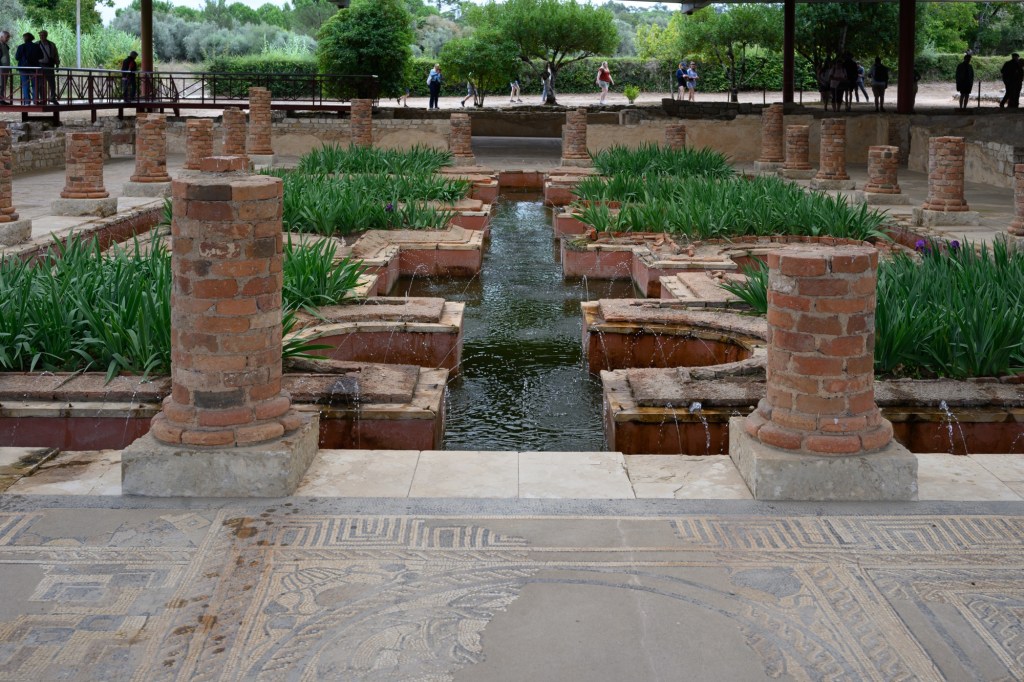
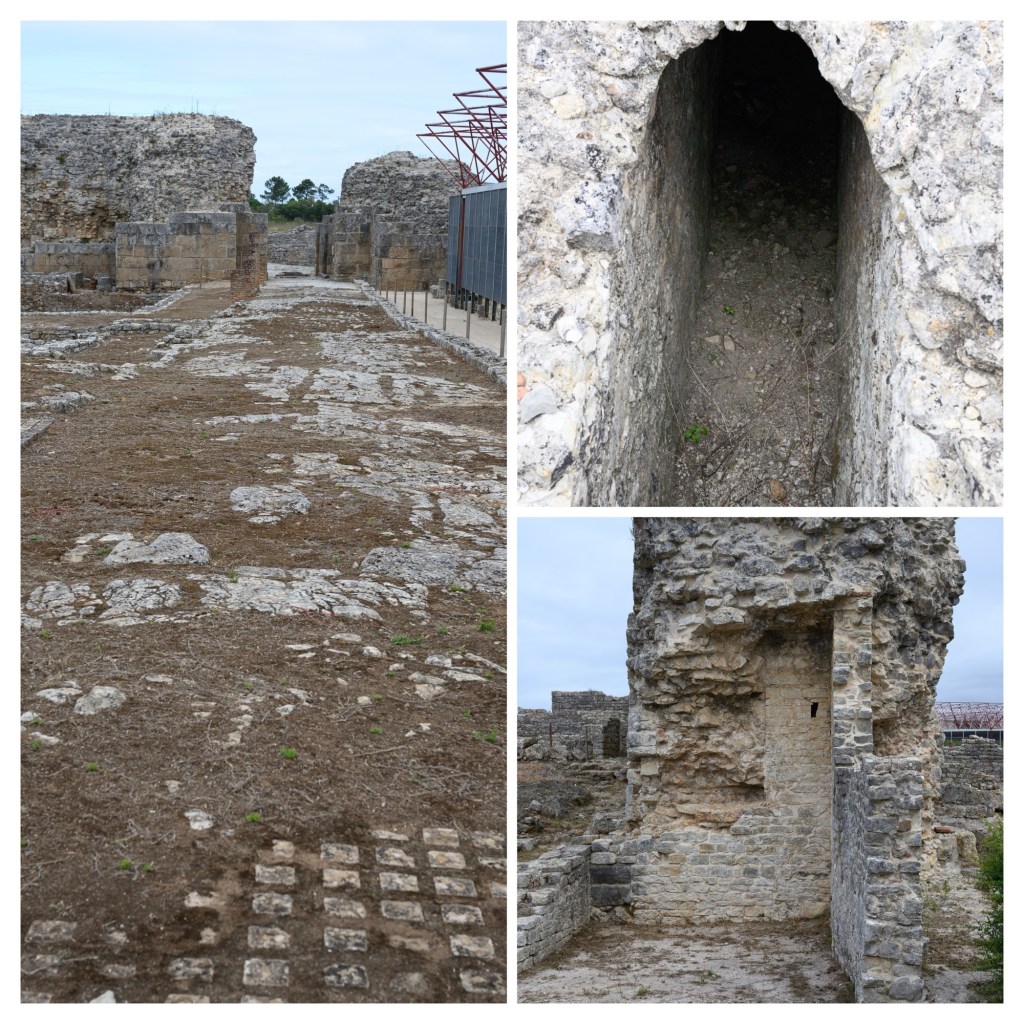
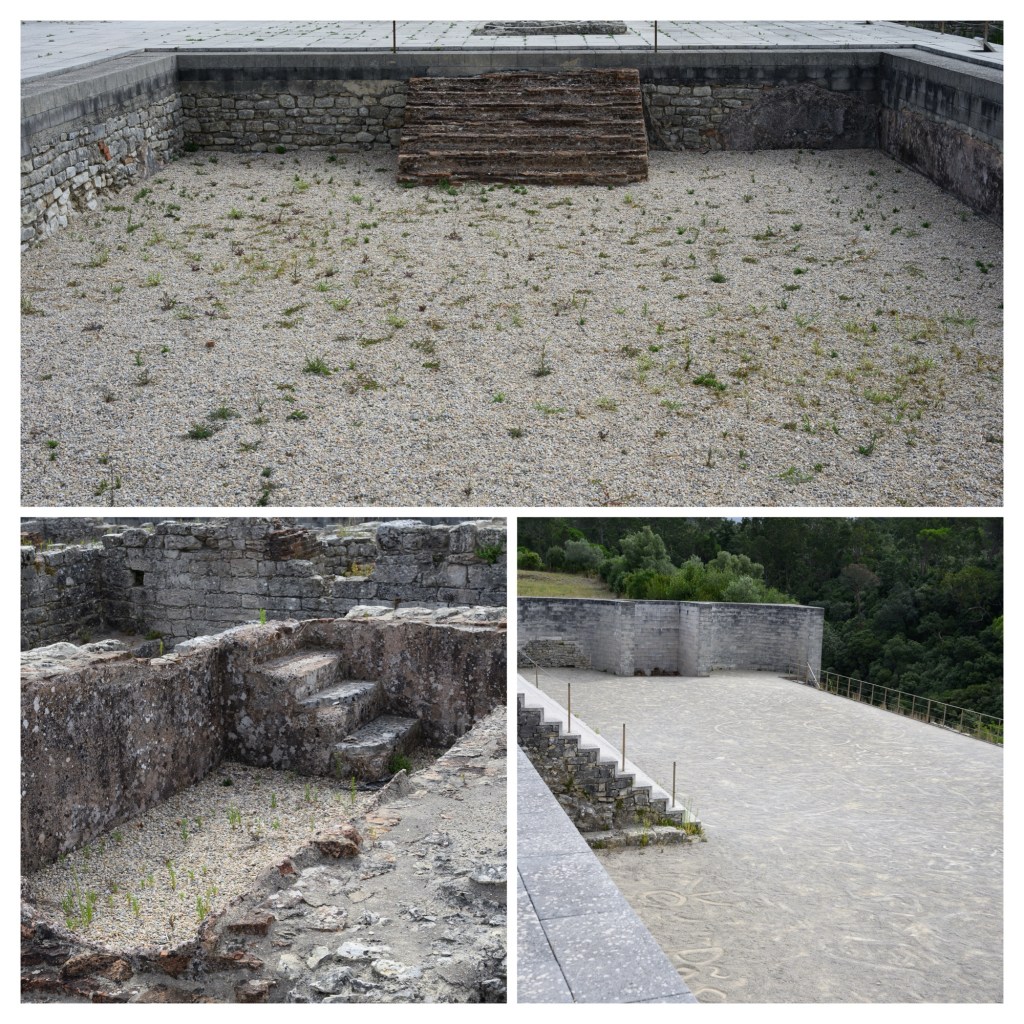
We weren’t expecting much from this tour, given that we’ve had similar ones many times. However, Eva was a good storyteller and made it entertaining.
We had lunch back at our hotel, then relaxed for a few hours. Then it was time to make up for my brain melt yesterday and actually go to see Fado.
Fado is a Portuguese music genre which is traceable to the early 19th century, but possibly is much older. It started as a working class, informal folk music that included singing and dancing. The dancing went away in the second half of the 19th century, leaving the singers – fadistas. There are two varieties of fado, Lisbon and Coimbra. What we saw was Coimbra, as we were there. This is traditionally linked to the University students – who were all men until c. 1890 – singing love songs to local women they were interested in. Even today, Coimbra fado is sang exclusively by men, who dress in the robes of their department of the University.
(Nerd alert – about guitars, not cameras this time)
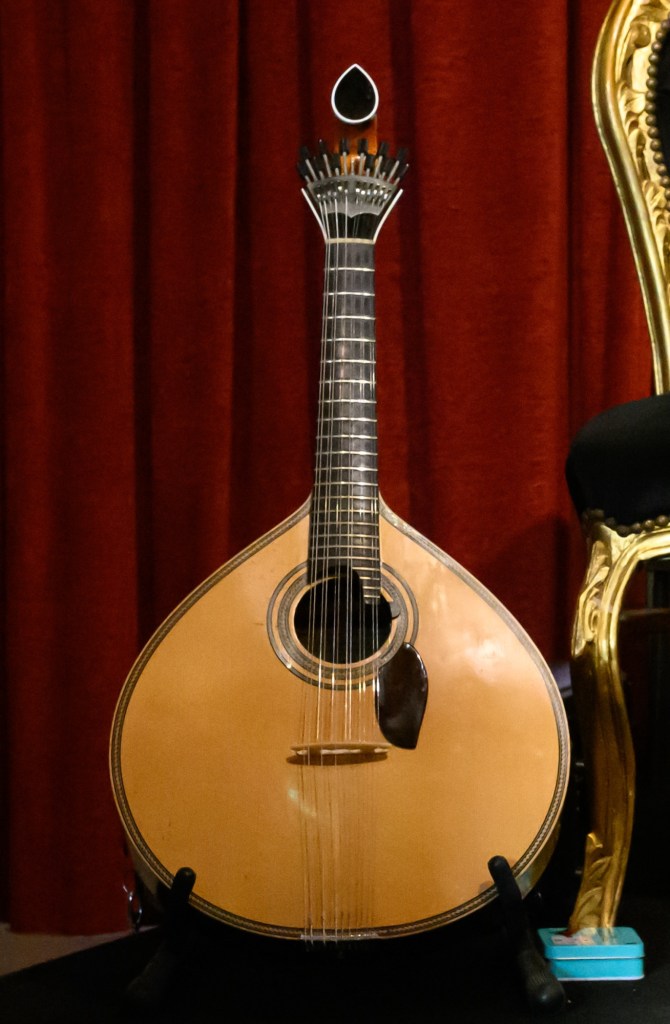
Along with the singing, Coimbra fado has developed a specialized guitar, the Portuguese Guitar. This is a 12-stringed instrument, like a normal 12 string guitar, with six pairs of strings: 3 pairs tuned in an octaves, and the other three tuned in unison. However, the tuning is very different than a normal guitar, and it utilizes a unique tuning mechanism on the headstock.
(Nerd off)

We got to the theater, which turned out to be exceedingly small – only 40 seats. The 50 minute show was excellent, with two instrumentalists (one on Portuguese guitar, and one on Classical guitar), and two vocalists who alternated singing alone and as a duo. Both fadistas were students at the University and were wearing what we assume were the appropriate gowns.

After the show, the audience was treated to a small glass of Port wine and had a chance to chat with the singers. We took the former and skipped the latter.
We walked around the old city for a bit, got a bite to eat for dinner, and caught an Uber back to the hotel. All in, a pretty fun day.
(!) That’s what Eva said. The only reference to population growth states that it was about 10,000 in 75 A.D. But we know that the city was significantly expanded over the next 250 years.


 The Bassman Blog