Strange stuff to pack

Years ago Sally and I would travel with suitcases filled with clothing and books.  If we were going to a resort or traveling by air, the books would cosume both a big part of my suitcase and my carry-on.  Technology and age have changed these priorities, especially for me.

20170723 untitled shoot SGA10027

Keith and Kindle, July 2017

I haven’t actually carried a real physical book on an airplane in years.  The first practical e-reader, the Kindle, was released in late 2007, and I believe I purchase one shortly thereafter.  Since then, I’ve purchased and downloaded almost every book I’ve gotten as a Kindle book (1).  In 2011, I bought my first iPad (an iPad 2), and installed the Kindle app.  I never replaced my original Kindle device, and it is now long gone.  So my reading library – especially while traveling – is now my iPad or even my iPhone.  Since I carry those whenever I travel anyway, this is a 100% weight and space savings.

The iPad and iPhone are just the tip of the iceberg when it comes to electronics, of course.  Sally does use a real Kindle device, which requires it’s own micro-USB cable.  All of these devices will charge using the same USB wall plug.  And I have my cameras, which use two different batteries, and thus require two different chargers.  The newest addition on this trip is the backup disk drive I bought, but this also charges using a USB wall plug, although again with a unique cable (USB 3).  Any I always take two of everything critical that could fail.

20170723 untitled shoot SGA10024

Meds, eyeglasses and a lens, July 2017

Another class of item that’s been growing for us over the years is our medications.  The good news is that we’ve actually lived as long as we have, and that there are pills to help us feel better every day.  They also help us try to preserve our general health and fitness for the future.  In my case, I have a slew of pills I take everyday to treat my arthritis.  I put the pills into these daily organizer strips that help me ensure that I take all of them everyday.  And I need almost three weeks supply for the trip, plus extras in the event we’re delayed returning or I lose or damage some.  So I’m taking four weeks worth.

Related to the meds are eyeglasses.  Sally and I both wear eyeglasses, of course.  She uses progressives, while I have bifocals.  We each will take a backup pair, as it will be hard to see if we lose or break our primary ones.  We both will take presription sunglasses, as we hope to be in the bright sun a good part of every day, looking for wild animals.  We also both are taking sunglass clips, that attach to the frame of our primary glasses for casual or city use.

The image above shows most (but not all) of my meds and packed eyeglasses. All of this stuff has to be in my carry-on.  I’ve put my largest lens there for size comparison.  I’d rather be able to take another lens.


(1) The only hard cover text I’ve bought in years was Keith Richards’ memoir, “Life”.   I’ve also acquired a number of photography books in paper form, as it’s pretty hard to appreciate the photos in a Kindle book.

I didn’t write this. I just like it.

I received this from a very good friend.  He’s not a military guy.  He’s not a Republican. He’s not from a fly-over state.   He’s definitely not a Fundamental Christian.  But we can all can get behind the sentiment expressed in this email.
I’ve taken some small liberties with the formating. Everything below the line is what I received.
———————————————————————————————————
To: {everyone I know}
Subject: AN AIRLINE CAPTAIN’S REPORT . . . A must read!


“The American flag does not fly because the wind moves past it . . .
The American flag flies from the last breath of each military member who has
died serving it.”

AIRLINE CAPTAIN — You will not regret reading this one.

My lead flight attendant came to me and said, “We have an H.R. on this flight.” (H.R stands for Human Remains.)

“Are they military?” I asked.

‘Yes’, she said.

‘Is there an escort?’ I asked.

‘Yes, I’ve already assigned him a seat’.

‘Would you please tell him to come to the Flight Deck. You can board him early,” I said.

A short while later a young army sergeant entered the flight deck.  He was the image of the perfectly dressed soldier.  He introduced himself and I
asked him about his soldier.

The escorts of these fallen soldiers talk about them as if they are still alive and still with us.  ‘My soldier is on his way back to Virginia,’ he said.  He proceeded to answer my questions, but offered no words.

I asked him if there was anything I could do for him and he said no.  I told him that he had the toughest job in the military, and that appreciated the work that he does for the families of our fallen soldiers.  The first officer and I got up out of our seats to shake his hand.  He left the Flight
Deck to find his seat.

We completed our preflight checks, pushed back and performed an uneventful
departure.  About 30 minutes into our flight, I received a call from the lead flight attendant in the cabin.

‘I just found out the family of the soldier we are carrying, is also on board’, she said.  She then proceeded to tell me that the father, mother, wife and 2-year old daughter were escorting their son, husband, and father
home.  The family was upset because they were unable to see the container that the soldier was in before we left.

We were on our way to a major hub at which the family was going to wait four hours for the connecting flight home to Virginia.  The father of the soldier told the flight attendant that knowing his son was below him in the cargo compartment and being unable to see him was too much for him and the family
to bear.  He had asked the flight attendant if there was anything that could be done to allow them to see him upon our arrival.  The family wanted to be outside by the cargo door to watch the soldier being taken off the airplane.

I could hear the desperation in the flight attendants voice when she asked me if there was anything I could do. ‘I’m on it’, I said.  I told her that I would get back to her.

Airborne communication with my company normally occurs in the form of e-mail like messages.  I decided to bypass this system and contact my flight dispatcher directly on a secondary radio.  There is a radio operator in the
operations control center who connects you to the telephone of the dispatcher. I was in direct contact with the dispatcher.  I explained the situation I had on board with the family and what it was the family wanted. He said he understood and that he would get back to me.

Two hours went by and I had not heard from the dispatcher.  We were going to get busy soon and I needed to know what to tell the family.  I sent a text message asking for an update.  I saved the return message from the
dispatcher and the following is the text:

‘Captain, sorry it has taken so long to get back to you.  There is policy on this now, and I had to check on a few things.  Upon your arrival a dedicated escort team will meet the aircraft.  The team will escort the family to the
ramp and plane side.  A van will be used to load the remains with a secondary van for the family.

The family will be taken to their departure area and escorted into the terminal, where the remains can be seen on the ramp.  It is a private area for the family only.  When the connecting aircraft arrives, the family will be escorted onto the ramp and plane side to watch the remains being loaded for the final leg home.

Captain, most of us here in flight control are veterans.  Please pass our condolences on to the family.  Thanks.

I sent a message back, telling flight control thanks for a good job.  I printed out the message and gave it to the lead flight attendant to pass on to the father.  The lead flight attendant was very thankful and told me,
‘You have no idea how much this will mean to them.’

Things started getting busy for the descent, approach and after landing. we cleared the runway and taxied to the ramp area.  The ramp is huge with 15 gates on either side of the alleyway.  It is always a busy area with aircraft maneuvering every which way to enter and exit.  When we
entered the ramp and checked in with the ramp controller, we were told that all traffic was being held for us.

‘There is a team in place to meet the aircraft’, we were told.  It looked like it was all coming together, then I realized that once we turned the seat belt sign off, everyone would stand up at once and delay the family from getting off the airplane.  As we approached our gate, I asked the
copilot to tell the ramp controller, we were going to stop short of the gate to make an announcement to the passengers.  He did that and the ramp controller said, ‘Take your time.’

I stopped the aircraft and set the parking brake.  I pushed the public address button and said:  ‘Ladies and gentleman, this is your Captain speaking: I have stopped short of our gate to make a special announcement.
We have a passenger on board who deserves our honor and respect.  His name
is Private XXXXXX, a soldier who recently lost his life.  Private XXXXXX is under your feet in the cargo hold.  Escorting him today is Army Sergeant XXXXXX.  Also, on board are his father, mother, wife, and daughter.  Your entire flight crew is asking for all passengers to remain in their seats to allow the family to exit the aircraft first.  Thank you.’

We continued the turn to the gate, came to a stop and started our shutdown procedures.  A couple of minutes later I opened the cockpit door.  I found
the two forward flight attendants crying, something you just do not see.  I was told that after we came to a stop, every passenger on the aircraft stayed in their seats, waiting for the family to exit the aircraft.

When the family got up and gathered their things, a passenger slowly started
to clap his hands.  Moments later, more passengers joined in and soon the entire aircraft was clapping.  Words of ‘God Bless You’, I’m sorry, thank you, be proud, and other kind words were uttered to the family as they made their way down the aisle and out of the airplane.  They were escorted down
to the ramp to finally be with their loved one.

Many of the passengers disembarking thanked me for the announcement I had made.  They were just words, I told them, I could say them over and over again, but nothing I say will bring back that brave soldier.

I respectfully ask that all of you reflect on this event and the sacrifices that millions of our men and women have made to ensure our freedom and
safety in these United States of AMERICA.

Foot note:

I know everyone who reads this will have tears in their eyes, including me. Prayer chain for our Military.. Don’t break it!  Please send this on after a
short prayer for our service men and women.

Don’t break it!

They die for me and mine and you and yours and deserve our honor and respect.

Prayer Request:  When you receive this, please stop for a moment and say a prayer for our troops around the world.. There is nothing attached.  Just send this to people in your address book.  Do not let it stop with you.  Of all the gifts you could give a Marine, Soldier, Sailor, Airman, and others  deployed in harm’s way, prayer is the very best one.

GOD BLESS YOU!!!

Thank you all who have served, or are serving.

We will not forget!!!


Connectivity

Years ago, in the pre-mobile phone era, or even in the roaming-is-so-expensive-you-don’t-dare era, I used to do a lot of business travel.  And Sally and I used to take vacations.  For each of these, I would prepare a list of travel information and contacts for those left behind – Sally if I was on business, our kids or their babysitters if we were on vacation without them.  This would include flights, hotels and phone numbers, contacts at my offices if I was on business and their contacts, etc.  This would enable someone to get in touch with me / us in the event of an emergency.

20170716 Where are we? 20170716 Where are we? Where are-2

Where are we?, July 2017

With the dawn of mobile communications, global email and texting, this became a much less intensive and critical exercise.  Now when we travel for pleasure, we usually let the kids know what our flights are, and generally where we’ll be.  And of course, since I’ve been blogging our major trips, all of you are kept up to date with our location as we go along.

This all changes for Africa.  For one thing, we probably won’t have cell service most of the time.   When we’ve traveled to Europe recently, we were able to (one way or another) tap into the local cell networks either with a wifi hot spot or directly with our mobile phones, as AT&T (and Verizon) have made roaming affordable.  Neither one has any local partners in South Africa or Botswana that I can see.  We will have wifi in our city hotels, so we’ll be able to communicate when we are there.  But while out and about, we’ll be mostly non-communicating.

I will look into getting a local SIM card for my allegedly unlocked iPhone while we’re in Johannesberg and Capetown, but I’m skeptical that it will work.

In addition to the cities (Johannesberg, Cape Town and Victoria Falls) we’ll be in four different camps on this trip.  Two of them have no Internet connectivity whatsoever.  So for the first time in many years, we will be completely off the grid.  If I remember correctly, the most recent time we were even close to this was in Anguila about 12 years ago. There was no cell service, no wifi, and no phone in our room.  There was a phone near the front desk that you could use, and I recall having to make some business-related calls while we were there.

In addition to the two camps that are explicit about having no wifi, I’m expecting wifi to be limited at the other two camps.  While texts and emails might get through, I’m doubtful that I’ll be able to upload any pictures.  And we have been in many city hotels where the wifi was barely useful in recent years.  But maybe I’ll be pleasantly surprised.

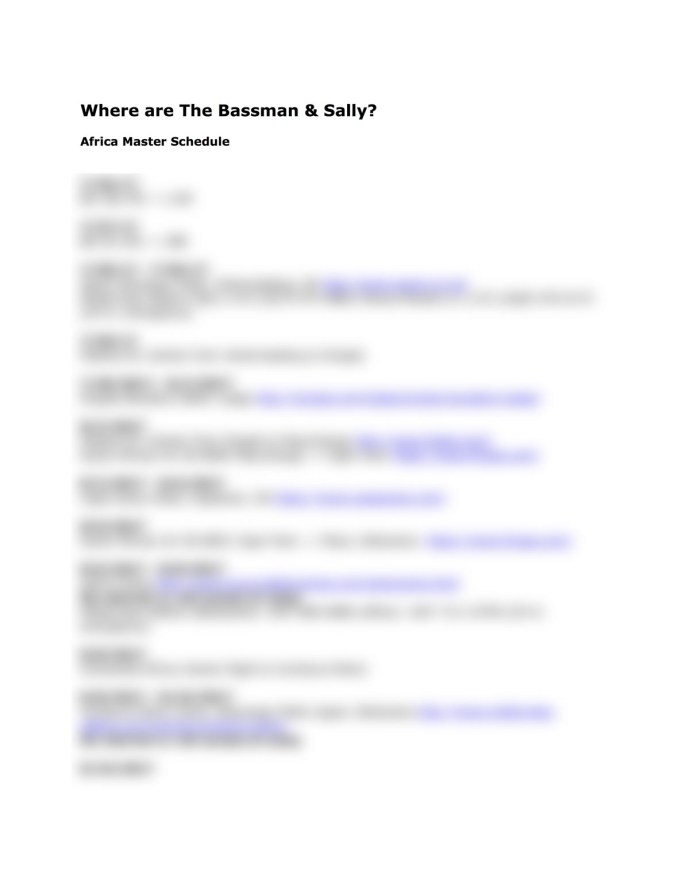
In any event, I have created a two page schedule of our flights and accomodations which I’ll leave with our kids before we go.  Not that I expect them to need it.  Unlike years past, this list doesn’t have phone numbers or addresses for our accomodations, nor the scheduled times for our flights.  Rather, I just give the web link for each and expect anyone who wants to get more information – and up-to-date information – will just hit the link.

Photographic gear for safari

Tuesday, July 11, T-15

Our upcoming trip to Africa was a birthday present to Sally from me: pick any place in the world you want to go, including a place that I’ve resisted in the past, and we will go there.   And I promise not to whine or complain.  After a bit of thought, she settled on an African Safari.   And I began planning for the photography gear I’d need to shoot (1) wild animals in the bush.

Here’s the thing about wild animal photography: the animals usually don’t cooperate.  They’re often far away, they move around unexpectedly, they hide in grass and brush, and they’re most active when the light is dim (dawn and dusk).  This drives you to want to have big heavy cameras that shoot fast and work well in low light, and big heavy lenses that have high magnification and work well in low light.  Every equipment decision therefore becomes a balancing act between how much weight you can bring and how much flexibility you want in the field.  Add to that the special requirements for an African safari: you travel on small airplanes with severe weight restrictions, you have limited (i.e. no) ability to repair or replace equipment that fails, and the dusty conditions mean you don’t want to be switching lenses while out and about.

I’ve never even owned the biggest and baddest cameras or lenses.   The most demanding thing I usually shoot from an equipment perspective is kids’ sports and shows.  I used to use medium sized equipment from Nikon (so-called “crop sensor”), but switched a few years ago to a class of camera called “micro 43” or m43, which uses a smaller sensor and therefore smaller lenses.  This enables one to save a lot of weight and space.   I estimate that my m43 kit, for similar capabilities, is about half the weight of my old Nikon kit.  And given the progress in digital camera technology, my current gear out-performs my old Nikon gear in most ways.   And the old stuff performed better than the photographer working the controls and was never the constraint on the quality of my images.

20170711 Camera Kits SGA10002

Cruise cameras and lenses: 4.25 lbs., May 2017

For our trip to Europe this year, I took four lenses that weighed about 2.5 lbs. and encompassed an 11x zoom range from pretty wide (9mm) to moderately long (100mm) (2).  That maximum magnification is woefully inadequate for safari.   Serious wildlife photographers like a magnification ratio at least 2 or 3 times greater, or 300mm.  And sadly, the weight of a lens grows faster than the focal length.   So where the 35-100mm zoom I took to Europe weighs 12 oz., the 40-150mm zoom I’m taking to Africa weighs 31 oz.   And the 100-400mm zoom I’m taking weighs 35 oz (3).

I mentioned that replace or repair is also not an option, so one needs to think about what you would do if some piece of equipment fails.  This stuff is pretty reliable, but it does fail.   I had an old lens actually fall apart in my hand last winter.   I also had the shutter on one of my cameras fail last winter.  The camera has been repaired, while the lens was not repairable.  So I have a strategy for what I would do if any piece of gear I’m bringing fails while we’re in the bush.

20170711 Camera Kits _1390085

Safari cameras and lenses: 8.2 lbs, July 2017

I’m taking four zoom lenses which have some overlap in range: 9-18, 12-35, 40-150 (convertible to 56-210), and 100-400. I’ll also take a fixed 25mm lens.  So:

– if the 9-18 fails, I use the 12-35 and loose the 9-11 range

– if the 12-35 fails, I use the 9-18 anf the 25mm, and loose the 19-24 and 26-35 ranges

– if the 40-150 fails, I use the 100-400 and loose the 40-99 range

– if the 100-400 fails, I put the adaptor on the 40-150 so I can have 56-210, and loose everything over 210.

In the cities, loosing the 12-35 would be the worst case, as I typically take about 2/3 of my “keeper” pictures with that lens.  On safari, loosing either of the long lenses would be a problem.  In any case, the solution would be to use the next shorter lens and crop the resulting pictures as needed.  Or to take different pictures more suitable to the lenses I have.  But hopefully, I won’t have any problems.

The camera backup is simpler: I’m taking two similar cameras, an Olympus OM-D E-M1 and an OM-D E-M1 Mark 2 (3).  Assuming both are working, I’ll use them both with different magnification lenses on each one while we’re driving around in the bush looking for animals, which solves another problem: changing lenses while driving is risky because it’s extremely dusty, and you don’t want to let dust get into the camera or lens.  But if one fails, I’ll have the other.

But other critical gear needs backup as well.  Cameras without batteries are paperweights, and one might use more than one battery in a day. So I will take four batteries for each camera (of course, they use different batteries).  And two chargers for each camera, as they could fail as well.

Finally, I need to plan for how to backup the most important thing, namely all the pictures I shoot (5).  They’re stored on little chips called SD cards, which are pretty reliable, but can fail.  Many serious photographers carry a laptop with them and copy the images into it each day as they travel, and review the images as they go.  I don’t own a laptop, and don’t want to deal with the weight of one, and don’t want to spend my valuable time on the trip reviewing thousands of pictures.  So I have a special device that will simply copy the contents of an SD card onto its own storage, and weighs only 12 oz. It also replaces the USB battery pack I usually travel with, so the net weight increase is only a few ounces.  And as with the other gear, I won’t be able to buy more SD cards in the bush if I fill them up.

And remember, the fact that the kit itself is so much larger and heavier means that the bag is much larger and heavier.  After counting all the stuff I need to bring – what’s listed above, batteries, chargers, tripod, etc. – the safari kit totals about 24 lbs. while the cruise kit was only about 7 lbs. (6)  I can only hope the pictures are 3.4 times as interesting …

—————-

(1) “Shoot” is the easiest term to use when you’re talking about making a photographic image of something.  Unfortunately, it’s also what you do with a gun.  Rest assured that we will not be using any guns on this trip – the only shooting that takes place will be with a camera.

(2) Focal lengths determine magnification, but differently for different classes of cameras.  Compared to old-school 35mm film cameras, an m43 camera requires half the length for equivalent magnification.  So my 35-100mm zoom on an m43 would need to be 70-200mm long on a film or “full frame” digital camera.   For comparison, most phone cameras are equivalent to about 15mm on my m43 cameras, but are actually 2.65mm on the iPhone 6S.

(3) The 100-400mm only weighs a bit more that the 40-150mm because is is the same physical diameter, and therefore works less well in low light situations.  A 400mm lens that had the same light-gathering capability as my 40-150 would probably weigh over 8 lbs.; Nikon’s version, which doesn’t even zoom, weighs 8.4 lbs. and costs $11,000.

(4) I don’t make up these names, I only report them.  The Mark 2 camera is a new improved version of the other.

(5) My professional career in IT started as a database administrator, which instilled in me a lifelong need to make backups of anything digital.  Of course, back in the film days, no one worried about backup – just how many rolls of film they could carry, and how to get them through airport security without being x-rayed. I’m carrying the equivalent of more than 400 rolls of film, not counting the backup copies.

(6) 7 lbs. for just the core kit – it totaled somewhat more than that.

Okay, I’ve been remiss

Monday, July 10, T-16

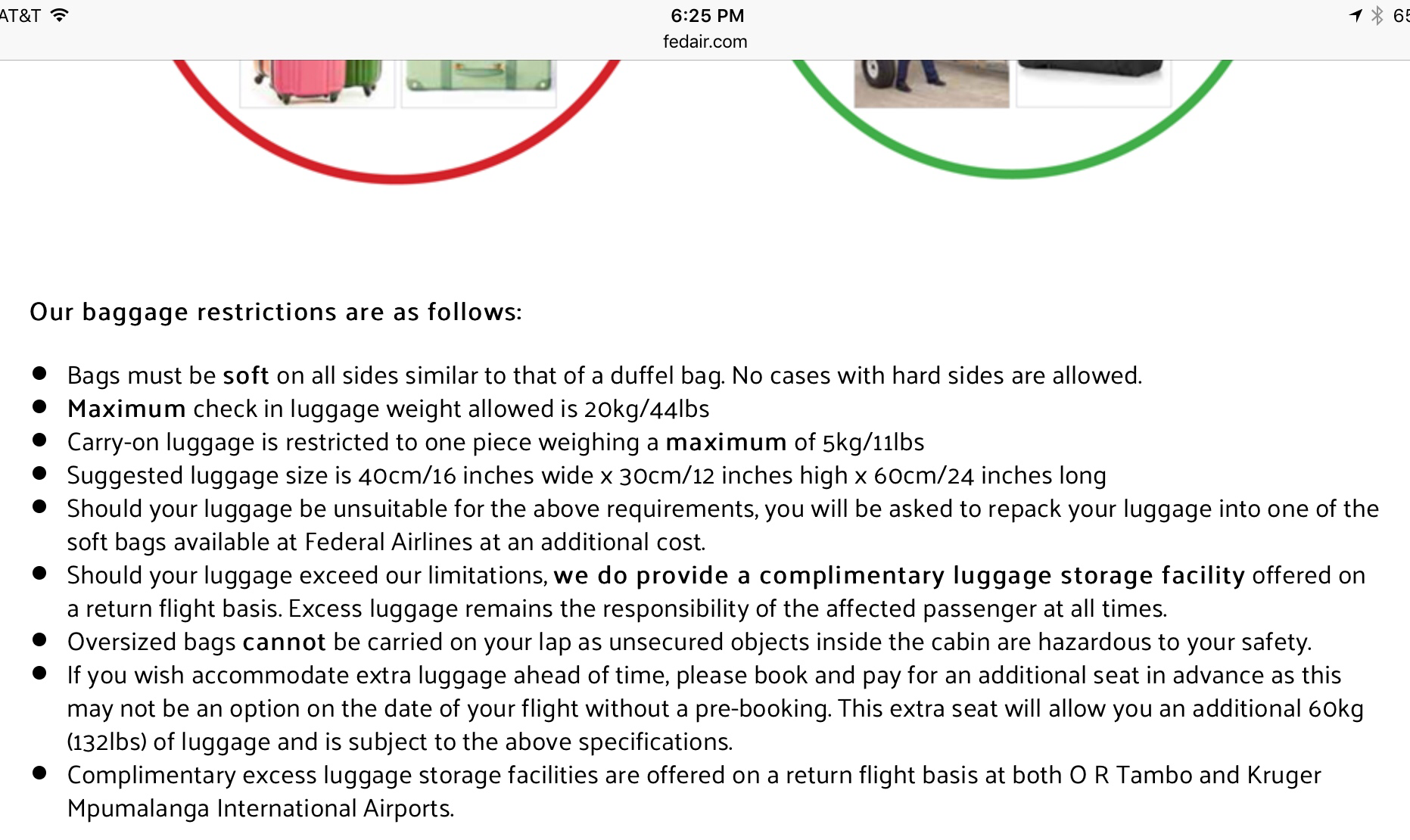
Sally pointed out this evening that I’ve haven’t been keeping you all up to date on my/our planning and packing adventures for our upcoming trip to Africa.  To recap the ground rules, which represent the most restrictive policies of the three scheduled and several charter airlines we are traveling with:

1. We are allowed a total of 44 lbs. of luggage for both cabin luggage and checked luggage.

2. Our luggage must be softsided and without wheels.  Maximum size is 24″ x 16″ x 12″ (Federal Airways).

3. We are allowed a single piece of cabin luggage not to exceed 8kg or 17.6 lbs., plus “1 small handbag or small laptop” (South African Airways), or a single piece up to 5kg or 11 lbs. (Federal Airways).

FedAir Baggage Policy, July 2017

4. We can carry no more than four spare lithium batteries in cabin baggage (British Airways), and (of course) cannot pack any in checked luggage.

5. The unscheduled charters are apparently both more and less flexible.  They do insist on soft luggage with no wheels, but apparently will accept whatever they can shove into the luggage compartment of the plane.

These restrictions pose a challenge to many travelers, but especially those carrying a fair amount of sensitive electronic equipment.  Like my camera kit.

Let’s start with the overall weight restrictions.  On our last trip, the cruise with Matteo and Zelda, my checked bag checked in at 38 lbs.  I had a carry-on backpack with my camera gear and other essentials, like meds, iPad/iPhone, etc. that weighed about 15 lbs.  for that trip, as the camera kit was very modest – some lenses, a backup (and small) backup body, and a bunch of batteries.  No tripod.  I did have a suit and dress shoes, etc.   So about 9 lbs. overweight (38 + 15 = 53 vs. 44) in total when compared to the safari, and also 4 lbs. over for the carry-on.

This Africa trip will require clothing for two environments: we’ll be in the city for eight days, and in camps/lodges in the bush for nine days.   The city clothing is normal sightseeing stuff: very casual during the day for sightseeing, and some nicer casual stuff for dinners in the evening.   The bush clothing is basically hiking clothes: neutral or earthtones so as to not scare the animals (1), warm layers as it’s winter in Southern Africa, hats to block the sun, sturdy hiking shoes or boots, etc.  Unlike the cruise, no need for a suit and tie, fancy dresses, high heels, etc.   We will have complimentary laundry during our time in the camps, but also need to deal with four days in a hotel in Cape Town.  So it’s a balancing act: bring enough stuff to last the one long city stay, or stuff that can be hand-washed in the room (2).

Then there’s the big elephant in the room, so to speak: my camera gear.  The kit for the cruise totaled 12 lbs., and more than 3 lbs. went in my checked bag.  But that trip, while interesting photographically, was not focused on photography, was with three other non-photographers, and was mostly to places I’d been recently.  So I knew in advance that the photography I did would be opportunistic and not involve a lot of setup for any shot.   In particular, no tripod and a minimal set of lenses.  Some days I didn’t even bring a camera bag out, just a camera, an extra lens, and an extra battery.

For this trip, the current estimate for the camera kit is 24 lbs. – a full 12 lbs. more than last time.  I’ll talk some more about this in a future post.  But this leaves me needing to find 23 lbs. to take out of the other stuff I brought on the cruise.  I already have the suit and it’s accessories, which is about 5 lbs.  The other big save is the checked bag itself.   As we’re required to use a soft bag for our checked luggage on this trip, we don’t need our lightweight Tumi rolling luggage at 12.5 lbs.  instead, we’ll each be using a duffle bag supplied by our travel agent which weighs about 2.2 lbs.  Those two alone save me 15 lbs.

Duffle and camera bag, July 2017

The usual way that travel experts say to save weight is to bring easy to wash clothing, and wash it each night.  For the items that I’m bringing multiples ofs (socks, underwear, t-shirts, etc.) I already do this.   It’s been years since I’ve traveled with more than about four days worth of clothing; instead, I drive Sally crazy by always leaving wet clothes hanging around our room (3).  This strategy is constrained by two factors:

– travel days, when your wet laundry may not have time to dry (I’ve never liked to pack wet clothes, plus they just weigh more wet and I already have a weight problem)

– the need for different stuff for different situations.

– The inability to obtain new stuff for most of the trip.

On this trip, we’re in cosmopolitan cities and the bush; we’re in warm weather (high of 82F and bright sun) and cold (low 40s pre-dawn while on a game drive in an open vehicle).  So we need everything from t-shirts to long underwear, insulated jackets, gloves and warm hats.

We’re also in safari camps/lodges for as much as 6 consecutive days, followed by two days in the small town of Victoria, Zimbabwe.  We really can’t count on being able to buy anything that we might have forgotten, lost or broken.  This includes, of course, meds and toiletries.  Given this, we’re both carrying at least a four weeks supply of all of these critical consumables.  While this may not sound like much, my daily meds in the weekly cases add up to about a pound for four weeks.

Anyway, I’ve gotten my non-photography/electronics gear including the duffle bag down to about 18 lbs. or so.  With the camera kit at around 24 lbs., I’m currently just two pounds under my limit assuming I haven’t forgotten anything, and I’m sure I’ve forgotten something(s).

————–

(1) One is universally advised to wear khaki-colored or other neutral colors while on game drives.   Yet I’ve been given to understand that many of the animals, including lions, are colorblind.  But maybe some can see colors.   In any event, we both have appropriately bland stuff.

(2) One could also pay for hotel laundry, but you’d spend less money discarding the soiled items and buying new ones.  I’m not particularly adverse to hand-washing myself, but Sally is less fond of it.

(3) It was no issue when I traveled alone for business, of course; then I didn’t care if I had wet stuff all over, and I was rarely in my hotel and awake.

OMG

The President just admitted that he obstructed justice by firing the guy leading the investigation into possible collusion between Drump associates and Russia, because of that investigation.  

From BuzzFeed:

“In an interview with NBC News on Thursday, President Trump blasted Comey for being a “showboat” and a “grandstander.” He also said he had directly asked Comey if he was the subject of an FBI probe.

In the same interview, Trump contradicted the official White House story that he fired Comey on the recommendation of the deputy attorney general, saying he made up his mind before receiving the memo. Trump also said he was thinking about the Russian investigation when he made his decision.”

You can’t make this stuff up

It’s really hard to believe.

The FBI (and the CIA, and the NSA) all say that Russia deliberately interfered with our Presidential election last year, to benefit Drump.  Drump’s not sure they did.  It could be China, it could be a fat guy on a bed somewhere, it could be fake news.  Anyway, he won by the biggest landslide ever.  Bigly.  No Russians required.

The FBI, under the leadership of James Comey, was running an investigation into whether members of the Drump campaign colluded with the Russians in that effort.

The FBI, last year, did an extensive investigation as to whether Hillary Clinton broke any laws with her stupid, idiotic and reckless private email server.  They concluded she did not.

Michael Flynn, who apparently lied repeatedly and probably broke several Federal law regarding working for Russia, was subpoenaed by the Senate committee trying to sort out this mess.  The FBI is also investigating him.

So in the last 24 hours or so, Drump did two interesting things:

– he fired Comey, the guy directing the investigation into Drump’s campaign, and perhaps Drump himself.  He claimed this was because Comey besmirched Hillary Clinton’s reputation.  Can you believe that logic?  He also made a point of thanking Comey for telling him three times that he was not under investigation.  What?

– he met with the Foreign Minister of Russia Sergey Lavrov,  and Ambassador to the US Sergey Kislyak (1).  Kislyak is one of the guys Flynn lied about talking to.  Drump did this at the request of his bro, Vlad Putin.  Both Obama and W refused to meet with the Foreign Minister.  But Drump did.

Can anyone doubt that Drump is either (a) being played by the Russians, or (b) is actively in bed with the Russians?

Choose your poison.  You’re dead in either case. 

————-

(1) Yes, they’re both named Sergey.  Not all Russians are.  But they are.  

Home

As always, it’s good to be home.  We had a little delay in the airport in Nice for a couple of mechanical problems, but we landed only a few minutes late.  And the Silver Muse Captain could take a lesson from our pilot, who came out to the gate area to explain to all of us exactly what was going on and apologize for the delay.  No such luck from Silversea.
20170503 Scott's iPhone Backup IMG_2435

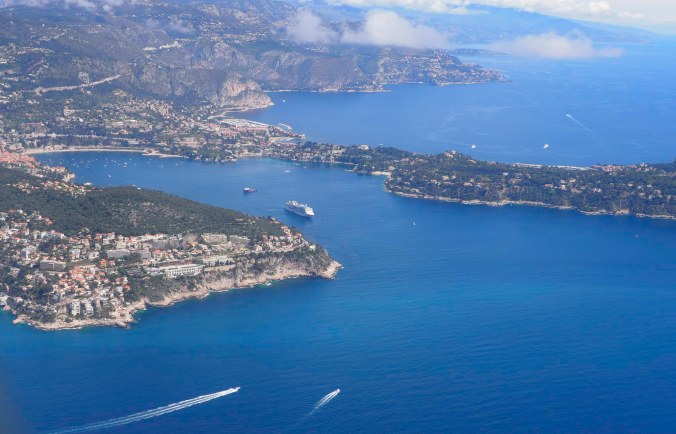
Silver Muse in Villefranche harbor, May 2017

Despite the well-documented problems we encountered on the Silver Muse, we had a good time.  It was nice spending an extended time with Zelda and Matteo.  It was nice not having to pack and unpack every couple of days, as we have on our last several trips.   It was nice to have extremely friendly and attentive staff who got to know what we liked over the two weeks we spent with them.  Our cabin, while not large by hotel standards, was extremely well designed (1), felt roomy enough, and had more storage than we needed.   It was cleaned each day before we came back from our activity, and looked eacvh day (except for our stuff) like no one had ever been in it before.  It had a remarkable number of electrical outlets, all accessible, in all the right places (2).
We booked five private guides, and they ranged from good to excellent.  We found Max the taxi driver on the street in Citivecchia, who made our day in Rome even better.  Keeping the theme of disappointment with Silversea, the ship’s Mt. Etna tour was very disappointing.
There were really three sets of problems with the cruise.
  1. We really were beta testing their ship.  And we didn’t even get a discount.  From the mechanical issues like lights falling off the wall to the really stupid way they mangled the dress code and restaurant reservation system, we suffered through all of the growing pains of a brand new operation.  Presumably these will be improved in due course.
  2. The tender situation went beyond simply uncomfortable to a safety issue. On more than one ride I was on, passengers were bouncing around and could have easily been injured from a fall or hitting the wall of the boat (and yes, they were all seated).  Passengers were bounced in the waves for extended periods while the crew tried to figure out how to deal with conditions that just didn’t seem that unusual to us, and which the other ships we encountered seem to handle just fine.  As gracious and competent most of the crew was, the tender crews seemed like the B team.
  3. The worst part was the food situation and their ability to deal with Sally’s garlic intolerance.  The last time we were on a Silversea ship, the restaurant staff had it all figured out after 24 hours.  They made it easy for Sally, with the head of the restaurants finding her each day to plan for her dinner the following night.   That just never happened here – the head of restaurants was useless.  Instead Sally had to find someone each evening, often by going to the next evening’s restaurant and speaking to the head guy there.   They then compounded the problem by either sometimes saying they lost the order, or not knowing if the dish they put in front of her was actually garlic-free.   You can make her sick, people!  This is not a matter of taste, this is a matter of health.  I shudder to think about the consequences if they were dealing with a life-threatening allergy such as nuts or eggs.  The result of all of this was that a part of the cruise that should have been relaxing and enjoyable turned into a daily ordeal.
But I hate to end on a downer.  The picture above shows the beautiful Villefranche bay, where the Silver Muse is waiting for its next load of victims passengers.  Because cruise ships never dock in Nice (3).
20170503 Scott's iPhone Backup IMG_2446

Warm nuts and a Gin & Tonic, Ma7 2017

And oh yeah, I got warm nuts on the flight home.  I ate them; they weren’t so warm, or so bad when washed down with a gin & tonic.

(1) That’s if you ignore the lights falling off the wall, the bathroom door that wouldn’t close properly and the heat that took almost two weeks to fix.
(2) There were an array of outlets along the desk/dressing table area, with US, European and USB sockets to accommodate everyone.   Strangely, there were outlets by one night table but not the other (mine).  A minor problem.
(3) I know that’s snarky, but I can’t help myself.

Firenze

Our visit to Florence was on Monday.  I’m only getting to it now because we’ve actually been very busy each day, what with sightseeing and the thrill park rides that they called tenders and such.   And I felt I needed to write about the tender insanity from yesterday and today.
20170501 Scott's iPhone Backup IMG_0106.JPG

Inspecting rental car for damage, May 2017

Our plan was the same as it was for our last cruise visit to Florence: rent a car in Livorno, the actual port, and drive the hour and a quarter to Florence for the day.   I understand some people don’t especially like driving, and specifically don’t like driving in foreign countries where the signs are difficult to interpret, and where the driving customs are different than they are used to.   But it’s never bothered me, even back in the dark ages before GPS, and even in countries where you drive on the left .  With a GPS, right side driving and highway signs written in the Latin alphabet, Italy is pretty easy for me.  So I arranged for a car, and went down to the dock at 8:00 to complete the rental.
The first problem was that our Visa card had been hacked last week (1).  While Chase agreed to let us use it for the remainder of our vacation as long as we physically used the card for each transaction with a swipe or chip reader, the car rental was a manual entry transaction and so it wouldn’t work.  So I pulled out my AmEx card and gave it to the guy.  It was rejected.  I went upstairs and got our other AmEx card from Sally.  Also rejected.  So I called Matteo, and he came down and we used his Visa to pay for the car (2).  The rental guy was exceedingly nice and all, but this took an annoyingly long 50 minutes.
Anyway, we all finished breakfast, loaded into the car, and drove to Florence.  At the last minute, Sally went back upstairs to get an umbrella, although the skies were sunny (rain was forecast for early evening).

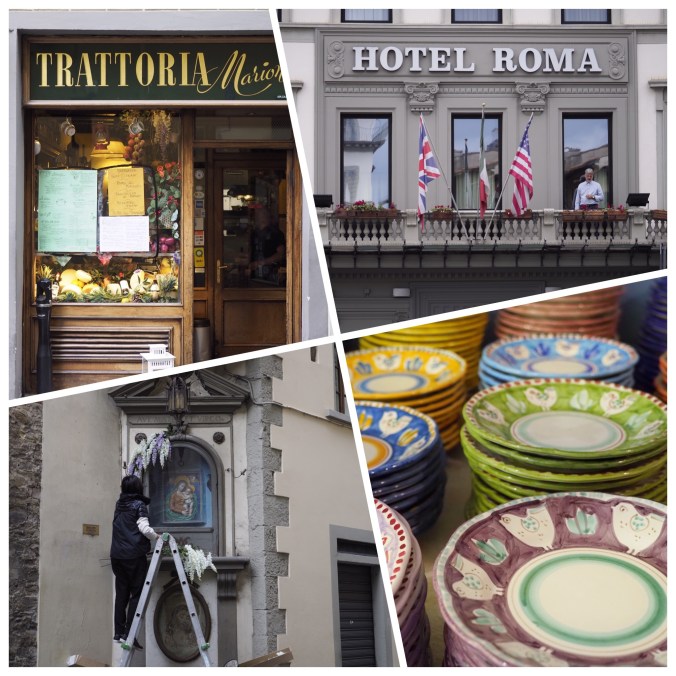
Florence scenes, May 2017

Our first objective in Florence was the Ponte Vecchio, a famous bridge across the Arno River which is lined with jewelry stores.  Zelda had in mind to buy herself an anniversary present.  So we walked there from the parking garage and were met with a horde of people.  Turns out this is a three-day holiday weekend, with May Day on Monday.   So every Italian was traveling, touring and visiting places.  Like Florence (and Rome).
On the walk over we had passed a pottery store that carried the same handmade dishes that Sally had bought years ago on the Amalfi Coast.  We all (3) looked inside, and Zelda wound up buying a few pieces to carry home.  Sally did not buy anything.
Zelda had less luck shopping on the Ponte Vecchio, so we all just went for lunch.  By this time it was starting to drizzle, so Sally was very happy to have her umbrella.   Being a tough guy, I had nothing but my hat.  Since it wasn’t pouring, we decided to walk over and see the Duomo, and perhaps go inside if the line wasn’t too long.
20170501 Scott's iPhone Backup IMG_2442.JPG

Duomo in the rain, May 2017

The line was too long.
From the front of the Duomo, the line snaked all the way down the side, and I couldn’t see where it ended.   So we looked, I took a picture, and we walked back to the car in the rain.
This day encapsulates what’s wrong with cruise-ship sightseeing.  We drove almost three hours to spend about three hours in town, including lunch.  In the rain.  If we were staying in Florence for a couple of days, we could have adjusted our sightseeing plans and worked around the rain.  We also could have had significantly more time to explore, or returned to our room to dress more appropriately for the light rain.  Instead we got the Readers’ Digest version of Florence: so condensed it actually misses the point.
Just my opinion, of course.  YMMV.
The ride home was uneventful especially as the skies cleared and the sun came out as we approached Livorno.

(1) Another hour of my life spent dealing with this and taken away from my vacation.
(2) See how I got Matteo to pay for the car?  And he felt good about helping me out!  Just like Huck Finn …
(3) I looked inside for a moment, then went outside and took a few pictures.

Tender tragedy

No one was hurt in the making of this episode of “As the tender turns”.  

I previously gave you some details about the the tender fiascos as we bounced around trying to get into and out of the ship in some of the ports.   Actually, in all of the ports where we tendered.   After leaving the last one, Sorrento, pretty much everyone on the ship was relieved that at least we we now going to be tender-free for the last three stops: Rome, Florence and our disembarkation point, Villefranche. Do you see a cruise ship dock here?, May 2017

Let me briefly talk about Villefranche. When we booked this cruise, it was advertised as Monte Carlo to Nice.   Then a couple of weeks before the cruise, we got a note from Silversea that the cruise had been changed and would now end in Villefranche.  This lead to some consternation, as we had booked flights home from Nice airport.   So I looked at a map and was relieved to find that Villefranche is basically a suburb of Nice, a few miles away, along the coast.   So this was an inconvenience, as we would have to somehow get from Villefranche to Nice to explore, but not that big a deal.  

It turns out the opening bid is that it is an €80 deal, as the standard taxi fare between the two towns is €10/person each way.

Then is got more annoying when we all found out that we would have to tender at Villefranche, as there is no cruise ship-capable dock there.   And so we would need to use the tenders to get in and out of town.  And worse, we would need to use the tenders to disembark with all of our carry-on luggage.  That reduces the number of people who can fit in each tender, and elongates the loading and unloading process.  So we were even more annoyed that they changed to final port from Nice to Villefranche for unknown reasons.

But wait, there’s more!

We were never going to dock at Nice!  Turns out that large cruise ships like ours never dock in Nice, but always Villefranche. The port area in Nice can’t accommodate large ships, and there’s no suitable anchorage offshore.  Since it’s difficult to believe that Silversea just found this out, they not only lied about it to the world in the first place, but then lied and said it was a change in their notice to us shortly before the cruise.  Simply unbelievable.  

But wait, there’s more!

Late Tuesday morning we tendered into Villefranche on another bumpy ride.   We spent a while sitting offshore on the tender as we waited for the tender from the Silversea Silver Whisper, which was also in port and sharing our dock, unload and load.  All the while, bounce-bounce-bounce.   We finally got in, and took a cab to Nice.

So French, May 2017
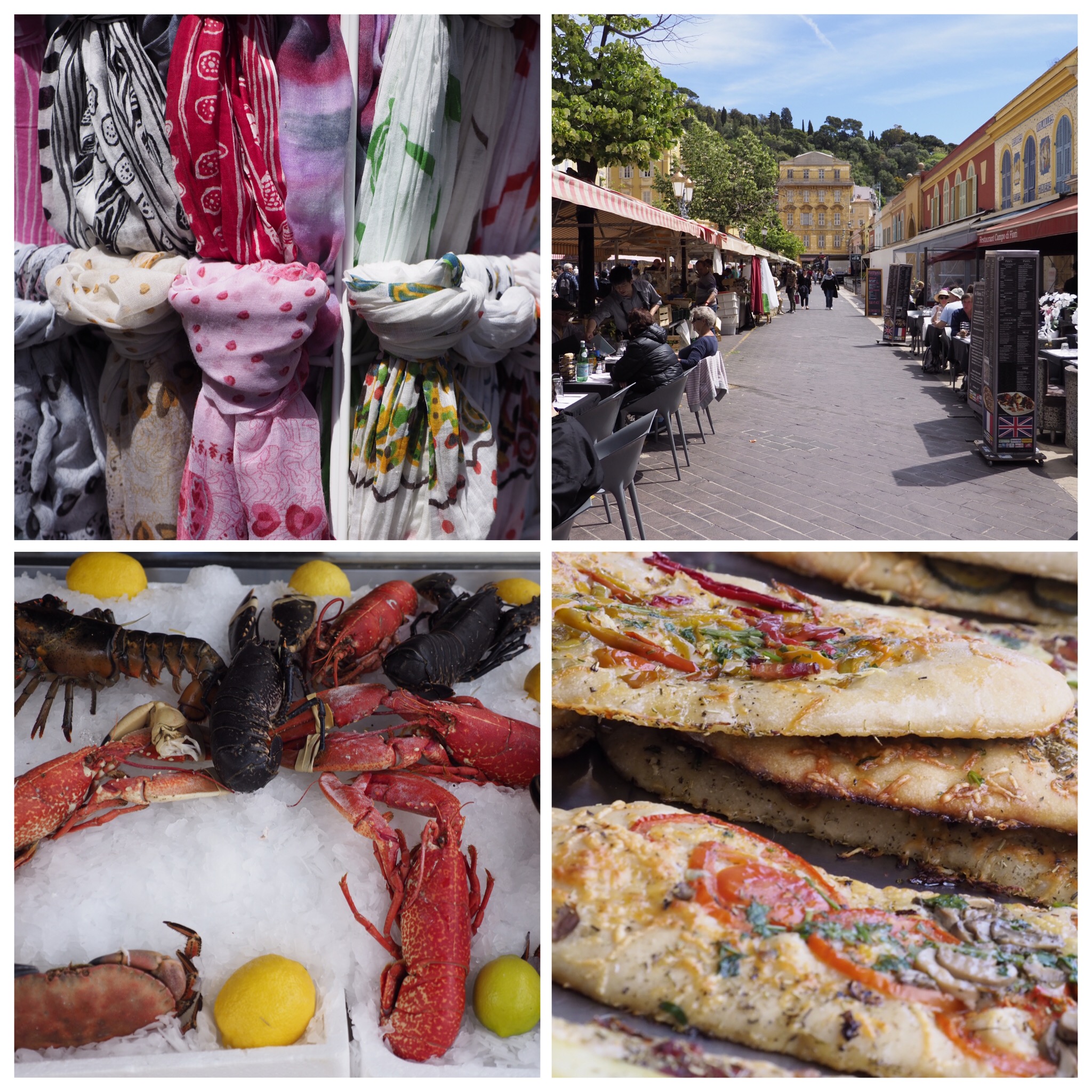
Nice market street, May 2017

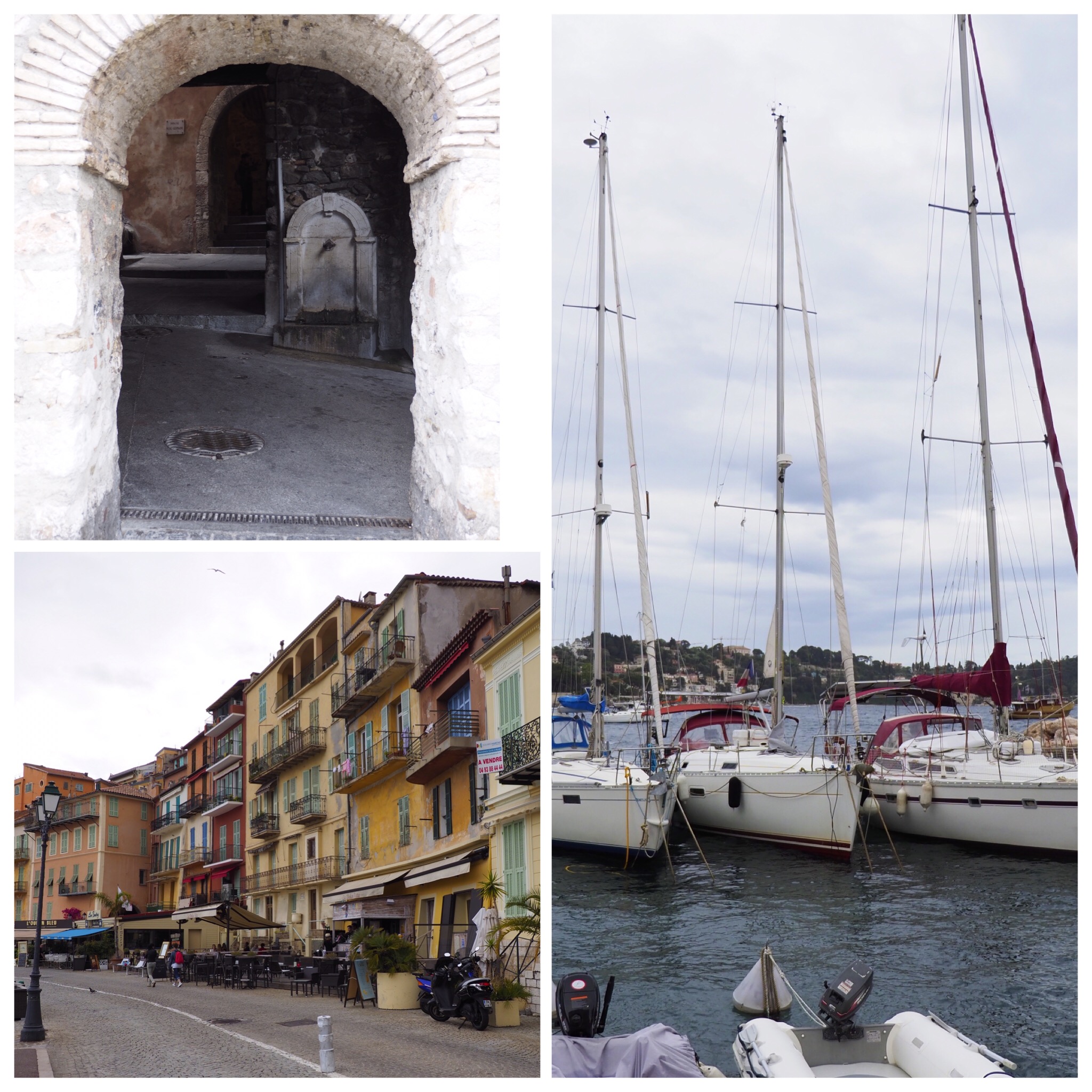
After visiting Nice, Sally decided to go back to the ship while Zelda, Matteo and I went to wander around Villefranche.   It’s a very small town, similar in size to Amalfi, and built up the side of the hill.  

Picturesque Villefranche, May 2017

About 45 minutes later I went down to the dock to tender back and found Sally and Zelda waiting for the tender.  Seems like the Silver Muse tenders were not capable of navigating the somewhat rough waters in the bay.  Meanwhile, the Silver Whisper and the Royal Caribbean ship in the harbor were not having any problems, with their tenders coming and going while our folks waited.  

The Captain and Gilligan must be running this operation, May 2017

Finally a Silver Muse tender motored in and we all watched while the driver lost control of the boat, with the tail drifting out from the dock and hitting a party boat docked along side, and then making a 10-point turn to turn the boat around with the bow facing out.   We all watched with sick feeling in our stomach, because this was the dopey crew that was going to take us back in these rough seas to our ship.  But we all borded – this boat was pretty full because it had been over an hour since the last one – and set out.   

Sure enough, our ride out was very bouncy and our approach to the Silver Muse once again filled with drama.  We bounced off the side of the Silver Muse several times, then pulled away and waited while they respositioned the larger ship to shield us from the wind and waves a bit.  But we all finally got on board.

Unfortunately for some people who got on board, they were actually passengers on the Silver Whisper!  The incompetent shore crew didn’t properly check their ID cards before they boarded the tender.  So they all had to get back on the tender and be taken somewhere else – to the shore or directly to the other ship, I don’t know.   We’re lucky it wasn’t some person with nefarious purpose who slipped past the non-security, but I feel bad for those passengers.

I later heard that the reason we had to wait so long was that the previous tender had lost one of its two engines and the driver lost control of it even more, smashing into the Silver Muse so hard that a windshield cracked and it had to be taken out of service.

But wait, there’s more!

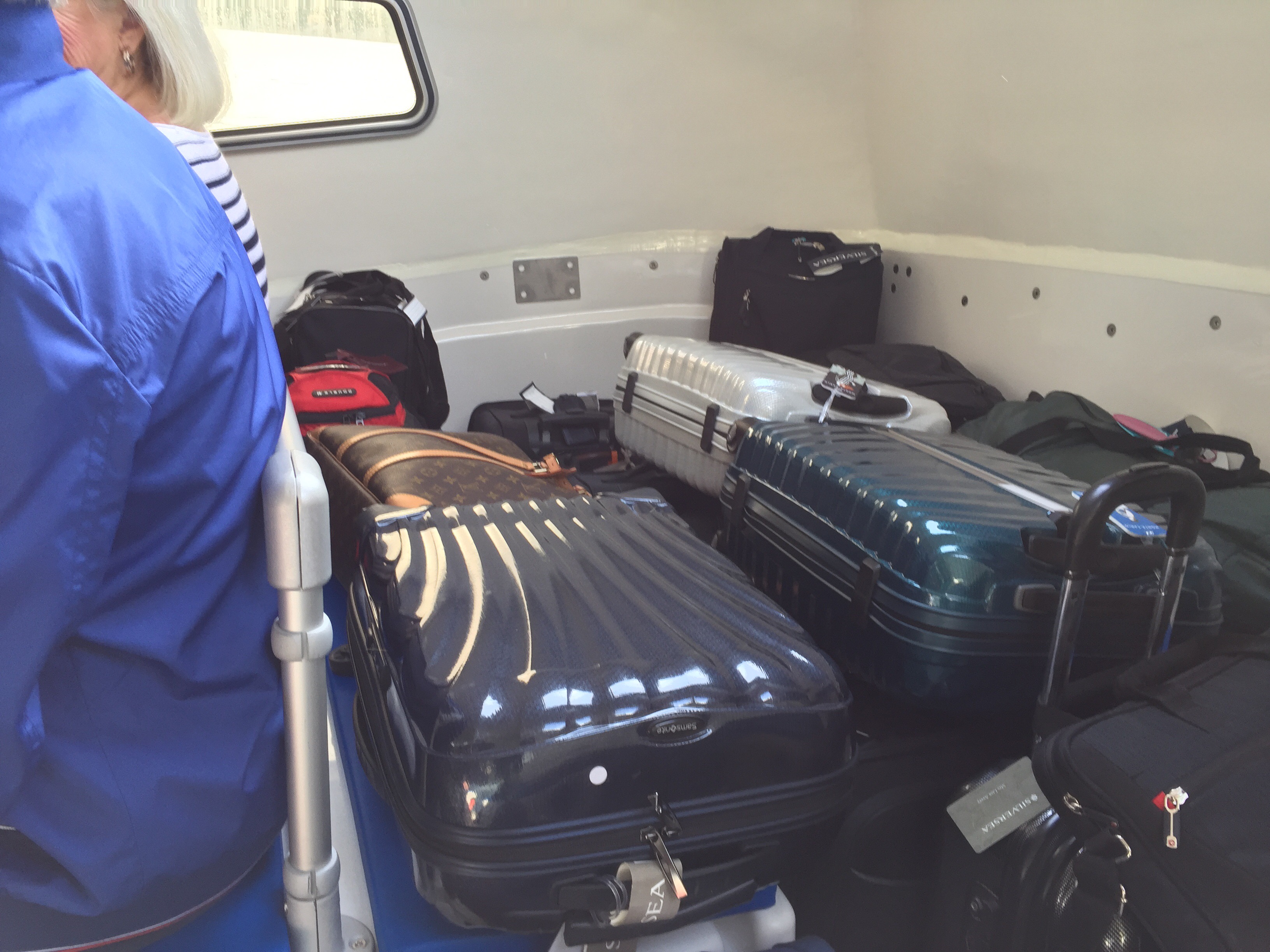
Hand luggage in the tender, May 2017

This morning we had arranged for our airport transfer from Villefranche at 9:30.  Since we had to tender in to shore, we went downstairs at a few minutes before 9 to account for the tender loading and transfer time.   There we and about 50 others waited in line for 25 minutes before loading.  From there, it was pretty smooth – the ride over was fine, we unloaded fine and found our car.  

Waiting on line, May 2017

The car, btw, was arranged through Silversea at 4x the going rate for an airport taxi.  That’s because the ship locks up all the taxis in town and makes you deal through them.  So $365 for a 30 minute ride.  

I really have the feeling that when they were staffing the new Silver Muse (remember, we are on the maiden voyage), all of the other ships got to protect their best players and only exposed the weaker performers to the expansion draft.   It certainly seems that way for the tender operation.  We do think that the front line staff in the restaurants are mostly pretty great.  Not so much the top management in the restaurants.   Our butler, who is an exceedingly nice person and eager to please, needed a bit of training from us to perform properly.