The reason we drove to this area was to explore the Colca Canyon. This is an enormous canyon in the Andes, about 43 miles long and ranging from 3,300 to 6,600 feet deep – perhaps deeper than the Grand Canyon, but not as long. Of particular interest was the opportunity to get a closer up view of Andean condors that live in some areas of the canyon.
I’ve never had much luck at getting pictures of birds in flight, but these are very large – wingspans range as large as 7 – 9 feet. The prime viewing point, “Cruz del Condor” is 3,900’ above the canyon floor. The condors fly on the air currents that rise up, and they go high above where one stands. When we were there,perhaps 50 people were hoping for a look at the birds, and they were not disappointed.
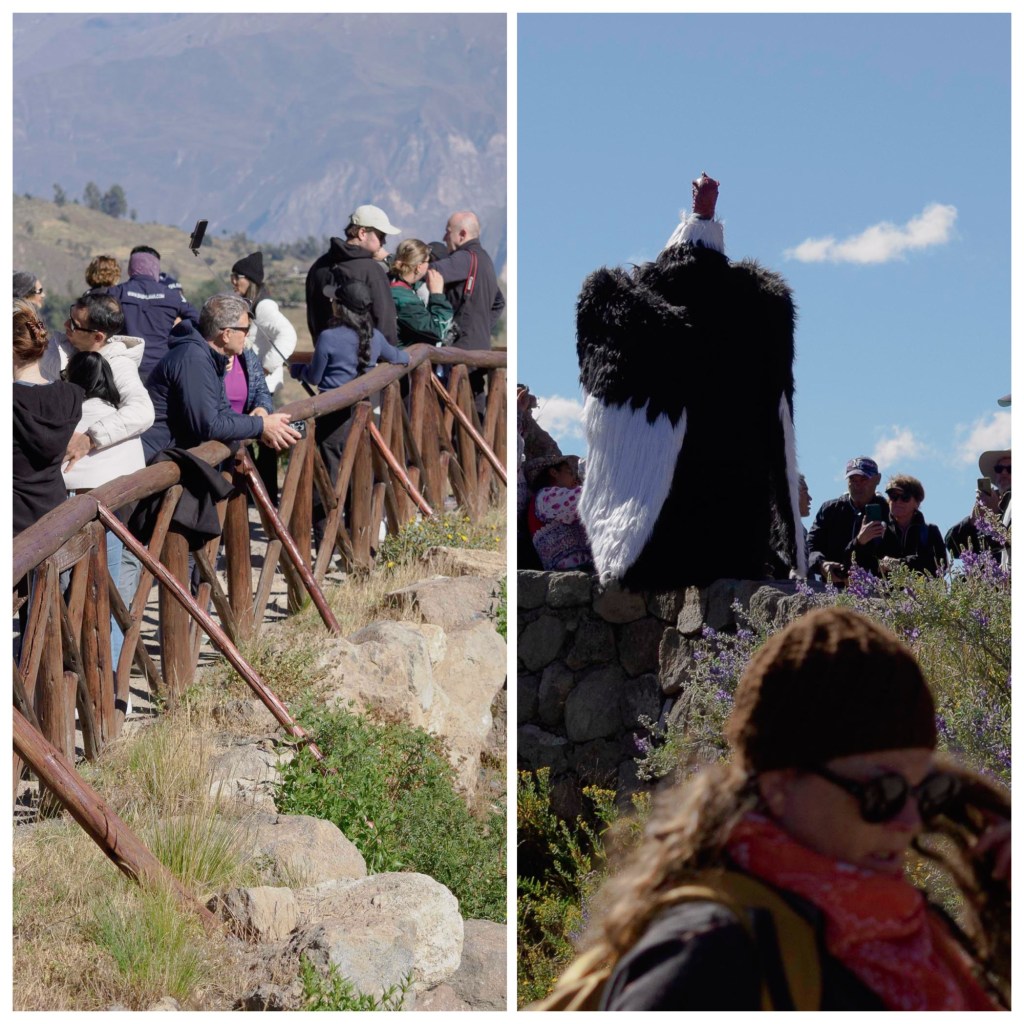
Because the birds live in the canyon and we were standing at the top of the wall, it’s a rare opportunity to see the upper portion of the bird in flight – usually, you can only see the underside as they fly by.
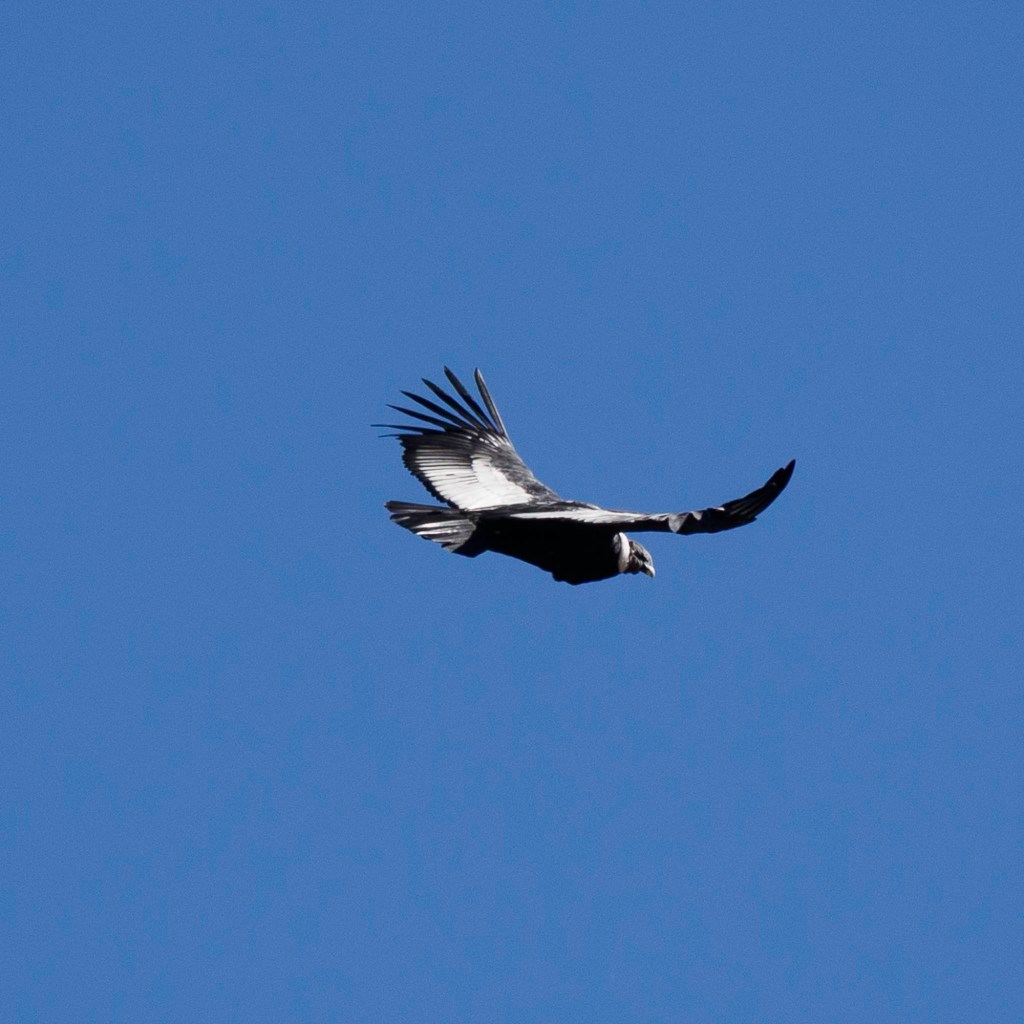
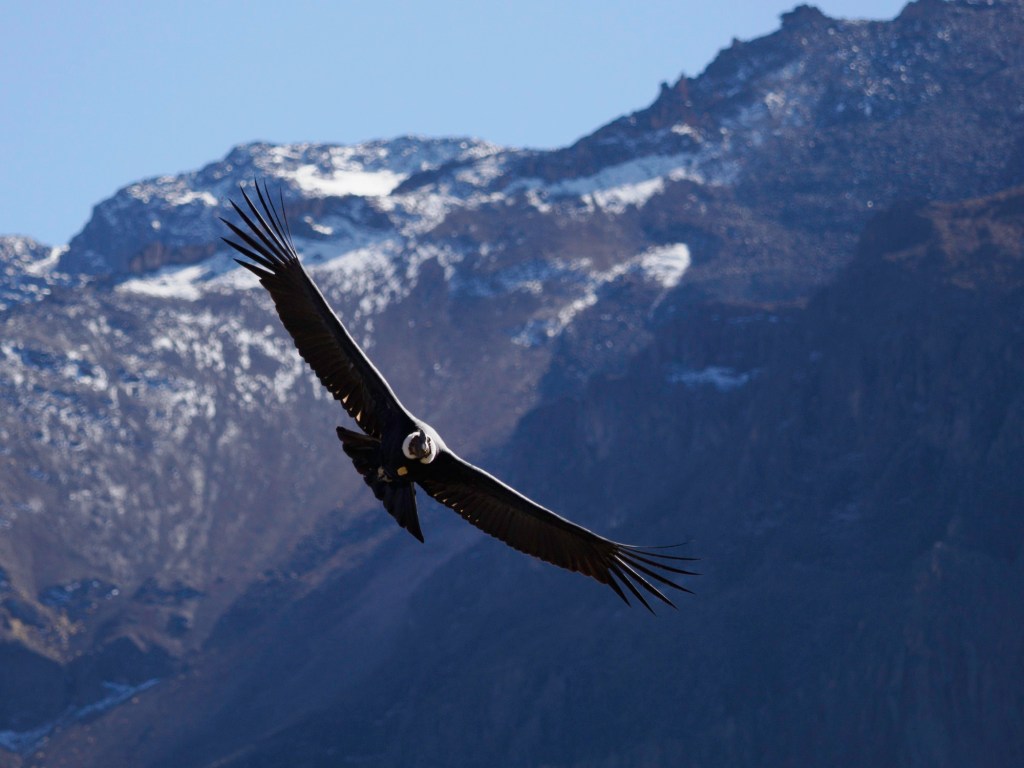
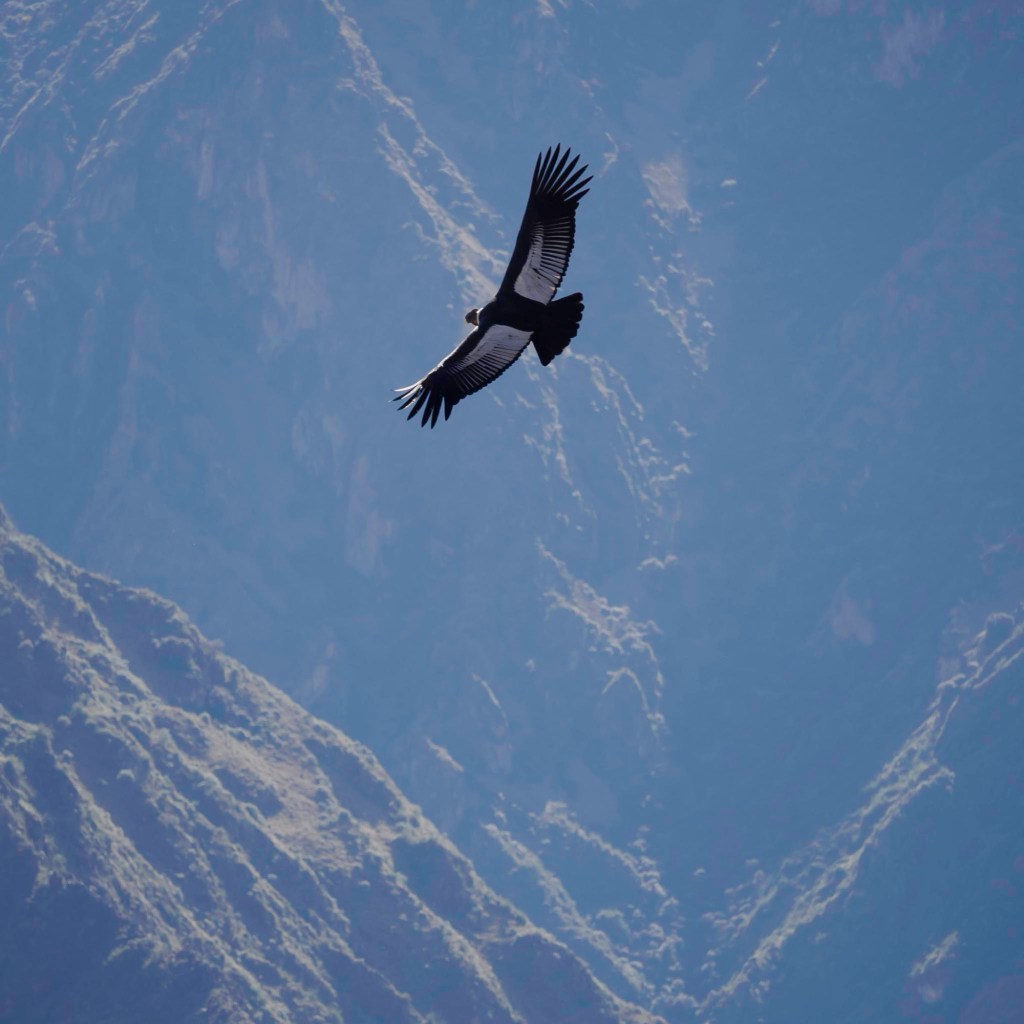
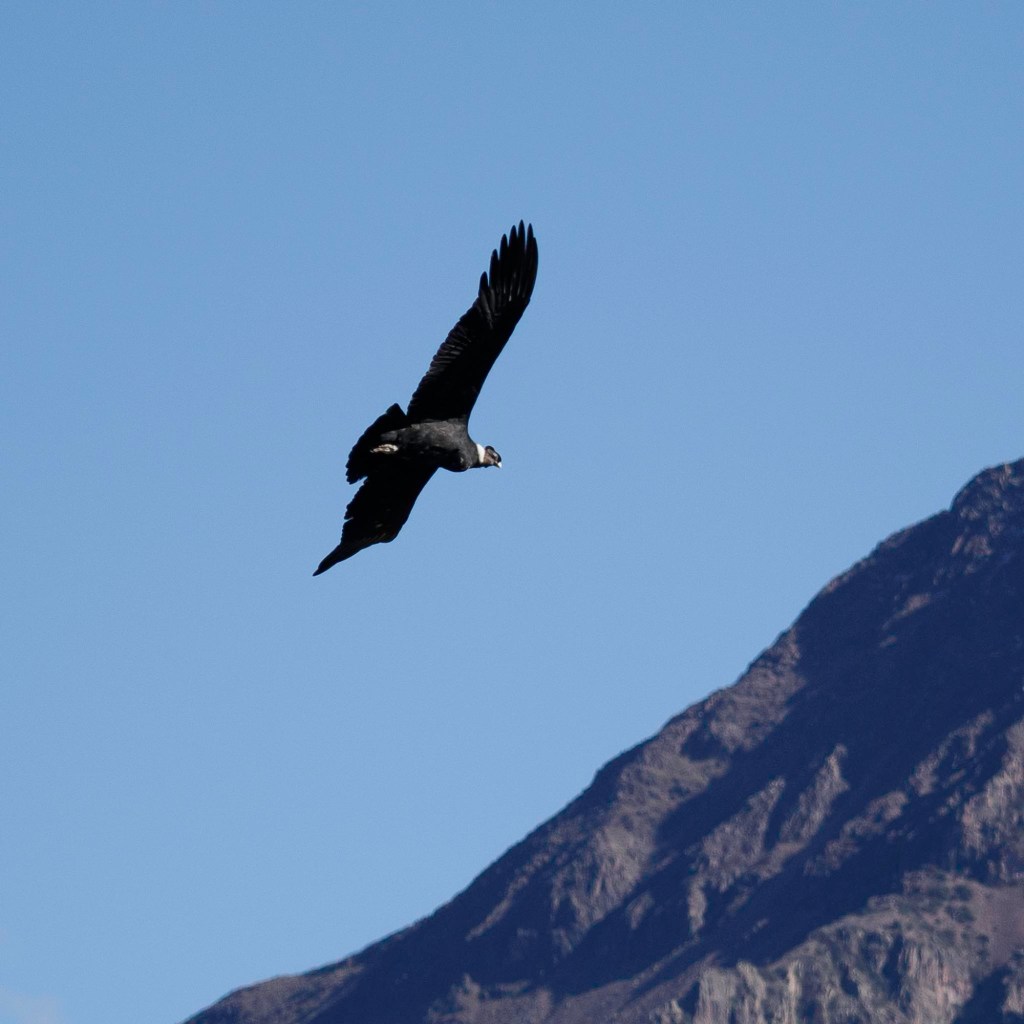
Capturing birds in flight might be the most expensive photographic genre for hobbyists – you can easily spend $10,000 or more on a single lens with enough magnification and resolving power to capture the fine feathered detail on a relatively small bird that’s far away. I had an $800 lens I bought for this trip with less than a third the magnification enthusiasts might like, and adequate but not outstanding resolution at its maximum extent. I was saved by how relatively close the birds are, and how big they are.
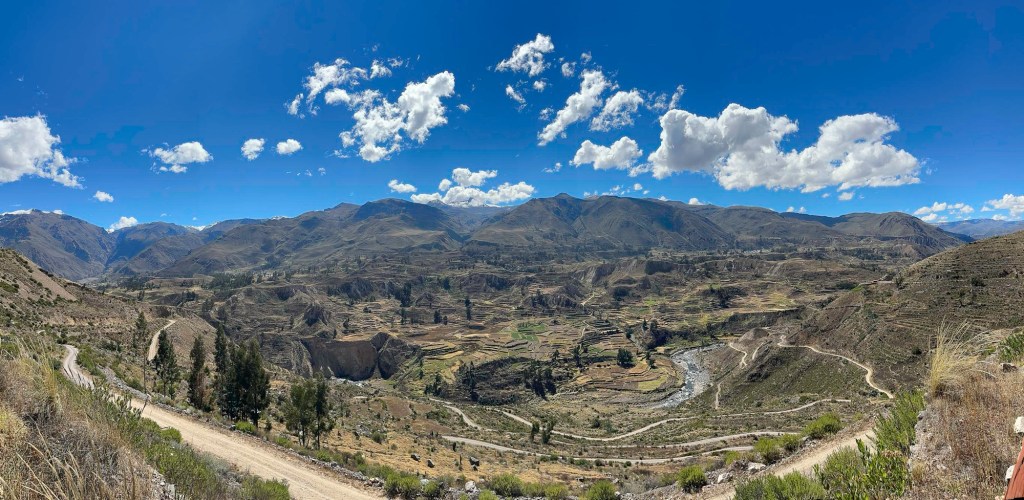
We stopped a few times as we drove through the canyon; the landscape was impressive. The Incas and their predecessors had lived here hundreds of years before the Spanish arrived, and many still do. You can see the terraced farms that they still maintain. There are trails that run through and past the farms – the hikers consider them a challenge, the farmers consider them the way they go to work.
That evening, Sally & I shared another pizza at the hotel. While we were waiting, we got invited to a Welcome Guest cocktail hour, so drinks were on them.

