Friday, August 8: Touring the Cape

Every touristy place has a set of “must see” sights and activities. For Cape Town, Table Mountain is one of these – and we covered that yesterday. Another is a tour of the Cape, which is the peninsula that extends south 35 miles from Cape Town itself to the Cape of Good Hope and Cape Point. The vast majority of the Cape is included in Table Mountain National Park.

We took this tour with a guide eight years ago during our first trip. Abs and Trey, who visited Cape Town for a wedding before they were even married, did the tour on their own in a rental car. But now we did it with their three children along.

Maiden’s Cove, August 2025

The first stop was a Maiden’s Cove, a bay ringed by some rock formations which the kids had some fun with. We took a bunch of pictures and then moved on.

Nic, our driver, was doing a great job both explaining what we were looking at and entertaining everyone. He looked like someone I knew, and I struggled to place him. Then it hit me and I looked back at some old pictures.
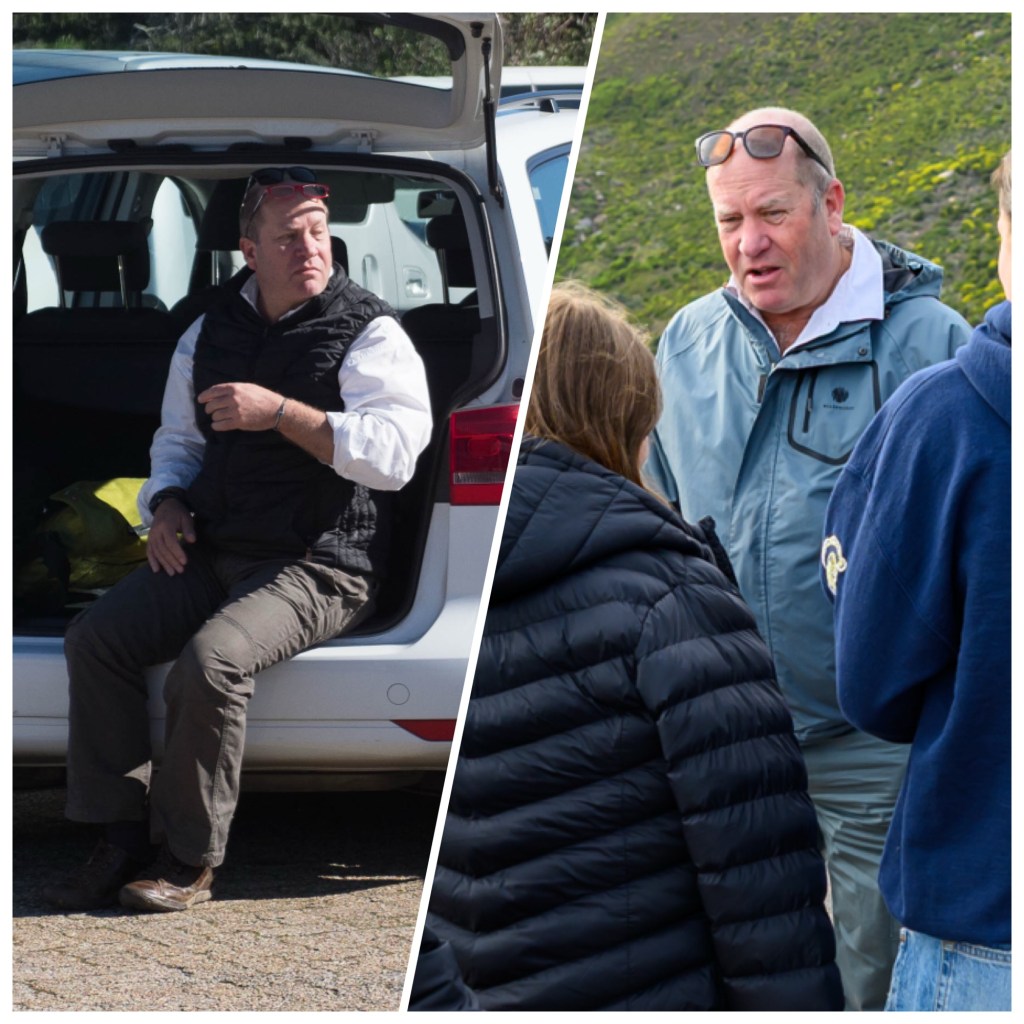
Nic, August 2017 and August 2025

Nic was the same guide that took Sally and me on the Cape Tour during our first trip to South Africa in 2017! This is the kind of coincidence that’s hard to imagine. We used different travel agents, who booked through different local outfitters, and we wound up with the same guy! When I showed him the 2017 picture, he was flabbergasted as well.

Penguins and the Bassman, August 2025 (photo of Bassman by Squeakers)

The next stop was one that the kids, and the adults, were especially looking forward to. Near Simon’s Town on the east side of the peninsula there is a colony of African penguins. African penguins mostly live on islands off the southern coast of Africa, with this colony near Simon’s Town being the only mainland example. The penguins put on a show for visitors, waddling around, jumping in the ocean, nesting and caring for their young. There is a boardwalk with a viewing area that you are restricted to.

Cape of Good Hope from Cape Point; Cape Point lighthouse, August 2025

From there we headed to the furthest point south we would reach, Cape Point. The Cape of Good Hope, which is a mile or so west of Cape Point, is often thought of at the dividing line between the Indian and Atlantic Oceans and is slightly south of Cape Point (1). But Cape Point is the tourist stop, due to the dramatic ridge that towers over the ocean, and the funicular that one can take to the top. You can also walk, which everyone but Sally and I did – we opted to ride.
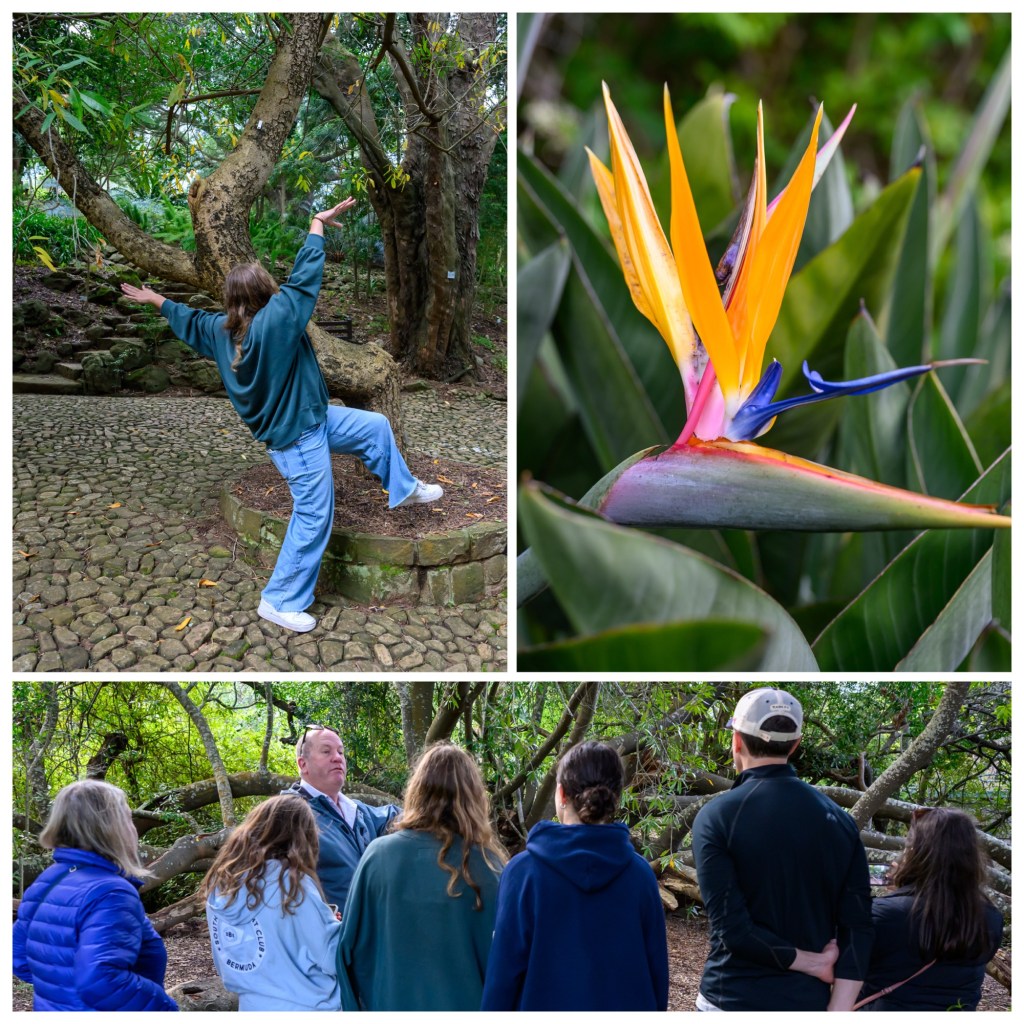
Bassgirl showing her inner tree, August 2025

Our last stop (after from a tasty lunch) was at the Kirstenbosch National Botanical Garden. Nic lead us on a tour and explained what we were looking at; that’s much more useful than us just wandering around and wondering what everything was.

Dinner was at a wonderful steak house called Bovine. The food was excellent. Tomorrow we leave at 8:30 to catch a flight up north towards our first safari day.


(1) Neither is the southern-most point of Africa; that is Cape Agulhas, located about 93 miles east of the others.
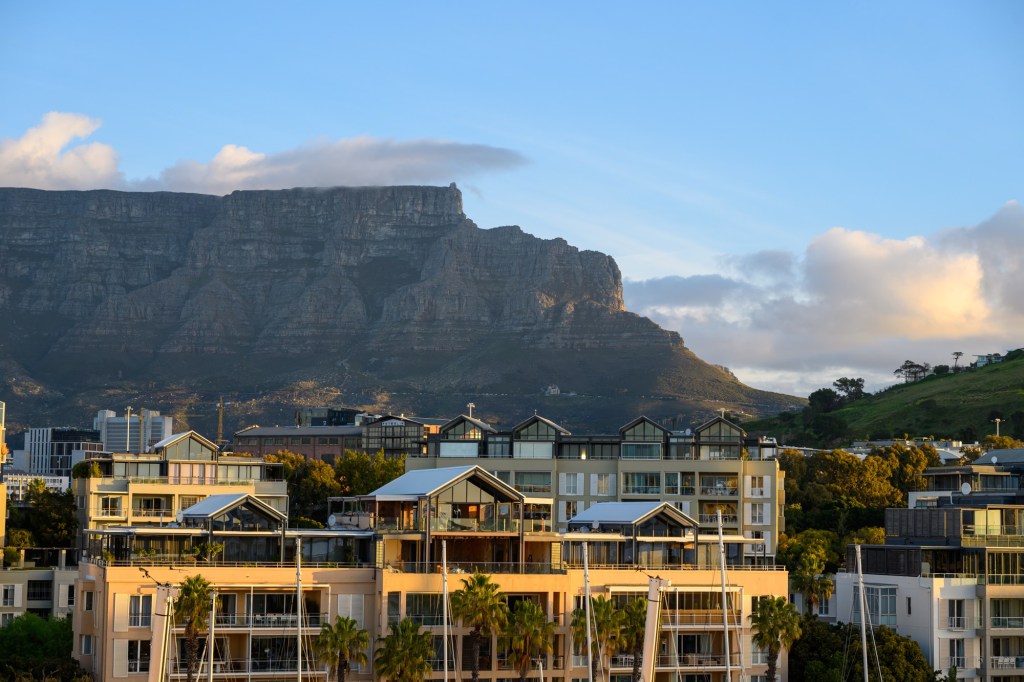
Thursday, August 7: Free day in Cape Town

We’re staying at the Cape Grace for three nights. Today is the first full day, and we made some plans to fill the day. But before that, let me give you the obligatory review of our accommodations.

We booked three rooms: one for Sally and Me, one for Abs & Trey, and one for the three youngins. All are equal (1), but our room is more equal than the others.
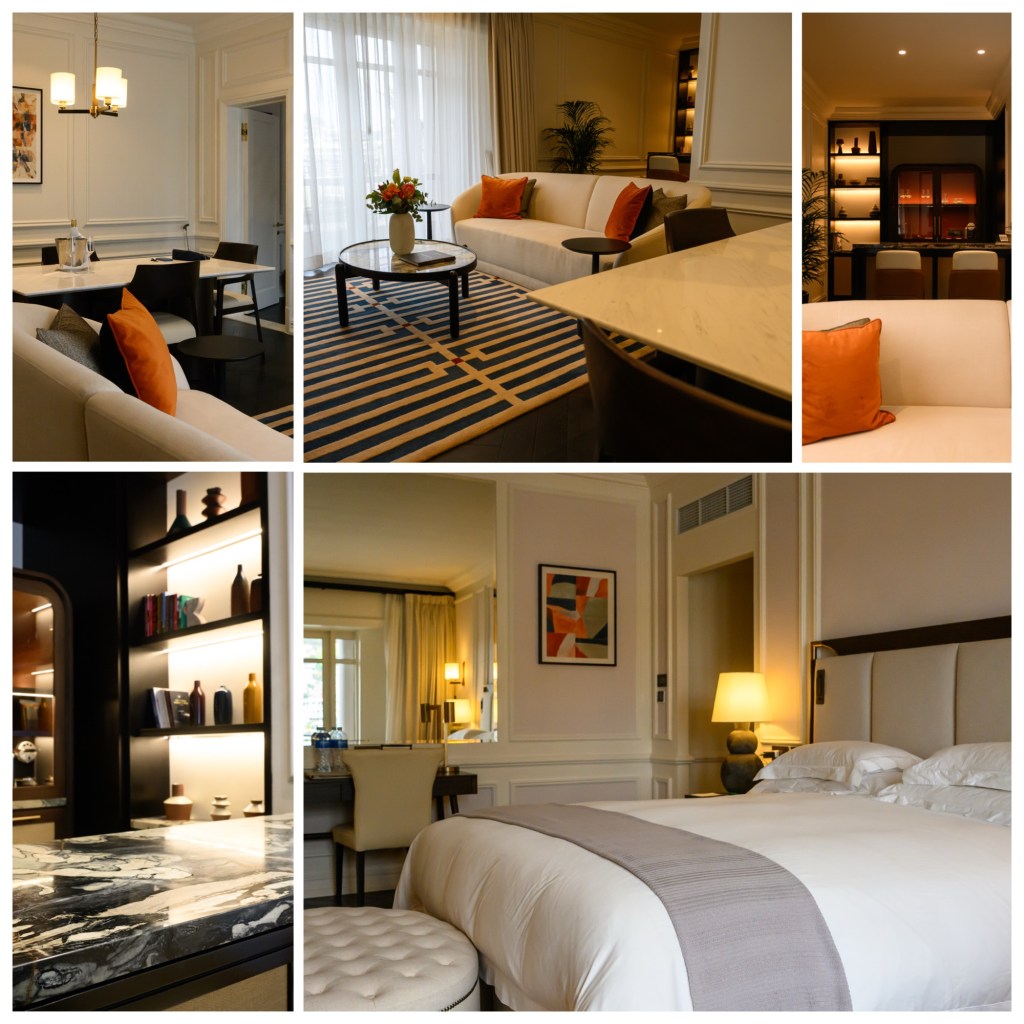
Cape Grace Hotel Room 416, August 2025

Our room consists of the following areas:

  • A large bathroom/closet/vanity area
  • A large bedroom with two club chairs
  • A large living room with a couch and dining table with four chairs
  • A small bar area off the living room

So, a large suite. This was an upgrade; I don’t know how Sally manages to get us upgraded perhaps 50% of the time.

The other two rooms didn’t have the bar area and were smaller, but still plush with separate bed and living rooms. And also upgrades.

The rough plan for the day was Table Mountain in the morning, and wandering around the V&A Harbor area in the afternoon. Interspersed with appropriate meals and snacks.

Table Mountain is a must-see Cape Town sight, written up in all of the guidebooks. There are three ways to enjoy Table Mountain:

Table Mountain yesterday, August 2025
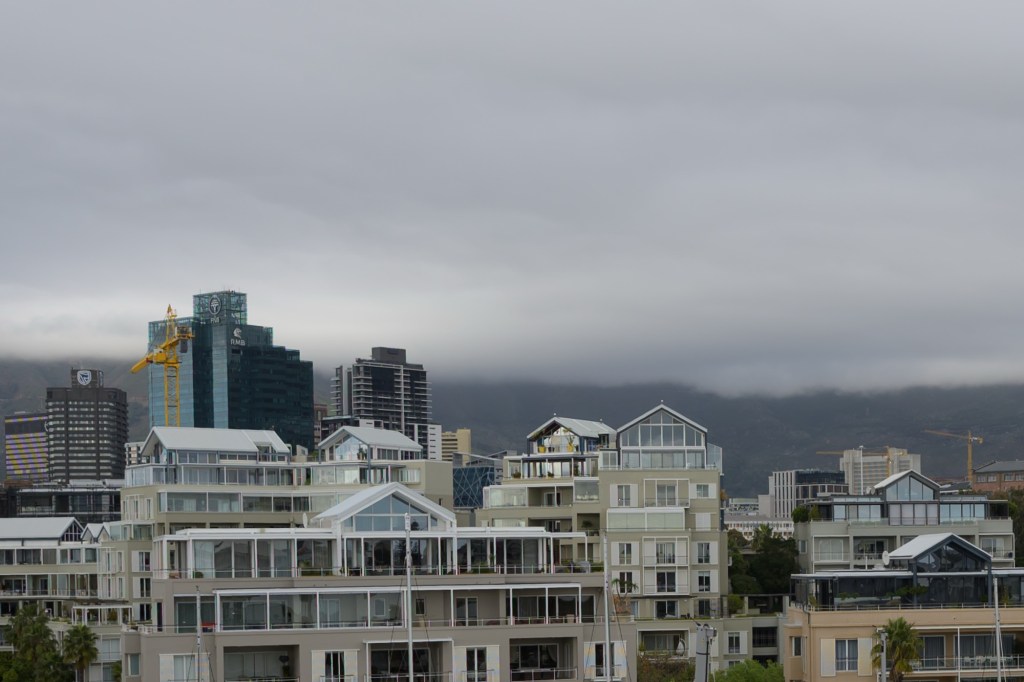
  1. Just look at it from the city. It’s really big, and visible everywhere. You can guess from the picture above from whence it got its name – the flat top or table.
  2. You can take a cable car ride up, and enjoy the views from the ride, from the summit, and can also take some short hikes on the summit. Four of us: Abs, Squeakers, Sally and I chose this option.
  3. You can hike up on one of five different trails. The hikes are only 2-3 miles long, but climb a bit over 2,000 ft. The remaining three – Trey, Munchie and Bassgirl – took this option.

Unfortunately, the picture above is the mountain as seen yesterday; today, the weather was not quite as cooperative. It’s hard to tell, but (a) these two pictures are approximately the same view, and (b) Table mountain really is in the second picture behind that thick cloud.

Table Mountain today, August 2025

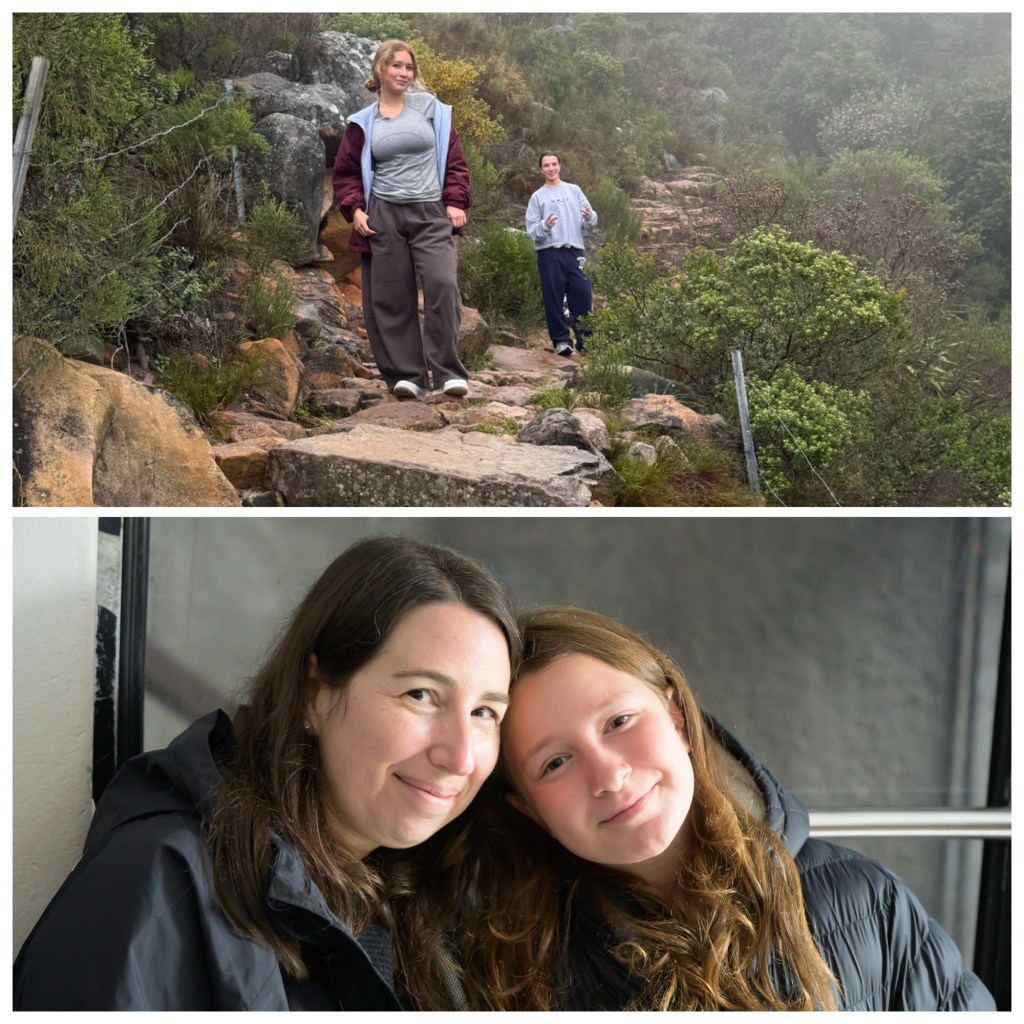
Anyway, when you’re on vacation, why let a little cloud interrupt your plans? So the three hikers left around 8:30, and the softees planned to arrive at the summit via cable car around 11:00 to meet them.

Starting on the trail, and in the cable car, August 2025 (top image by Trey)

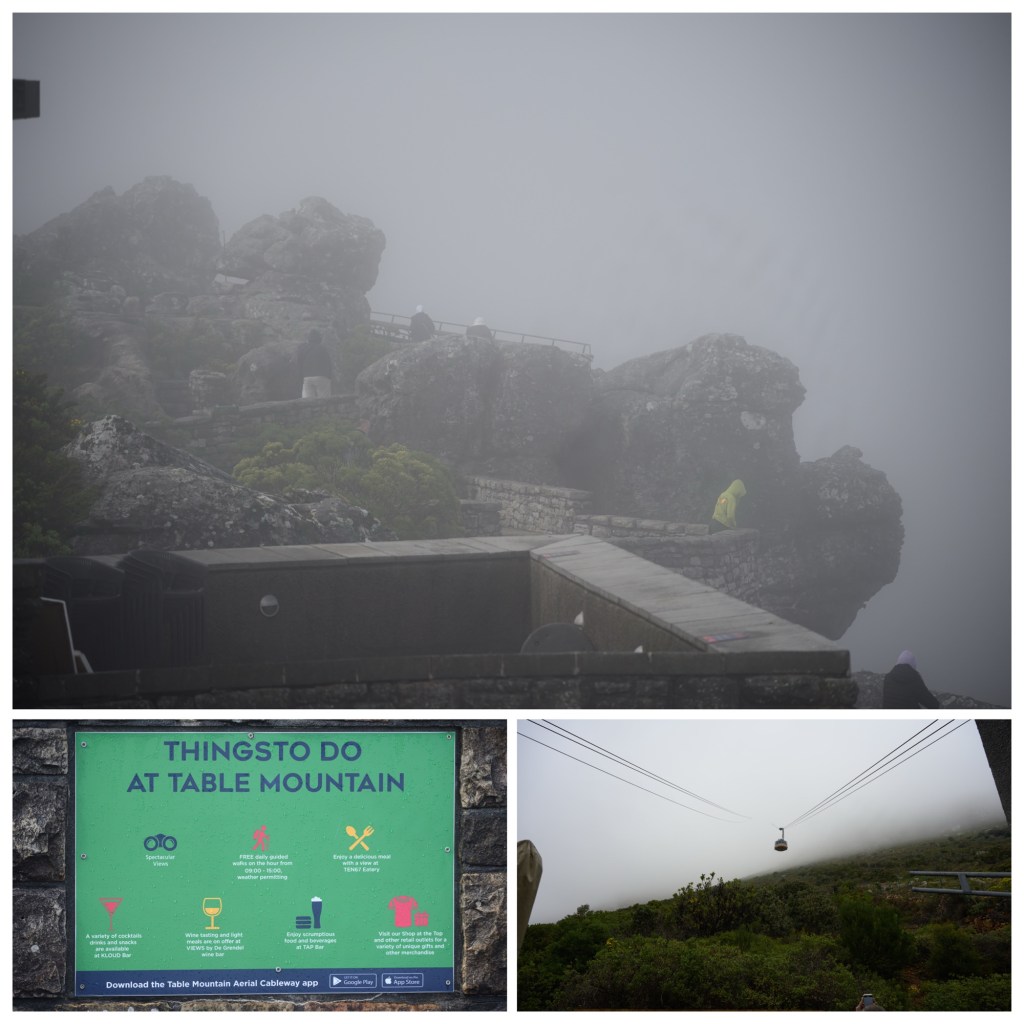
By the time we reached the summit we realized that our stay would be pretty short. Waiting for our cable car, we saw it appear out of the cloud. When we disembarked at the summit, the weather was dreadful. Cold, windy, mist blowing in our faces. You could see maybe a hundred feet or so.

Things you won’t do on Table Mountain today, August 2025

Suffice it say, we waited for the three musketeers to reach us and then we all went back down on the next cable car. In fairness, the hikers did say that the weather was fine for most of their hike. It was just near the top that it got really nasty.

We made a quick stop at the hotel to regroup and change clothes if needed, and then headed back to the V&A waterfront for lunch and to do some shopping. There’s always lots going on there: musicians, singers, We also bought some stuff. Sally bought some small bowls to match ones that we got last time we were here; Sally and Abs both bought winter coats to wear on the safari drives later this week and next.

Activities at the waterfront, August 2025

I should mention the food here. We’re generally enjoying it. Like everywhere, some is better and some is not so great, but overall it’s been very pleasing. The hotel has a nice buffet breakfast. In advance of the trip, we had our travel agent make reservations in three restaurants, one for each of our Cape Town evenings. Wednesday night was a “casual” place in the V&A waterfront, which meant jeans (2) are acceptable. Last night we ate in The Black Sheep. We were all a bit skeptical, as the menu was unusual and it was supposedly upscale. However, we were very impressed – we had several dishes and they were all good. Despite the billing, we found that jeans are acceptable.

Mojitos 85 SAR = $4,79

Also, the food here is very inexpensive. Draft beers are $2-3, local wines are $18-25 for a bottle in the restaurants. We had dinner for 7, with drinks appetizers and deserts, for $209 !


(1) see Animal Farm (G. Orwell)

(2) Due to our severe packing constraints, jeans form a major part of everyone’s wardrobe. I have two pair of pants, one of them jeans.

Wednesday, August 6: Cape Town

We spent a long 26 hours from leaving our home in the US until we arrived at our first stop, the Cape Grace Hotel in Cape Town, South Africa. The trip was uneventful. We got to JFK on time, our first flight to London left and arrived on time. We spent an hour and a half in the lounge at Heathrow, before boarding our flight to Cape Town. Enough time to use the bathrooms, eat a light meal, and stretch our legs.

Then back on the next flight. This was a much longer flight; about 11 hours overnight. At least, this gave some of us time for a good night’s sleep, unlike the quick, seven hour, NYC-London flight.

At the airport we were met by two handlers who did little more than escort us to the passport control sign, and then wait with us on the long-ish line. Sally likes this kind of extra service; I would have been happy to find our way there on our own. I must admit that they did save us a little time by getting an official to allow us to cut about 20% of the line, and they did wheel five of our seven carry-on bags from the passport line to the terminal exit, where we were met by our driver.

At the hotel we checked out our rooms, then had lunch at the hotel. We all realized that we would fall asleep if we went to the rooms, so we walked over the the V&A (1) harbor area and looked around at the shops and activities. The V&A is a very secure area in a not-so secure country. Then back to the Cape Grace Hotel to relax and clean up before dinner.

Let me introduce you to our crew for this trip. Starting, of course, with Sally and Me. We’ve been on a lot of trips together.

Joining us is Abs, our daughter, and her family.

Abs & Sally, August 2025

Husband Trey, and her youngest daughter, Squeaks.

Squeaks and Trey, August 2025

And their two other daughters, Bassgirl and Munchie.

Bassgirl and Munchie, August 2025

This entire crew showered, in some cases put on makeup, and then went for a fun dinner back at the V&A.

Dinner at Den Anker, August 2025

We ended the day right after dinner, as we were all pretty exhausted. Tomorrow will be our first full day in CT (1), and we already have some morning activities planned.


(1) Cape Town , not Connecticut.

Tuesday, August 5: Off to Africa!

We left the house early – as Sally would say, in the middle of the night – to begin our journey. We’ll meet the kids at JFK’s for the first air leg to London. My guess is that we will need 25 hours or so door to door.

Not that much luggage for 2 weeks, August 2025

I’m amazed that we fit everything we need for almost two weeks in Cape Town and the safari camps into these small bags. And that I fit the camera gear needed to get good pictures into an 11” square box (plus lots of accessories).

This is all the cameras, but not all the gear, August 2025

But we did.

Part of the reason, of course, is that we don’t want to check any luggage on the long flights. But we are also taking a small charter flight for one in-country leg, and they don’t allow larger bags because they can’t fit through the hatch into the “trunk”. While we’re not sure exactly what “larger” means, we believe these bags will fit.

Even more luggage, August 2025

Anyway, our entire group is at the airport and we are ready to leave in a little while. With seven roll-a-boards and seven backpacks. Next update after we get to Cape Town!

We went on safari

This was, without a doubt, one of the best trips we ever took. Sally would say it was the best. We spent nine days in four camps, eight days in three cities (1), and three days traveling to and from Africa.

Final Collage

The cities were pleasant and/or informative. I would say we are both much more knowledgeable about South Africa’s history than we were before the trip, and much more aware of the conditions on the ground. My biggest learning was this: South Africa, under Nelson Mandela’s leadership (2), transitioned from the horrific oppression of apartheid to a functioning though messy democracy inclusive of all people, one which still faces significant issues. And it did so without a civil war, and without a bloodbath.

The camps were something else. While we knew what lions, giraffes and elephants looked like we had no idea of how they lived. We had no idea how they interacted with all the other wildlife in the bush. We had no idea how the ecosystem that is the bush worked, and how the pieces all fit together. It was sad and gruesome to watch the lions catch and kill the water buffalo, but the alternate outcome is clear: if the lions don’t catch and kill their prey, they will die. That is truly the circle of life.

The animals were spectacular. The birds were spectacular. As I mentioned, Africa could turn you into a birder – there’s so much to see.

While the city hotels were, well, hotels, the camps were a completely new experience for us. They are a strange combination of luxury and roughing it.

Luxury: you never touch your luggage, there’s food and drink set out for you throughout the day, the view from your tent/villa is extraordinary (3). Your every whim is catered to, within the limits of what the camp staff can accomplish in the bush. Free laundry. Hot water bottles and blankets in the game drive vehicles as well as your bed (4). Watching the sunset from a private pontoon boat with a G&T in your hand, just the two of you (and your guide). Sitting for an hour and watching an animal live. A free high end camera to use (5). Binoculars to use (5).

Roughing it: no heat in two camps, limited in another. No electricity in one camp. Dim lights at best. You’re not allowed outside after dark. Limited or no wifi in three camps, and no phone service (even to call the front “desk”). Driving around at dawn and after sunset, in the cold and even the rain, in open vehicles. We were cold, a lot.

I’m not sure whether to characterize being flown from camp to camp in your own private plane as “luxury” or “roughing it”.  It was, as the pilots said, “a little rough”.  At the very least it was new for us.

But there was another dimension to the trip, one that made this different than any other trip we’ve taken.

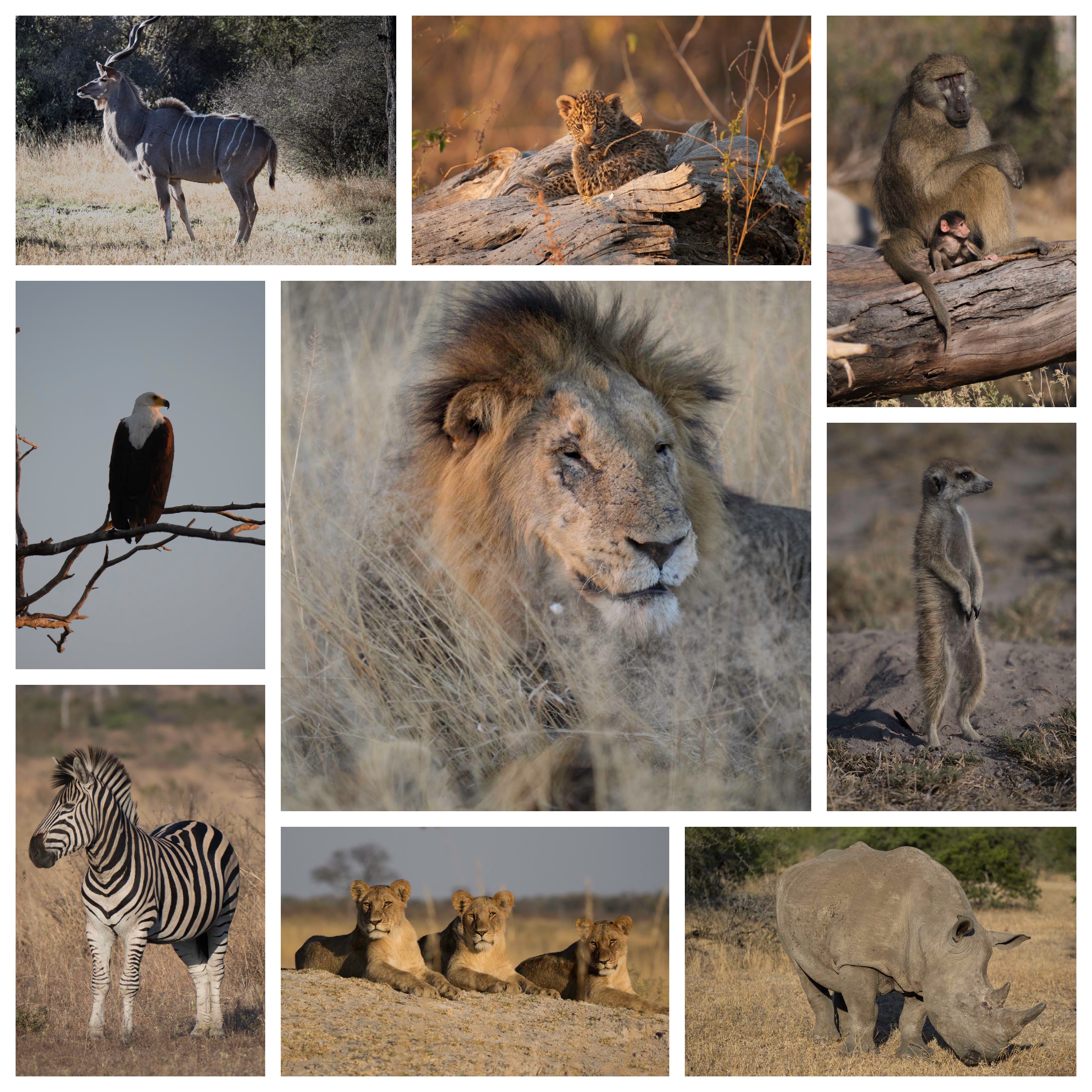
Mind blowing: being close enough to lions to touch them, although you don’t dare reach outside of the vehicle. Watching a male ostrich chase a female across the plain at high speed. Watching a leopard cub annoying it’s mother, just like any toddler. Hearing a pride of lions, which surrounds you, announcing to the world that they’re there with their roars. Seeing hundreds of water buffalo appear out of the brush and cross the meadow in front of, and all around, you. Seeing lions bathed in the golden light after sunrise. Seeing two lions catch the scent of, chase down and kill their prey. Seeing hyenas anxious to get the scraps the lions left, but afraid the lions are still around. Seeing an elephant herd rush to protect their young from a leopard, bellowing all the time. Watching a father baboon caring for and playing with a newborn, and a (slightly) older sibling joining in the fun. Seeing a herd of elephants come down to the river to drink, and to play in the mud.  Sunrise and sunset over the delta.  Rushing through the brush in our open Land Rover as our guide tried to follow some animal’s tracks.  Following a pack of wild dogs as they patrolled their territory, looking for food. 

Did I mention the birds?

And I’m sure I have forgotten maybe one or two (6).

Once we had decided on this trip, I gathered up my camera gear and went to the Bronx Zoo to see if I could actually take pictures of animals. I got some good portraits. But I may never go to a zoo again. The idea of seeing these animals confined to cages (even “big” cages camouflaged as natural areas) is just so unappealing. The animals don’t interact with any others as they normally would; they don’t hunt or forage, but get fed by humans. Life for animals in the bush is unforgiving, but it’s life. It’s not cruel; the concept doesn’t exist.

20170809 Africa 2017 _EM26670

Perhaps there’s a lesson there for all of us. Perhaps all of Africa, where we all came from, is a lesson for all of us.


(1) I use the term “city” loosely regarding Vic Falls.

(2) Countries seem to do better when they have good and effective leaders.
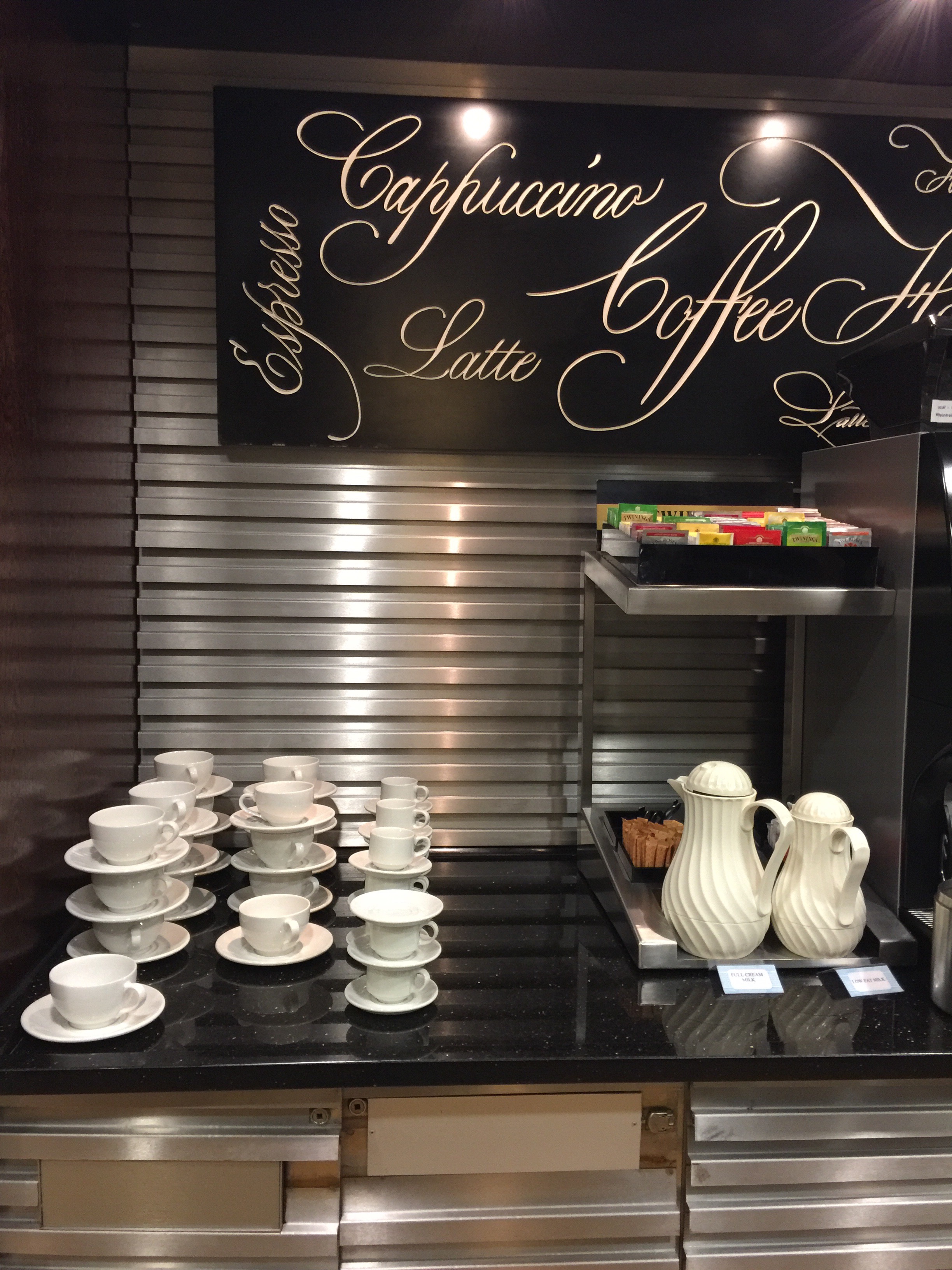
(3) Jack’s Camp excepted; there we saw a bush.

(4) An attempt to offset the lack of heat in the tents, or a roof and windows in the vehicles.

(5) A camera in one camp, binoculars in two.

(6) John Sebastian, Younger Generation.

Victoria Falls

Imagine you took Niagra Falls and put it down in the middle of the wilderness, hundreds of miles from anything. Just rugged mountains upstream, with no industry to encourage any commerce and therefore shipping on the river. Hundreds of miles of scrub brush downstream, with rocky and dry land unsuitable for crops.

Then you built a large Victorian style hotel by the Falls, and a railroad to deliver tourists. A small town would grow up around the hotel to support the workers and provide some services to visitors – restaurant, gift shops, art galleries, cheaper hotels and campgrounds.

You would have Victoria Falls.

20170812 Africa 2017 _EM27913

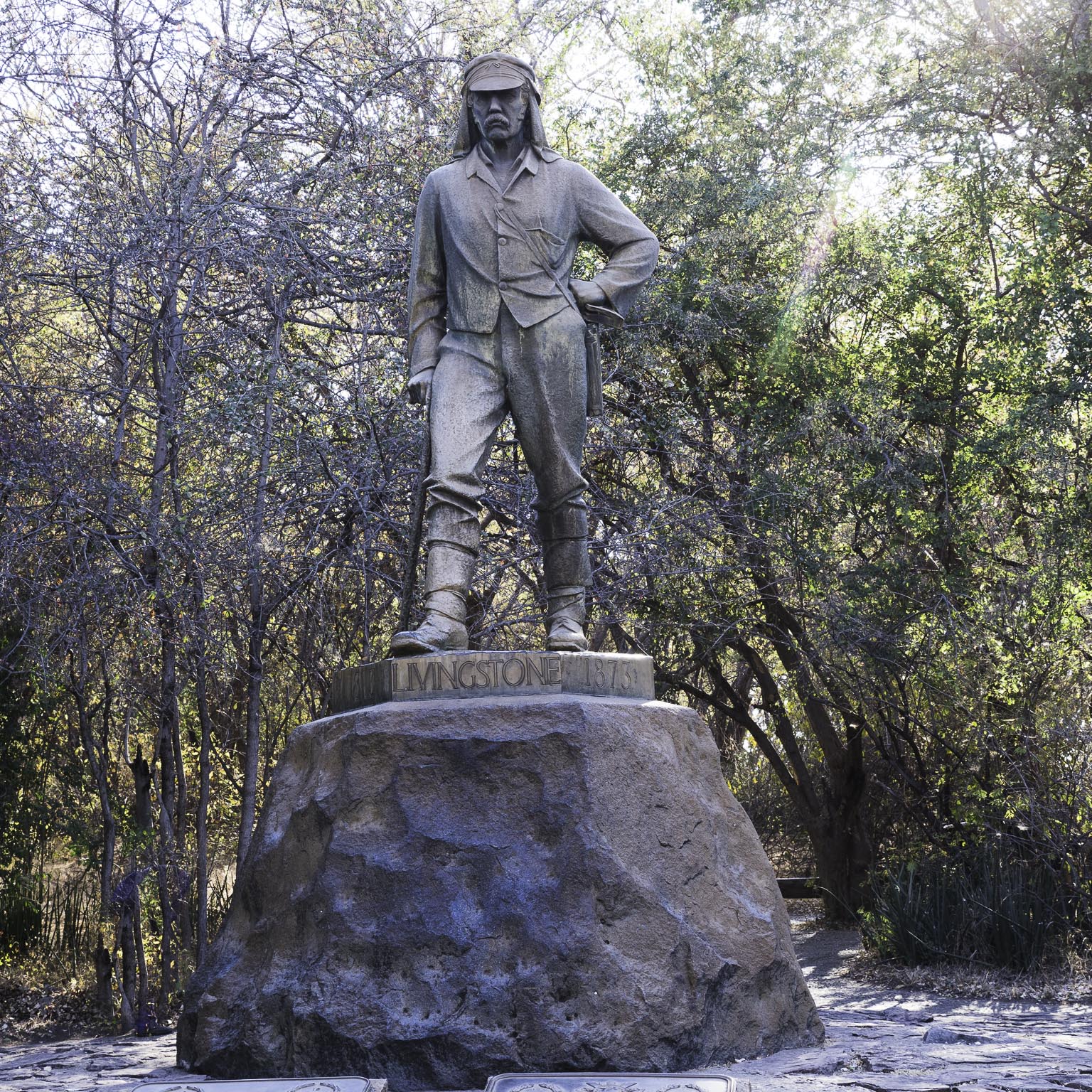
Dr. Livingstone, I presume?, August 2017

David Livingstone, the famous English explorer and missionary, was the first European to see the Falls. The Zambeze River, which forms the Falls, is also the local border between Zimbabwe, where we stayed, and Zambia. The town of Livingstone is a few miles away in Zambia.

20170812 Africa 2017 _EM27904

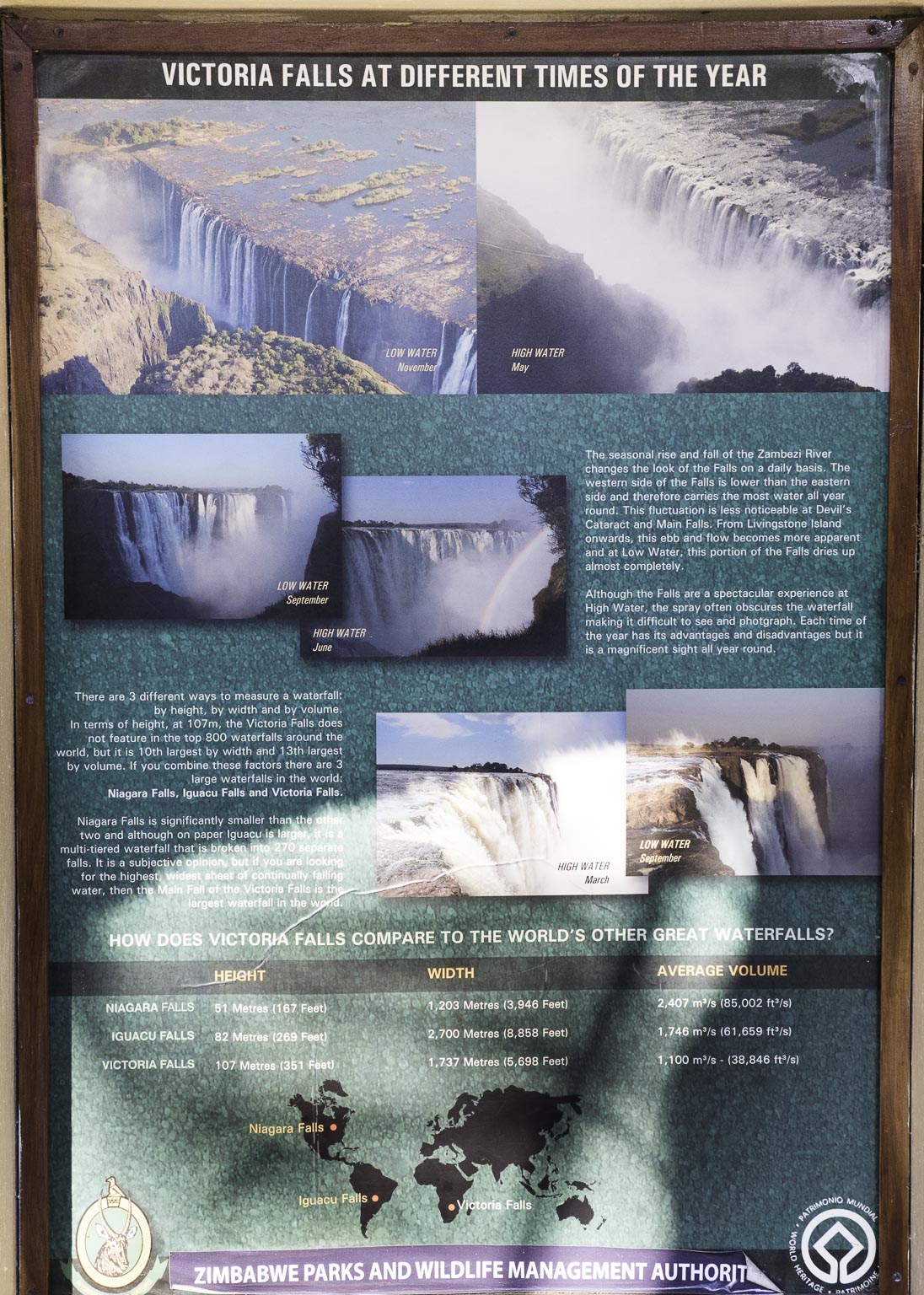
Everything you need to know about Victoria Falls, August 2017

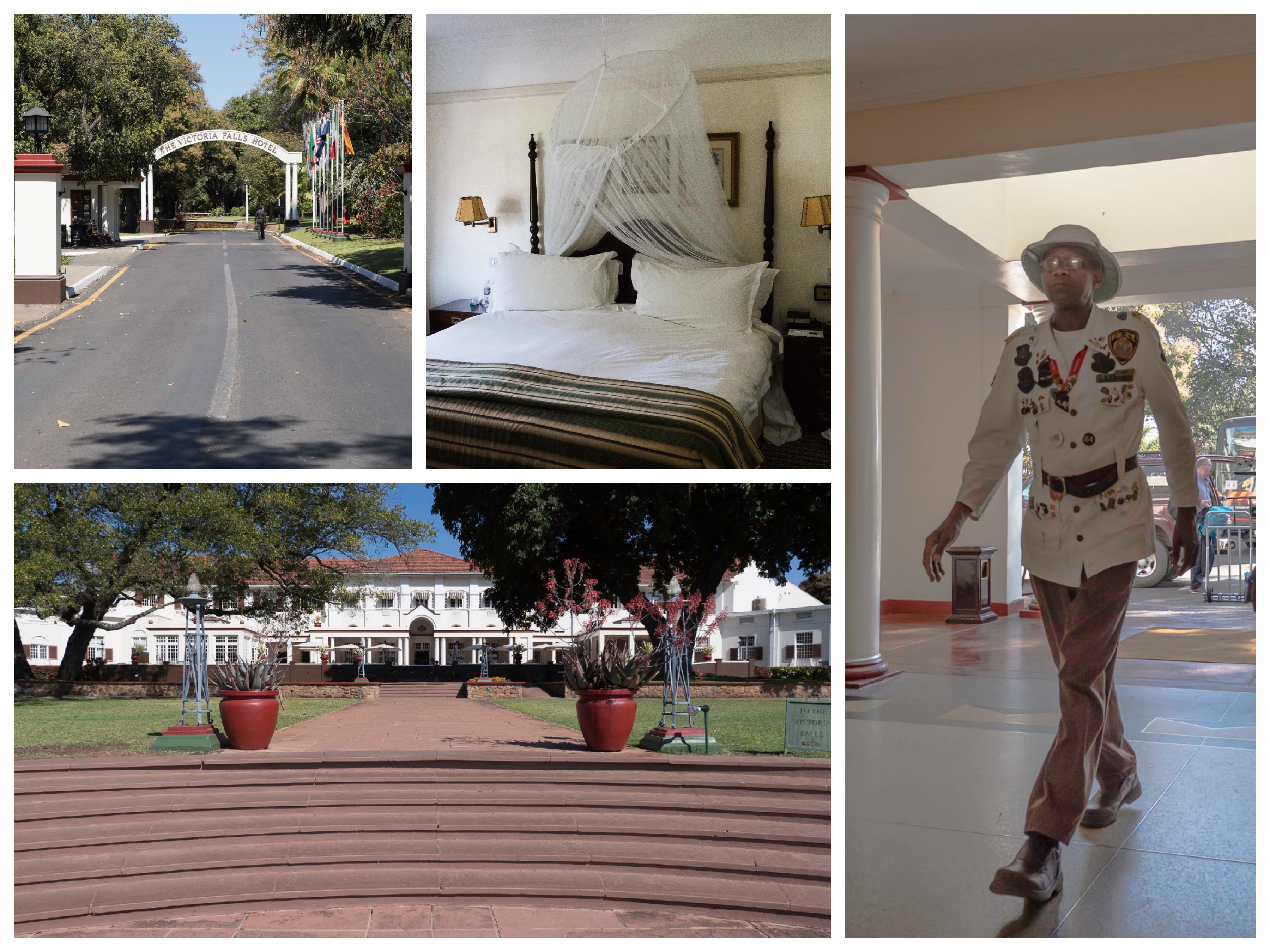
After six nights on safari in Botswana, Vic Falls (1) was a good decompression point before our long journey home. While the hotel is large and fairly luxurious, it does show it’s age somewhat, and the service is not as crisp or attentive as the other places we’ve stayed on this trip.  Even the Cape Grace Hotel in CT (2) had much better service than this.

As far as I can tell, there are four things you can do in Vic Falls.

  1. You can visit the Falls.  That’s why you’re here.
  2. You can take a helicopter ride over the Falls.
  3. You can take a boat ride on the Zambeze RIver upstream from the Falls.
  4. You can take a safari ride through the bush near town, either in a motor vehicle or on an elephant.

We opted for (1) and (3).  (2) seemed uneccesarily risky for the 12 or 22 minute view, while (4) seemed uneccesary after nine days in the camps.

20170812 Africa 2017 _EM27919

Horseshoe Falls section, August 2017

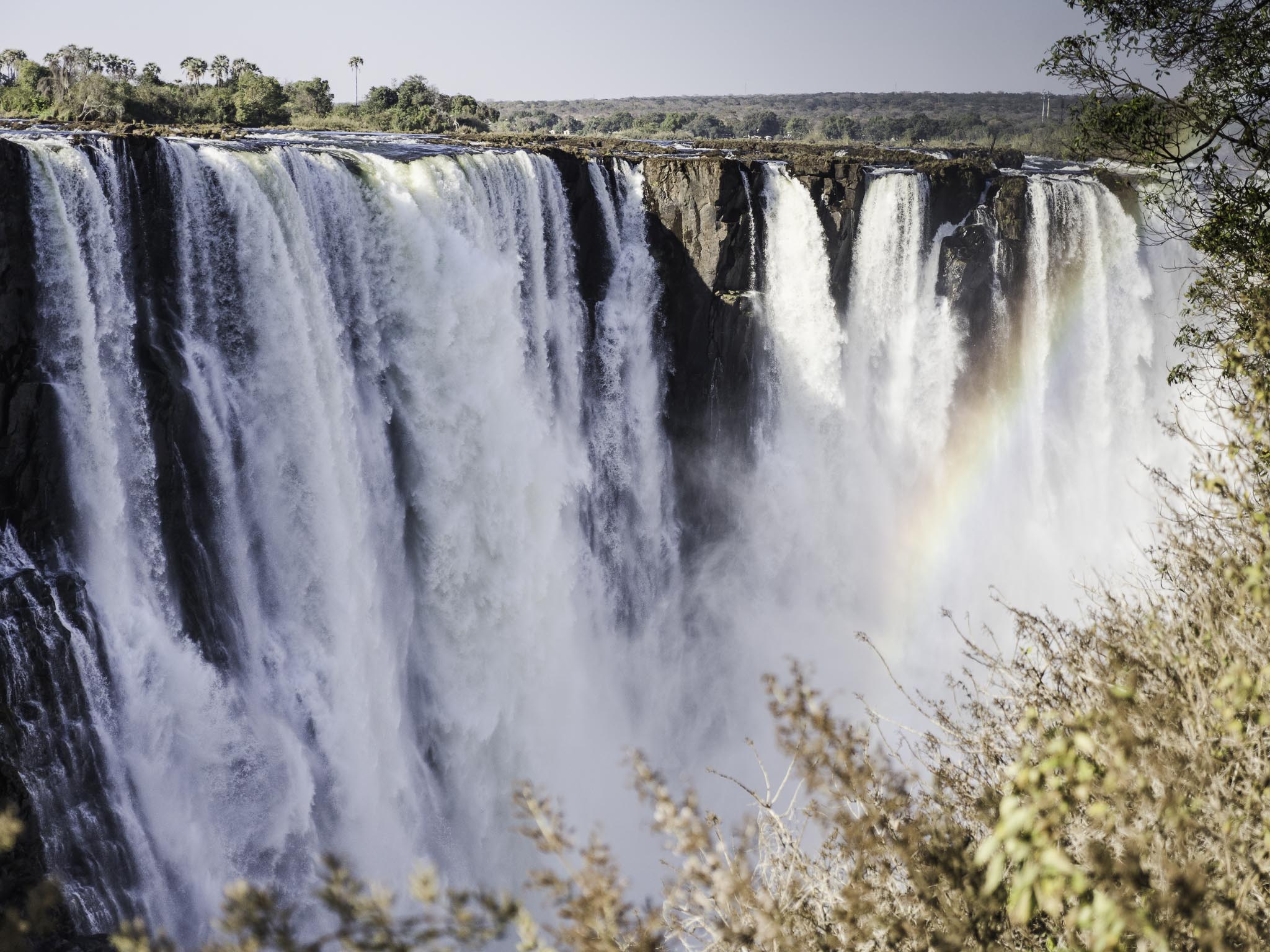
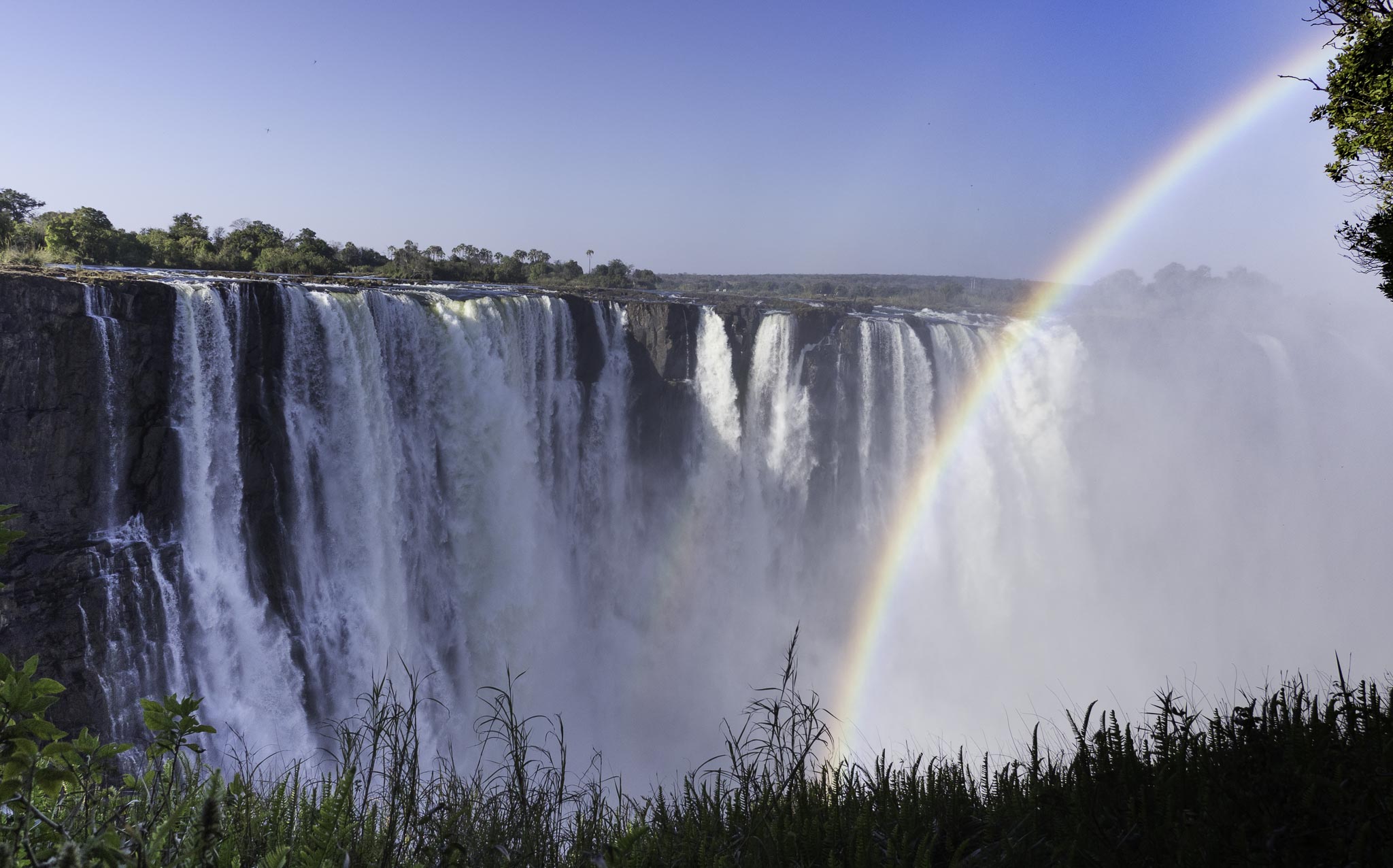
The Falls stretch for over a mile wide and about 250-350′ high.  It’s impossible to see the entire width of the Falls from any vantage point on the ground; that is only possible from the air.  We were wisked over to the Falls, which is surrounded by a National Park, by our guide as soon as we arrived at the hotel around 3:30 in the afternoon.  This is actually the best time to visit, as the late afternoon sun is behind you and you get rainbows in the mist rising from the water.  The falls themselves are mostly in Zambia, but the best viewing points are on the Zimbwabwe side of the river.

20170812 Africa 2017 _EM27968

Big rainbow, August 2017

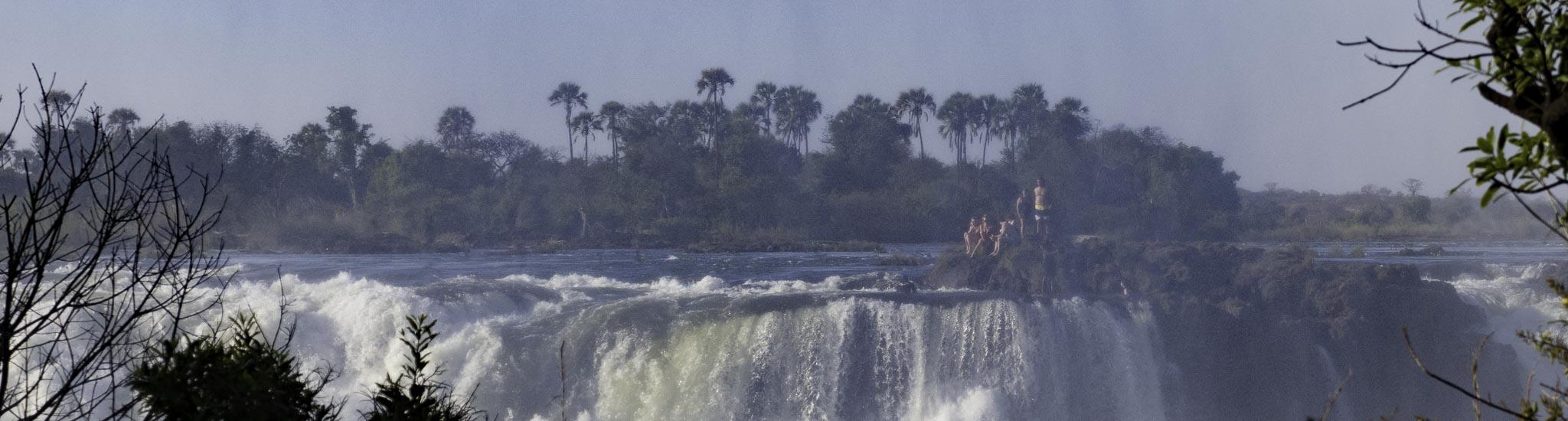
When we visited the US National Parks several years ago, we were impressed  by the apparent stupidity of people who felt they were invincible, and that the parks were just as safe as Disneyland.  That behavior is not limited to the US; we saw people bathing in pools a few feet from the edge of the waterfall.  Craaaaazy.  Or Darwinian …

20170812 Africa 2017 _EM27972

Not likely to pass on their DNA, August 2017

20170812 Africa 2017 _EM28000

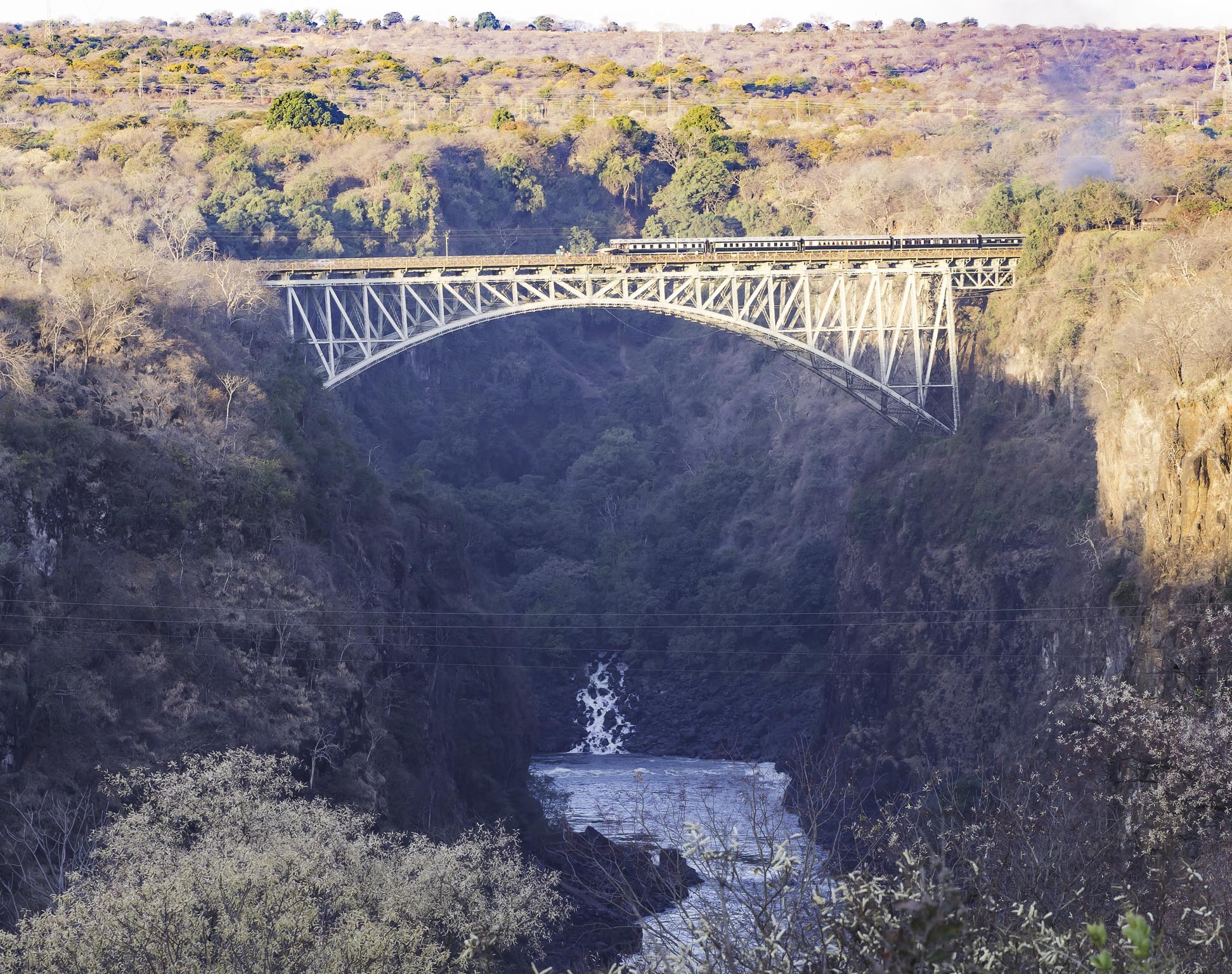
Victoria Falls Bridge, August 2017

Just downstream of the Falls the Victoria Falls Bridge spans the gorge for 650′, and about 420′ above the river.  It was comissioned by Cecil Rhodes, the British mining magnate who gave his name to Rhodesia (the predecessor to Zimbwabwe and Zambia), the Rhodes Scholarship, and was a founder of the De Beers diamond firm.  He was also an unabashed white supremacist.

Victoria Falls Hotel Collage.jpg

Victoria Falls Hotel, August 2017

The next day we hung around the hotel, and went for a walk into town where we found a large market place that seemed to specialize in large stone and wood sculptures. Despite the tempations, we managed to not buy anything.

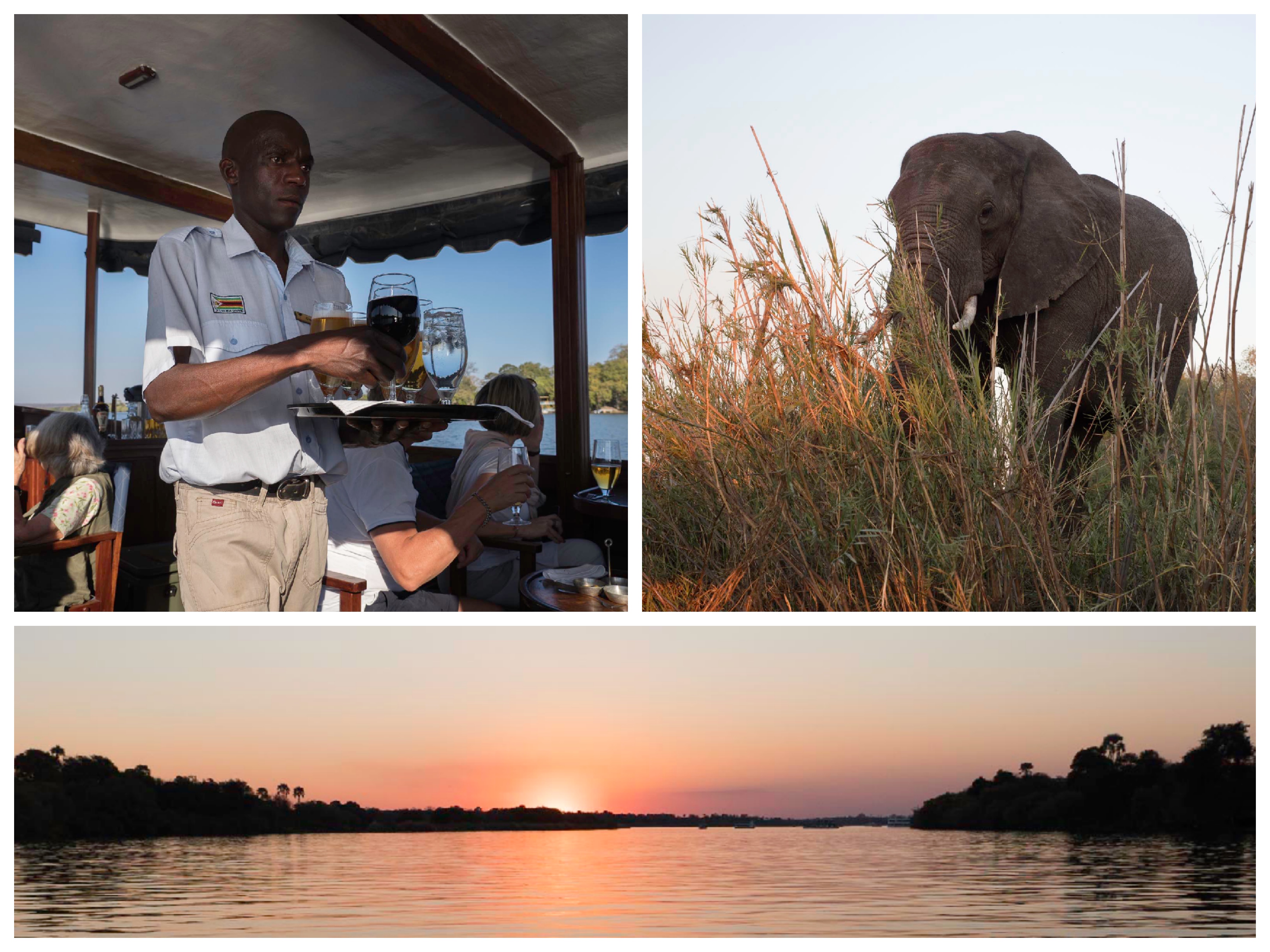
At 3:30 we went on our last activity, a sunset cruise on the Zambeze River complete with snacks and unlimited drinks.  Our last African sunset …

Zambeze Cruise Collage


(1) Just like Joburg is local slang for Johannesburg, Vic Falls is how Victoria Falls is referred to around here.

(2) “CT” = Cape Town

Zarafa in the Selinda Reserve

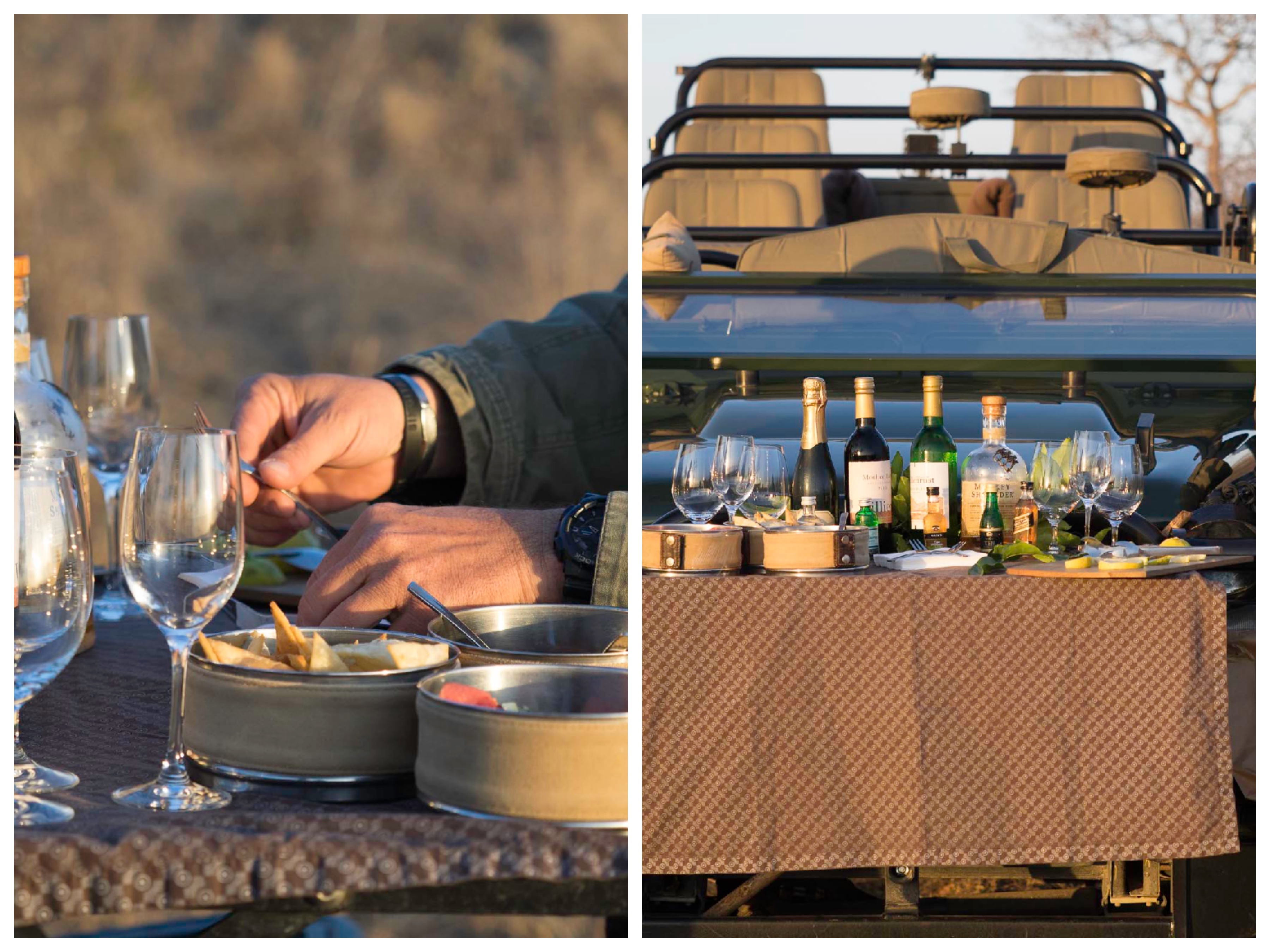
The camps are all full of eating and (mainly) drinking traditions. Around 3:30pm, most camps seem to gather for afternoon tea. This consists of tea, of course, but also pastries and sometimes fruit, and other soft drinks such as lemonade. At 4:00 you head out on the afternoon drive. Around 6:00pm, you might stop for a “sundowner”, which is drinks in the bush to watch the sun go down. We often had G&Ts (gin & tonics), and there would again be snacks – chips, some dried beef, maybe something else. All very civilized, all very British.

Sundowner Collage (Singita)

Sundowners – there’s always an excuse for drink and food, August 2017

Zarafa is located in the Selinda Reserve, a 500 square mile private area.  All of our camps were on private reserves.  The big advantage of that over the National Parks (like Kruger in South Africa) is that they are much less crowded.  The second big advantage is that the guides can drive off-road in search of animals.  The disadvantage is the cost – an order of magnitude higher than you would pay if you stayed in one of the parks.  But the wildlife is the same: they can’t read the signs at the boundaries.

20170810 Africa 2017 IMG_0235

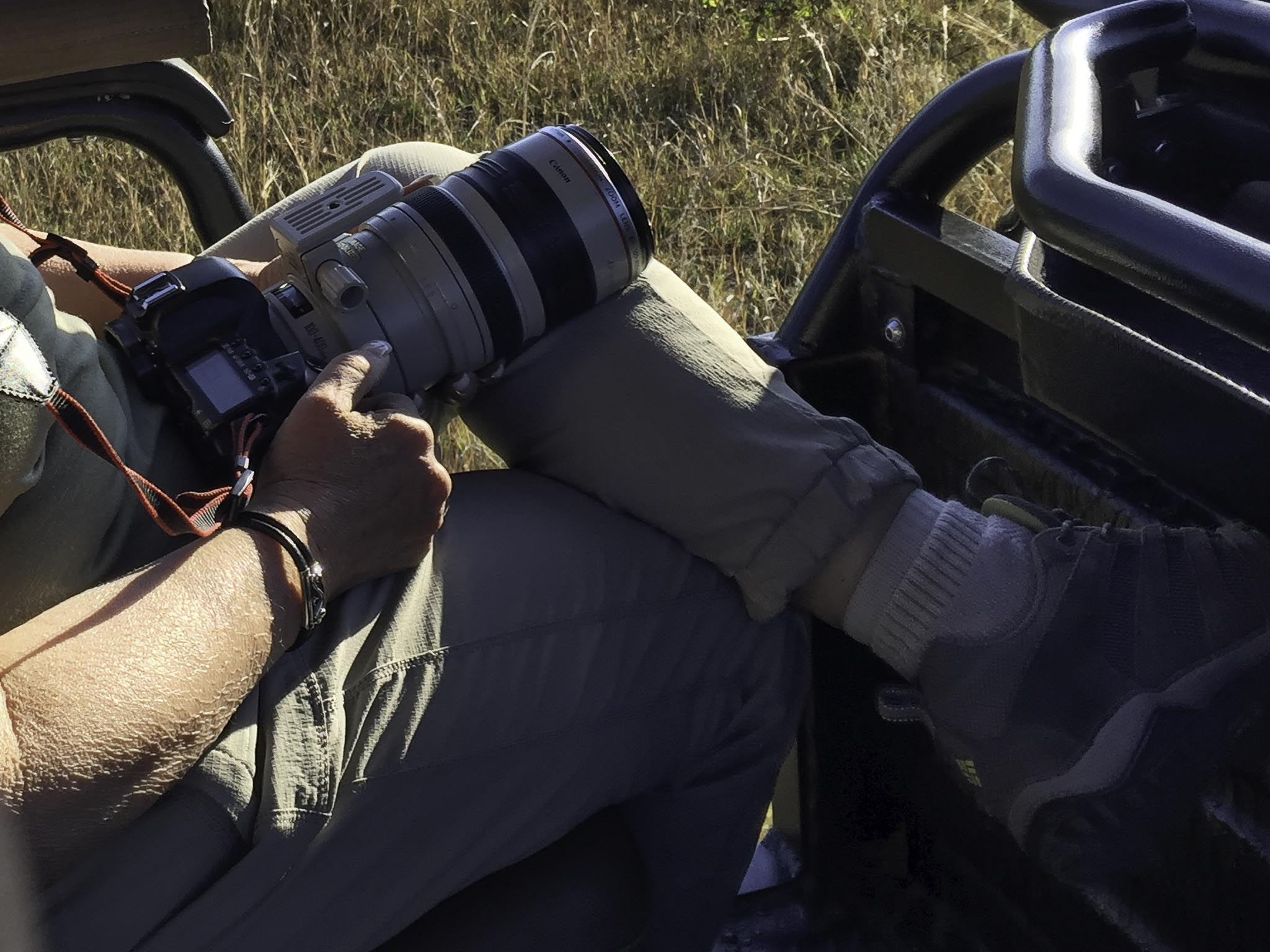
Sally with the big gun, August 2017

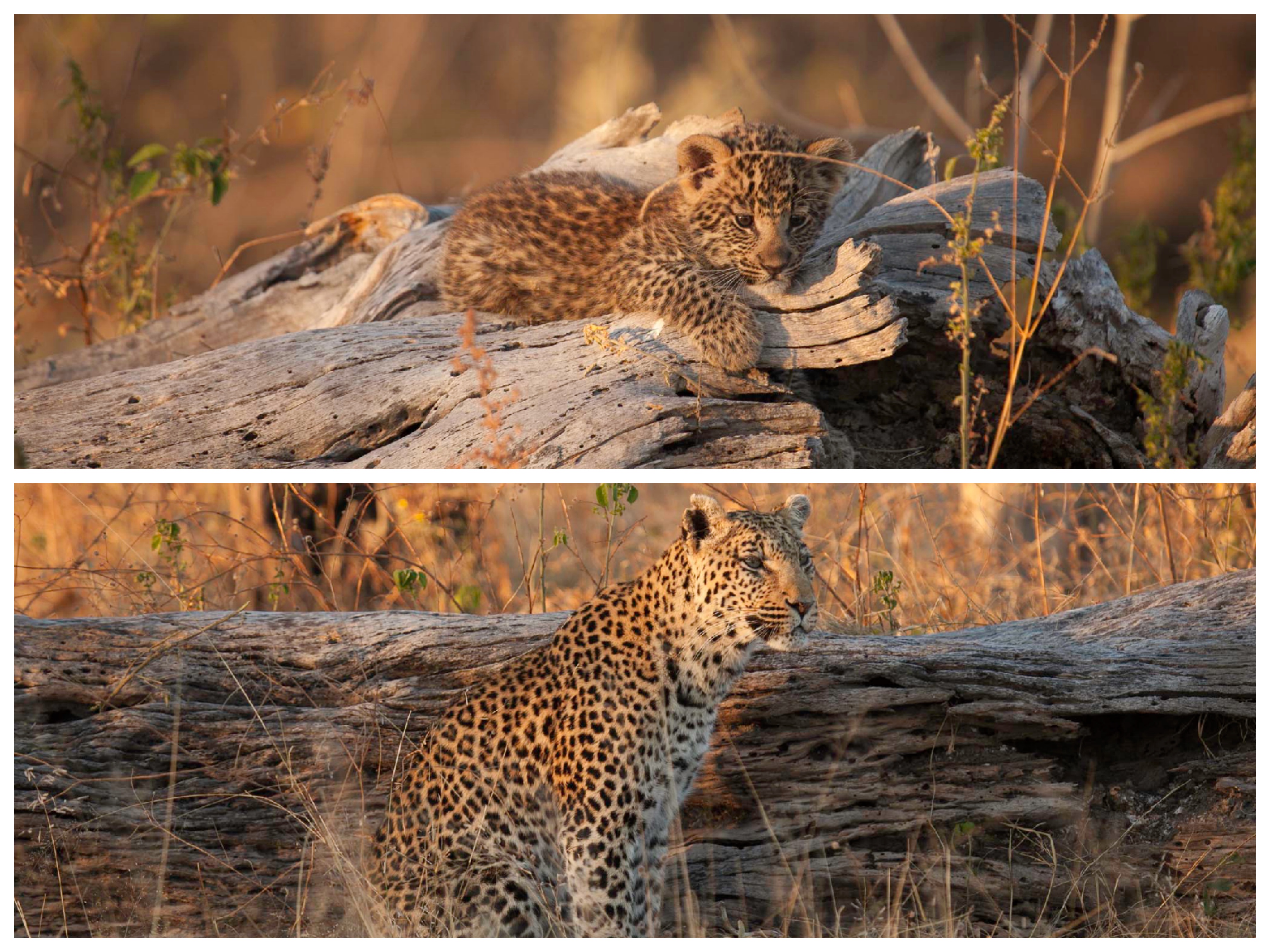
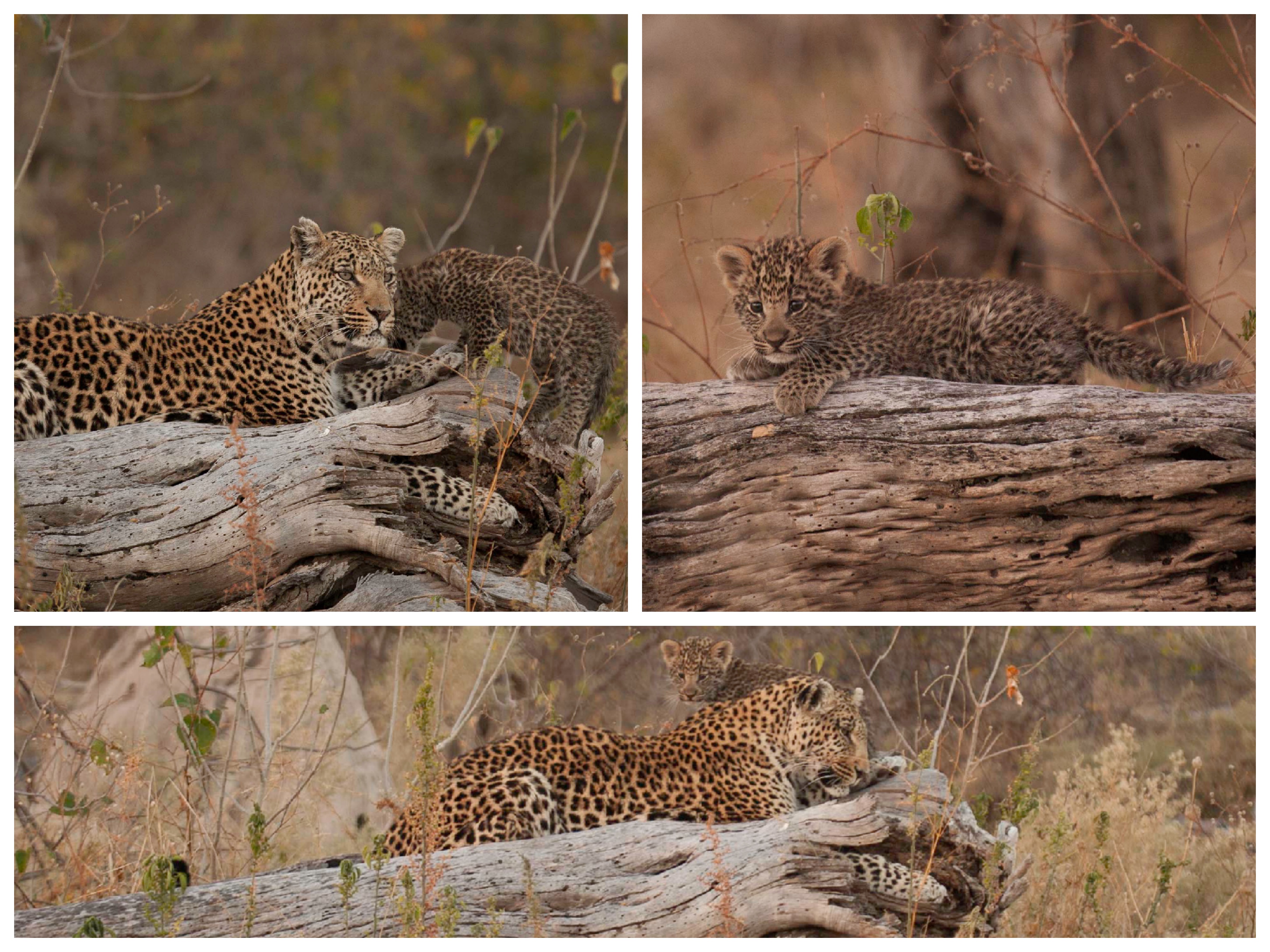
On our first drive with our guide Isaac at Zarafa, Sally was fully equipped with binoculars and a big Canon camera with a telephoto zoom. As the camp only had two couples staying there, we had a private car and guide. He asked what we wanted to see, and Sally asked for leopards and giraffes. Isaac drove off and eventually took us to a leopard den, where a mother had her cub stashed. The mother was lying in the grass besides a log, and we waited patiently.

Leopard & Cub Collage (lit)

Golden light, August 2017 (Photos by Sally)

We learned a lot of things on this trip. One was that the wild animals are completely unpredictable, yet also follow patterns of behavior. So once you’re in a situation where the pattern is likely, patience becomes a huge asset. You simply wait for the expected behavior, which will probably but not necessarily occur. In this case, we were waiting for the cub to emerge from the den to see its mother. After a while it did, and Sally got some fabulous pictures in the late afternoon golden light.

Leopard & Cub Collage (Shadow)

Mother and cub leopards, August 2017 (Photos by Sally)

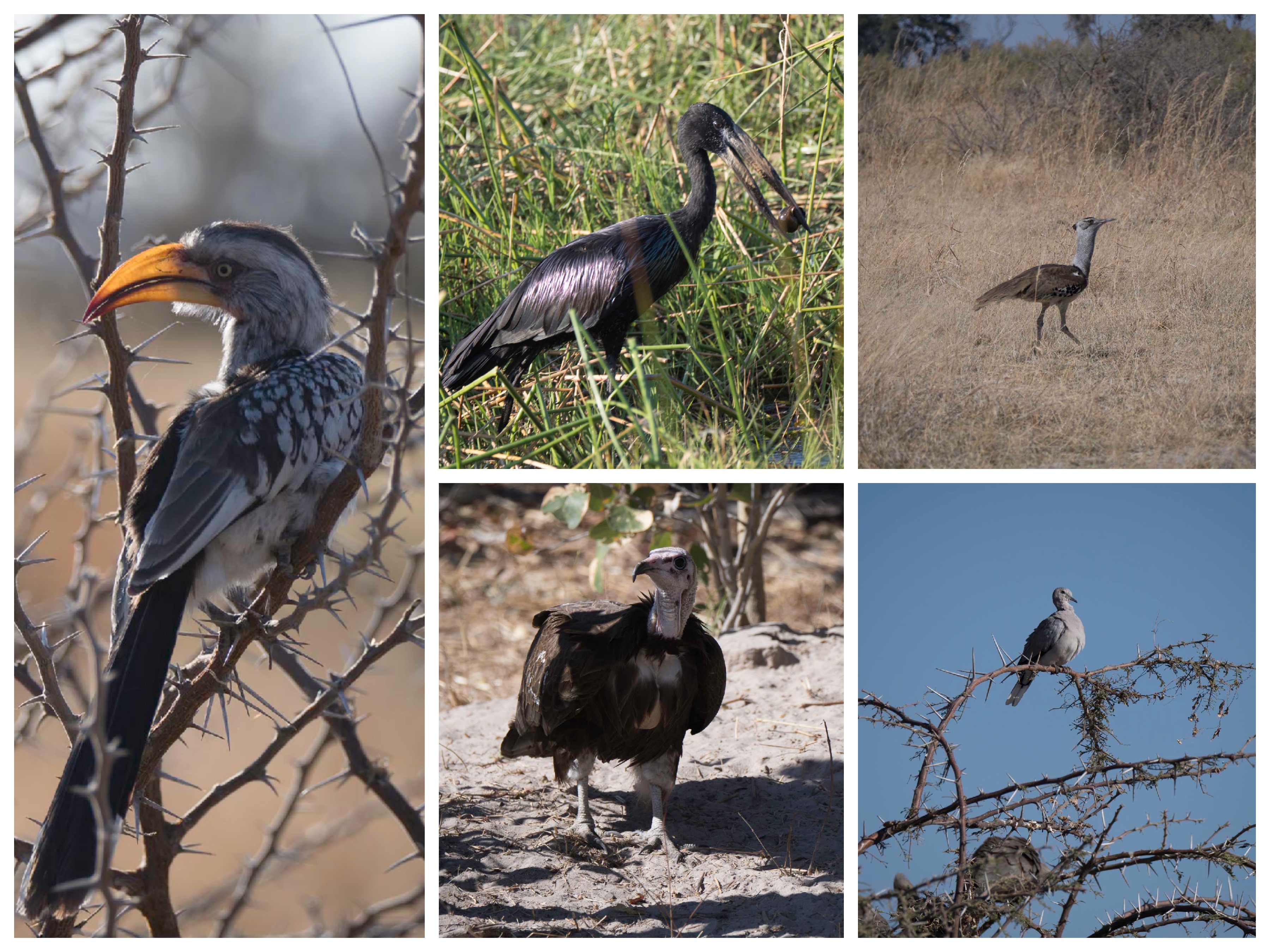
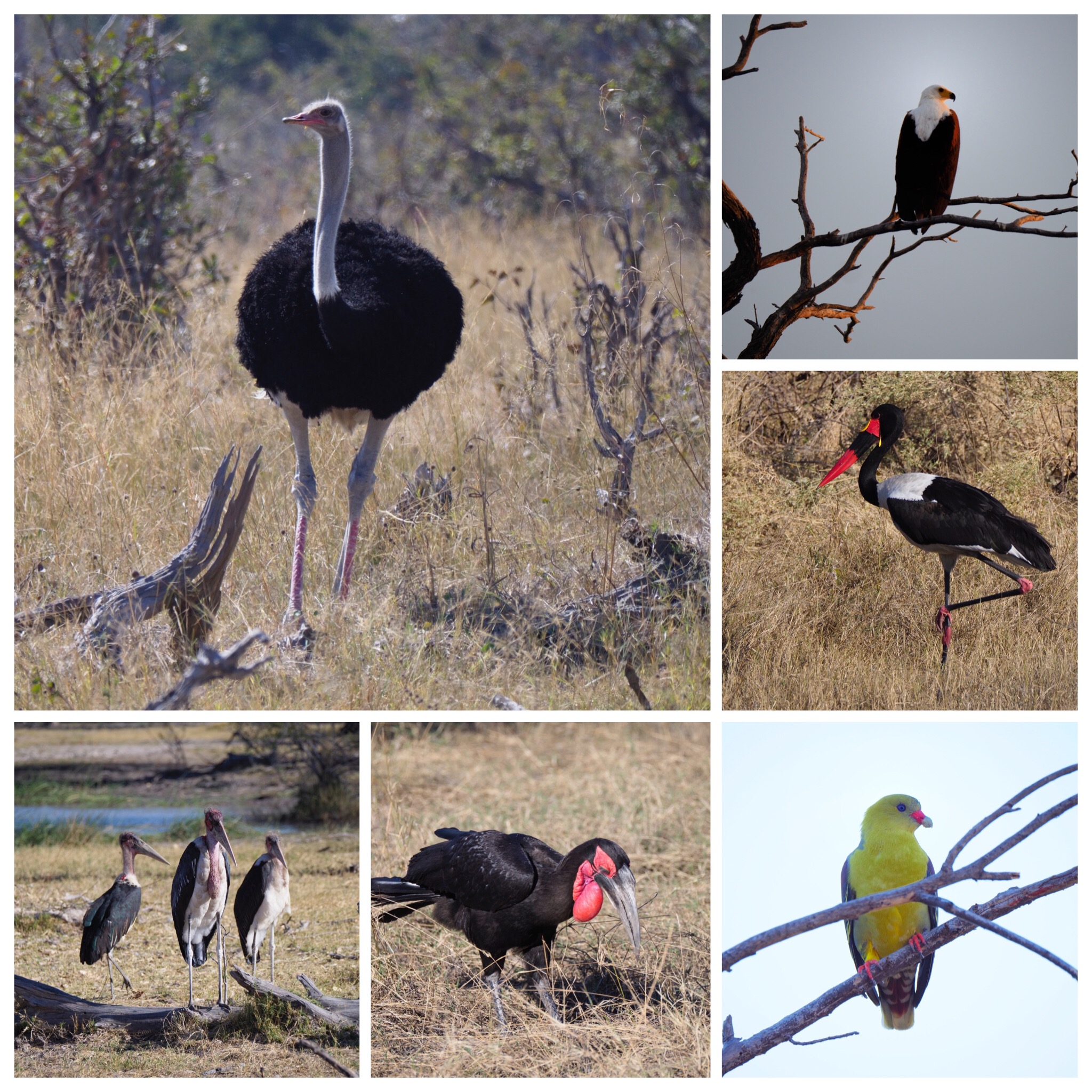
I know I’ve shown pictures of some of the birds we saw in earlier posts, but here are some more.  If you weren’t a birder before you came here, the variety and beauty might turn you into one.

Zarafa Bird Collage

Selinda Reserve birds, August 2017

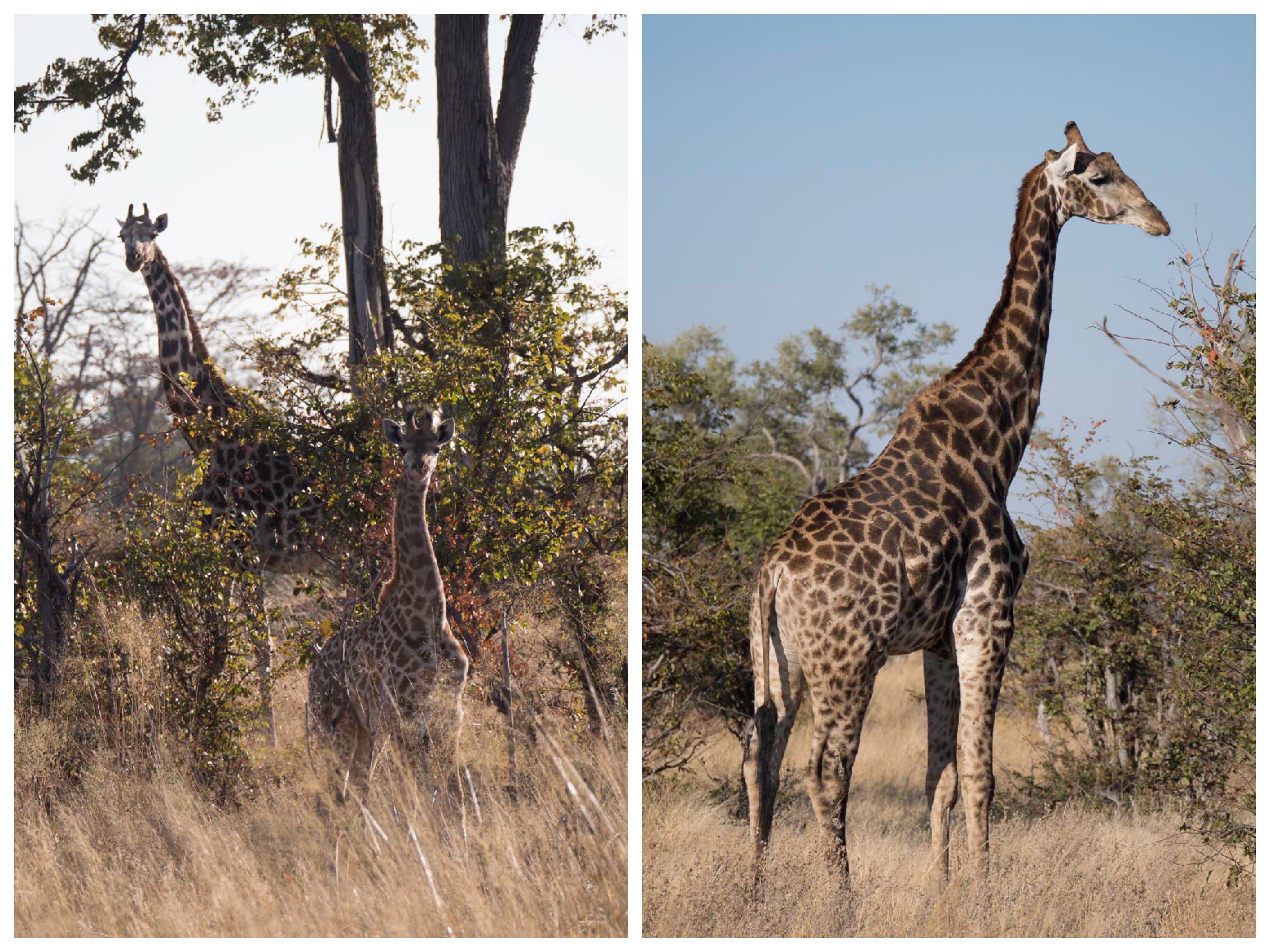
When Isaac first took us out in the morning, he asked what animals we hadn’t seen yet.  We really had seen pretty much all the animals we knew about, but our giraffe sightings were not very clear (one was in near darkness).  He almost immediately found us some giraffes.

Giraffe Collage (Zarafa)

Adult and young giraffe, August 2017

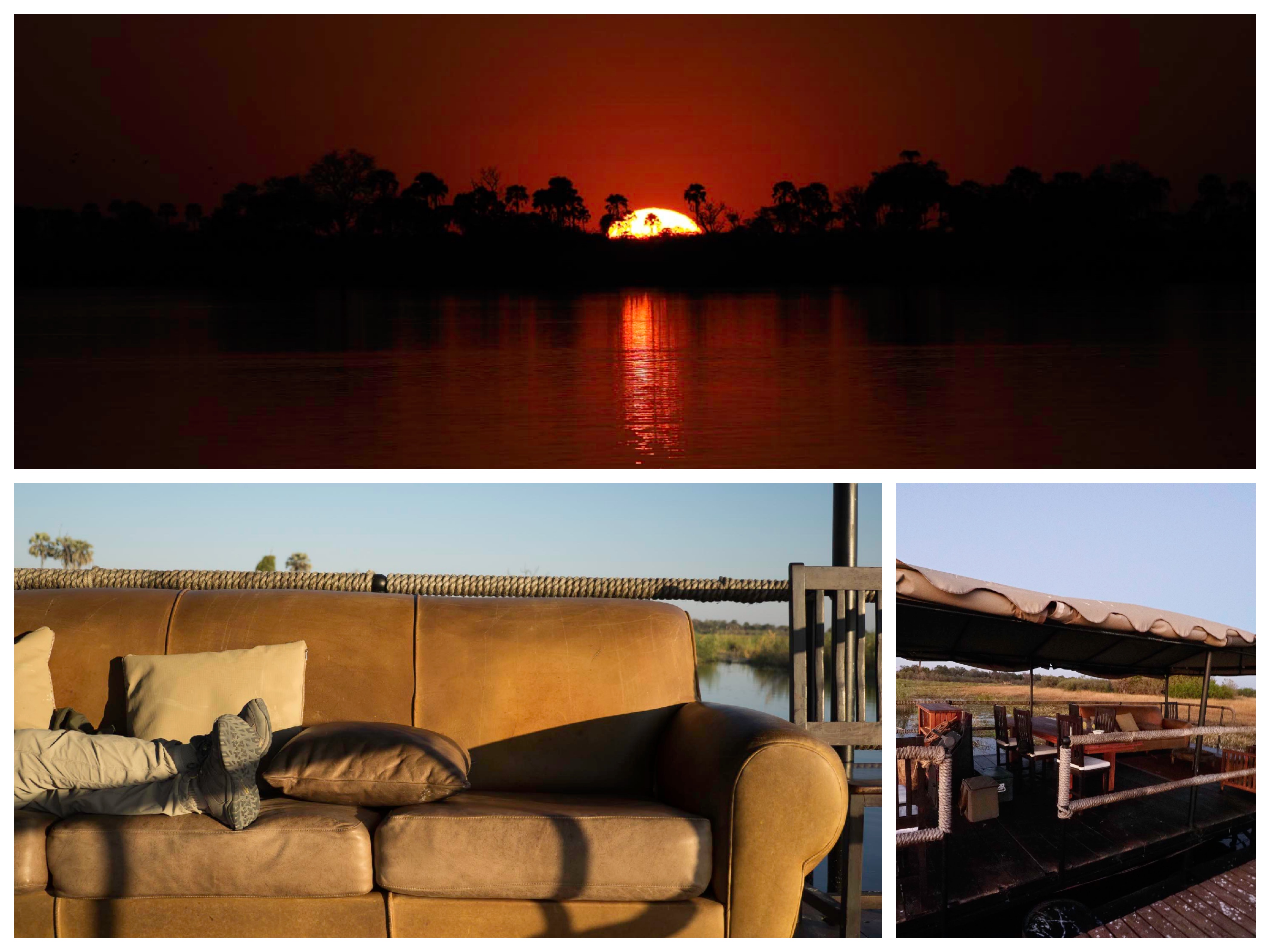
After the excitement of our first two game drives at Zarafa, Isaac suggested a pontoon boat ride for the late afternoon and sunset.  We did our sundowners on the water.  You get a different view of life there.  For one thing, it’s quiet and smooth, not at all like the noise and bouncing of the Land Rovers we drove around in all day.

20170811 Africa 2017 SGA10796

Elephant by the water, August 2017

Pontoon Boat Collage.jpg

Hard to beat this, August 2017

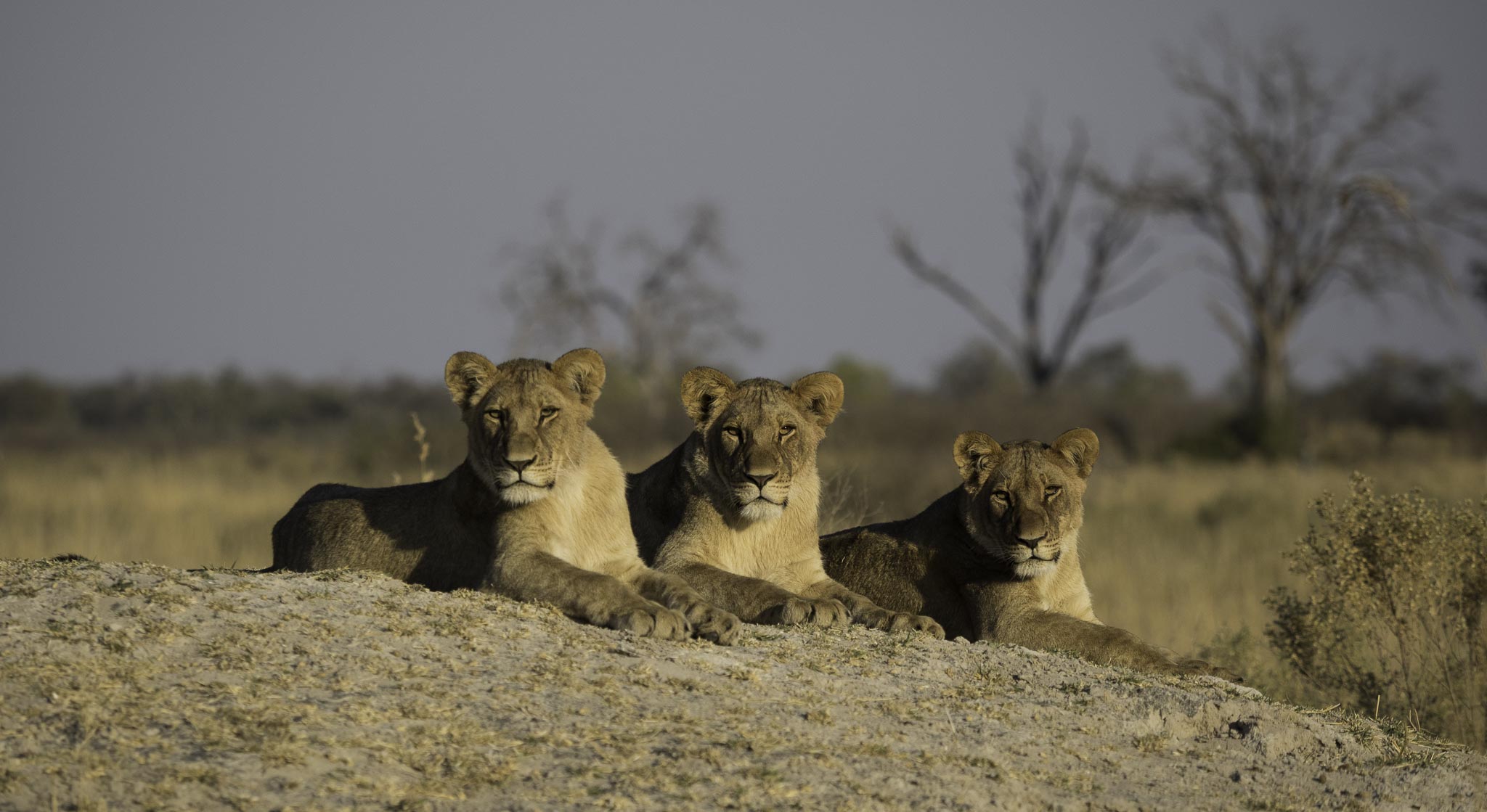
The next and final morning of our safari adventures Sally decided to sleep in (1), while I got up in the dark to go out one more time with Isaac.  We (2) tracked a pride of lions and I got a shot of three of them warming in the morning sun.

20170812 Africa 2017 SGA10867

Sunning, August 2017

Then back to camp to finish packing and to say goodby to the safari life.


(1) 7:00 am

(2) Isaac tracked; I sat on my throne and held on tight as he sped through the bush


Zarafa Camp

August 10-12 

Our fourth and final safari camp was Zarafa, located in the Selinda Reserve about 30 minutes north of Vumbura by bush plane.  It represented a continuing improvement in modern conveniences from the previous camps:

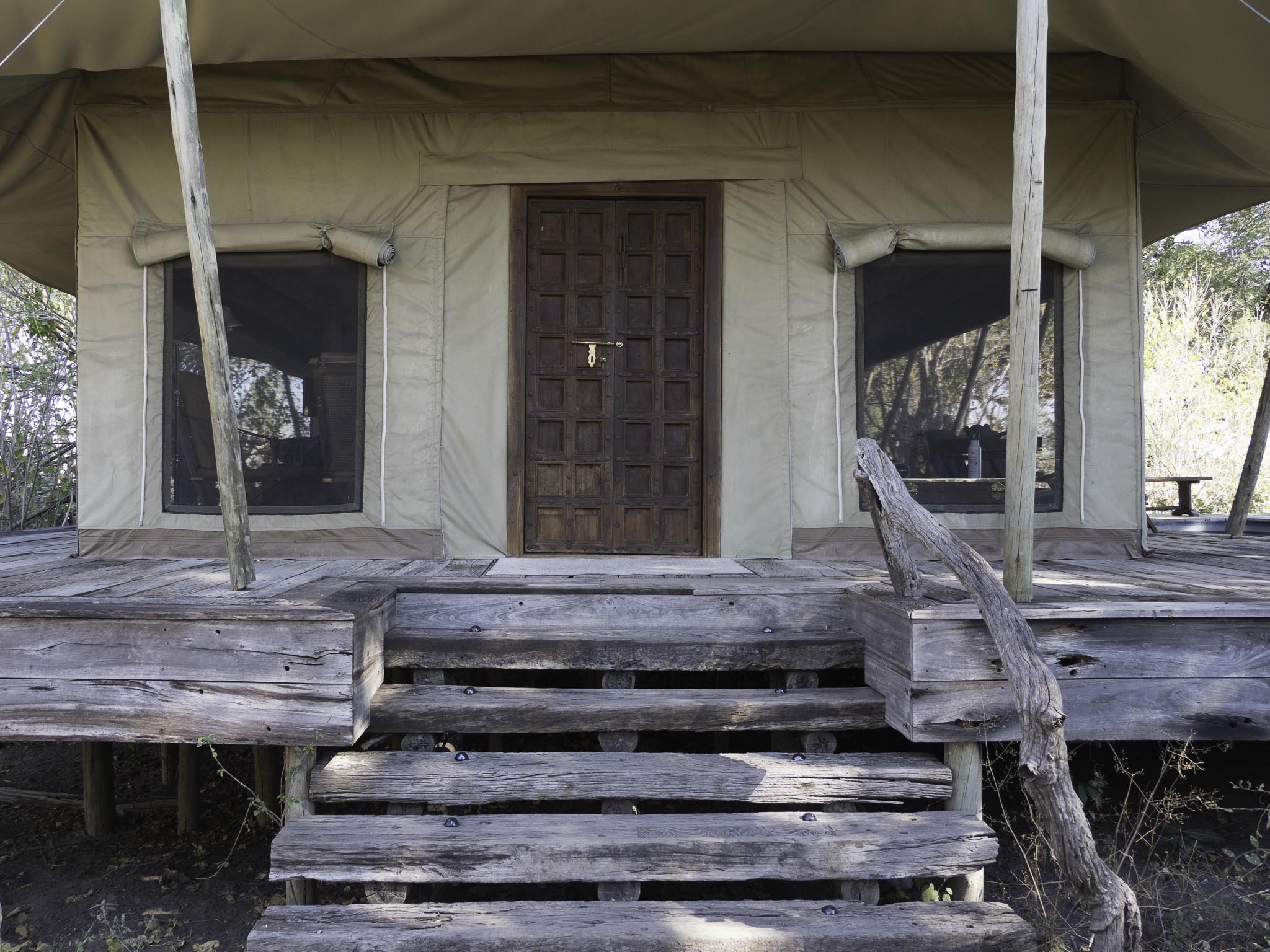
20170811 Africa 2017 _EM27509

Our tent at Zarafa Camp, August 2017

Jack’s – no heat, light by paraffin lantern, mostly canvas walls in the tent with small screened windows (so dim even during daylight), no real storage for clothing etc., electricity in main tent from 8-5 daily.  Did I mention there is no heat anywhere?  No wifi or other connectivity.

Vumbura Plains – much much larger tent, electric lights, fully screened walls for lots of daylight, 24 hour electricity in tent, tons of hanging and storage space.  Still no heat anywhere.  Still no wifi or other connectivity.

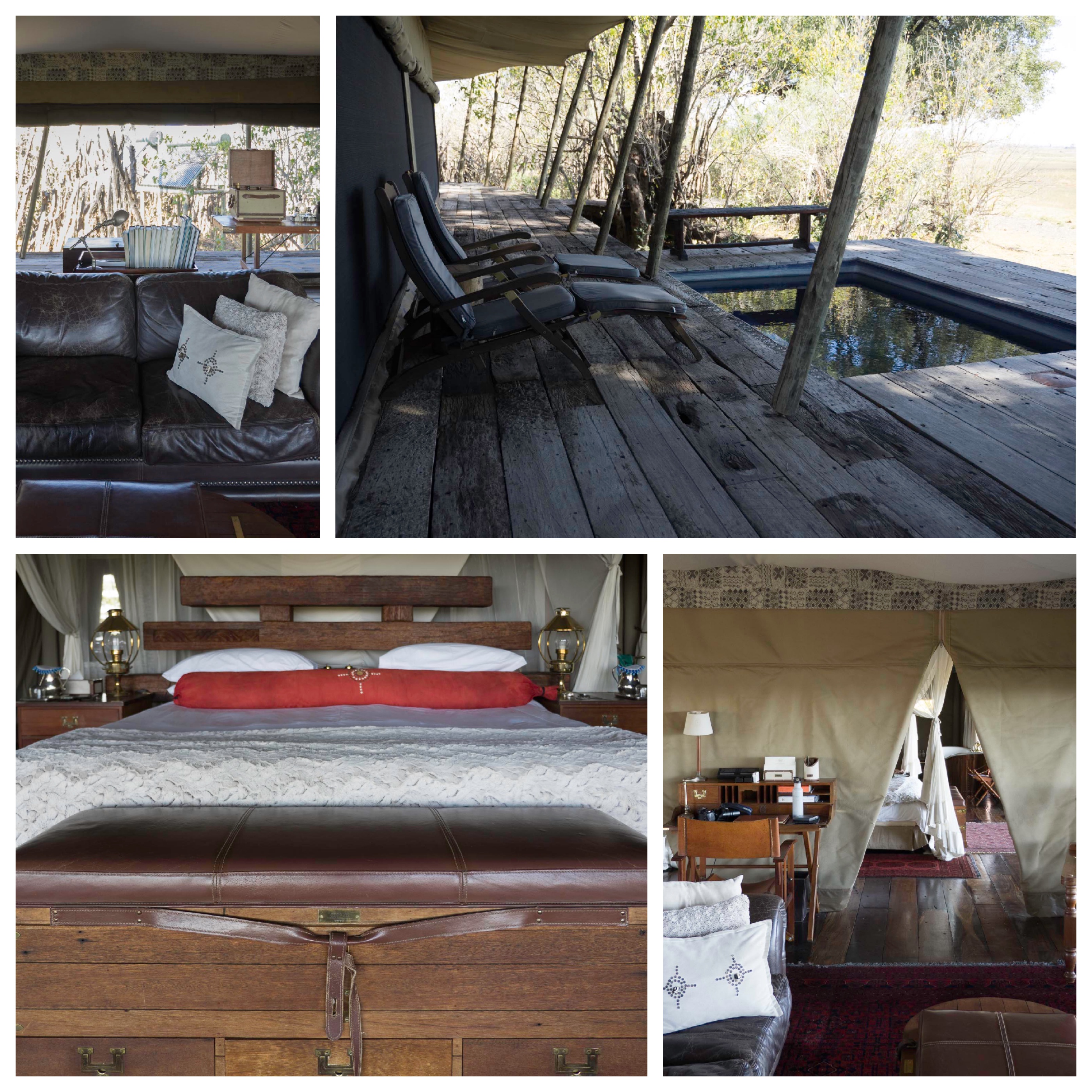
Zarafa – large tent with “living room” and “bedroom suite” areas separated by a canvas wall, electric lights, fully screened walls with plastic covers at night, gas heater in bedroom area, 24 hour electricity in tent. Wifi, although pretty limited in speed.

Even in Zarafa, the toilet room was unheated and cold in the morning or at night.  And I had to start the gas heater in the morning, as we were asked to not keep it on all night.

There was also the question of what to do if you needed to leave the tent, or needed assistance, at night.  In no camps are guests allowed to walk unescorted in the dark, as there’s always the chance that a dangerous animal could wander into camp.   Singita, our first camp, had phones in the villas.  The other camps did not.  Jack’s and Zarafa relied upon air horns for you to call for help if needed, while Vumbura added a walkie-talkie radio.

We never needed any of these.

Zarafa Tent Collage.jpg

All the modern conveniences of 1935, August 2017

Zarafa, like Jack’s, was decorated in early 20th century British camp style – lots of trunks, campaign chairs, etc.   But Zarafa also had serious amenities.  Each of the four tents had Swarovski binoculars (1).  The camp has four serious Canon cameras with big zooms lenses available for your use (2).

As I mentioned, Zarafa is small – just four tents for two people each (3).  It’s managed by a couple, Sas and Dave.  Dave is/was a professional photographer and all-around very knowledgeable about many things.  I had several good chats with him.  When I asked him why he had moved from England to Botswana, he replied “Sas”.   She was born in Africa, and has been knocking around the tourism and safari business for a long time.  She was never going to live in a place like England.


(1) She used the binoculars for each drive.
(2) Sally used the Canon 5D with the 100-400/3.5-5.6 lens for one drive, and enjoyed it, but found it way too heavy to use comfortably.  Frankly, I found it too heavy to use comfortably as well.  That’s why I use my lightweight Olympus and Panasonic gear.
(3) Only two tents were occupied, including ours, during our stay.  So it was pretty quiet.

A real time update

Due to the lack of any useable wifi (or any at all) for the last week, I’ve been trying to catch up.  I still have two more stops to go: Zarafa camp, and Victoria Falls.  

Tea, anyone?, August 2017

Right now, Sally and I are in the British Airways lounge in Johannesburg’s airport.  We should be on our flight to London in two hours, and back in the US of A in about 24 hours.  

Did we miss anything?

The Okavango Delta

August 8-10

As I wrote earlier, the Okavango Delta is an area of marsh and grassy plains that is rich in wildlife. After our days at Jack’s in the Desert, it was nice to be in areas that contained more wildlife in our next two camps.
Given our plan of visiting three camps in succession for two days each, our schedule went something like this:

Day 1: travel late morning to early afternoon to a camp. Unpack quickly, then take the afternoon game drive.
Day 2: wake up in the dark, get dressed and have a light breakfast. Leave for the morning drive or activity at first light. Come back late morning, have lunch, perhaps rest or cleanup. Afternoon tea at 3:30, then the afternoon drive or activity until after sunset. Dinner. Try to pack as much as possible for departure the next day.

Day 3: wake up between 5:30 and 6:30 am in the dark, get dressed and have a light breakfast. Leave for the morning drive or activity at first light. Come back, finish packing. Drive to the airstrip for the flight to the next camp.

Rinse and repeat as needed.

Vumbura was the first of two in this climate. It’s at the edge of the Delta, and we were often crossing water in our Land Rover.  The camp was located at the west edge of a wet area, giving us beautiful sunrises each morning.


Sunrise at Vumbura, August 2017

There were an endless number of birds. Our guides at each camp made sure to tell us the name of each one that we saw, and often some interesting facts about them, but all I can remember is how pretty they were. 


An ostrich, an eagle, and a bunch of other birds, August 2017

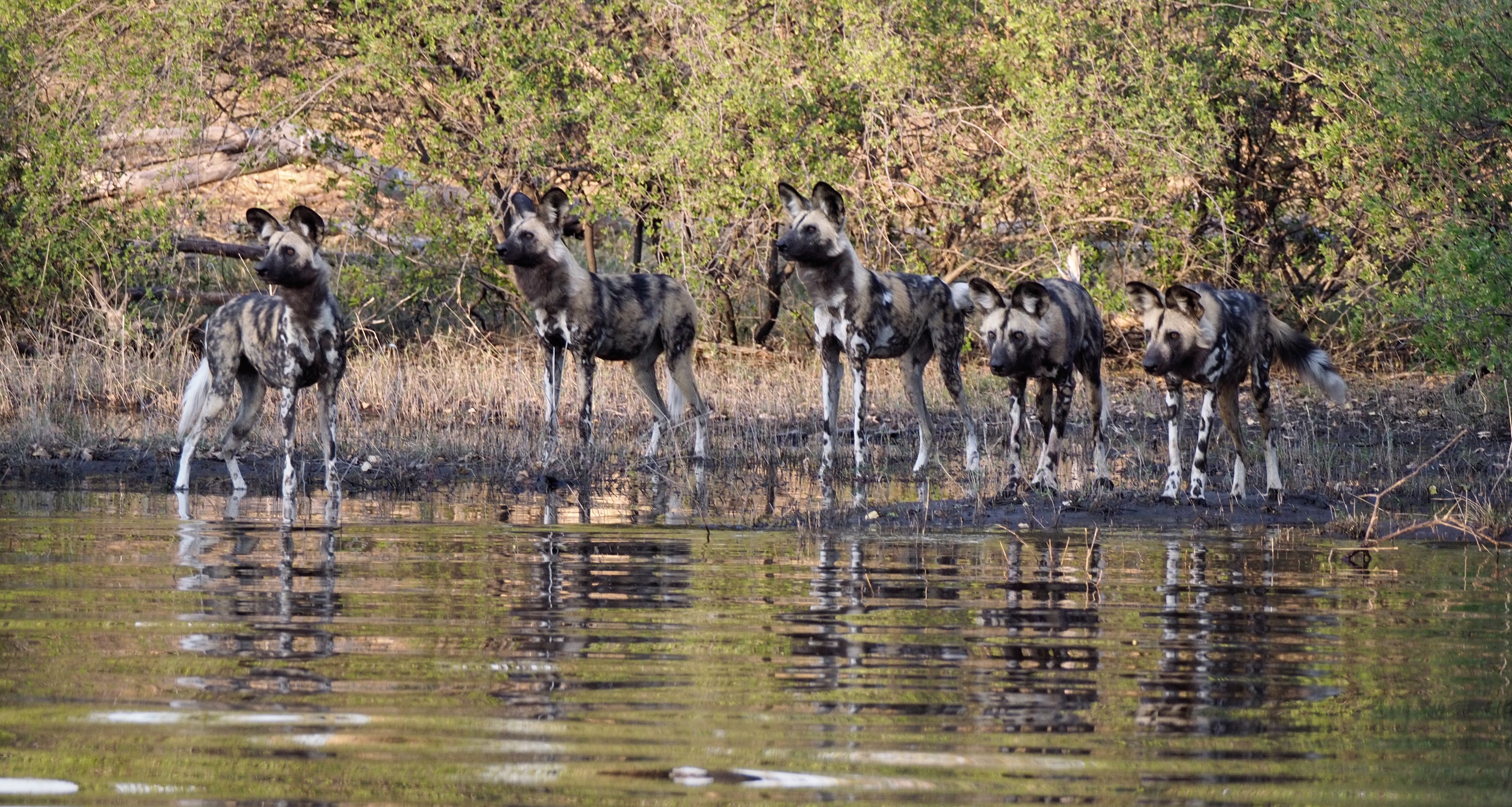
We tracked a pack of African Wild Dogs through the bush for a while, and they came to a water crossing. They all lined up to think about the best way to cross.


Should we stay or should we go, August 2017

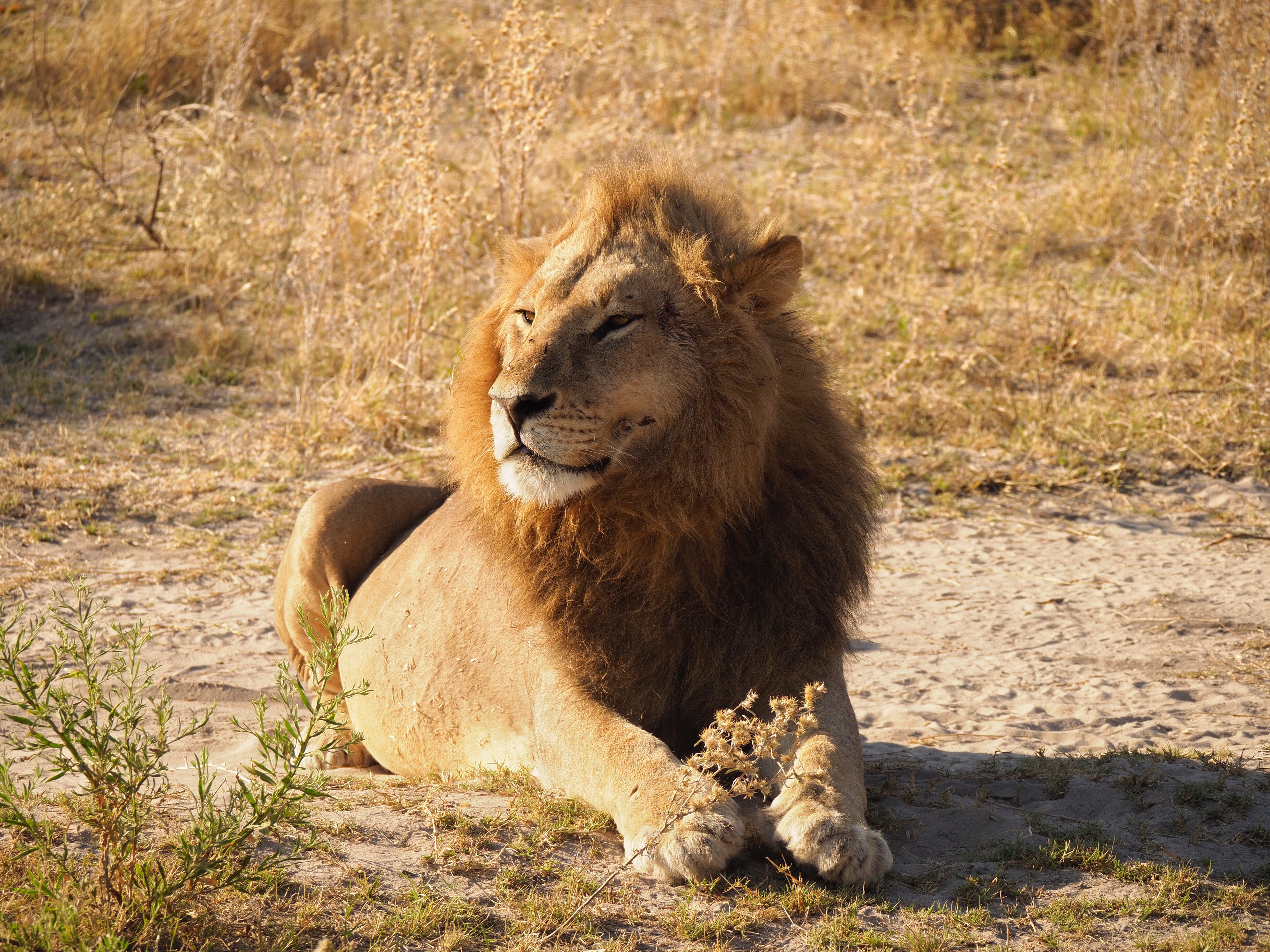
The King of the Jungle made an appearance. Lions sleep most of the day – up to 18 hours. This one was awake but not wasting any energy. When they make a kill, they’ll eat until they’re gorged, then fall into a food coma. They may not find any more food for several days.


Lazing on a sunny afternoon, August 2017

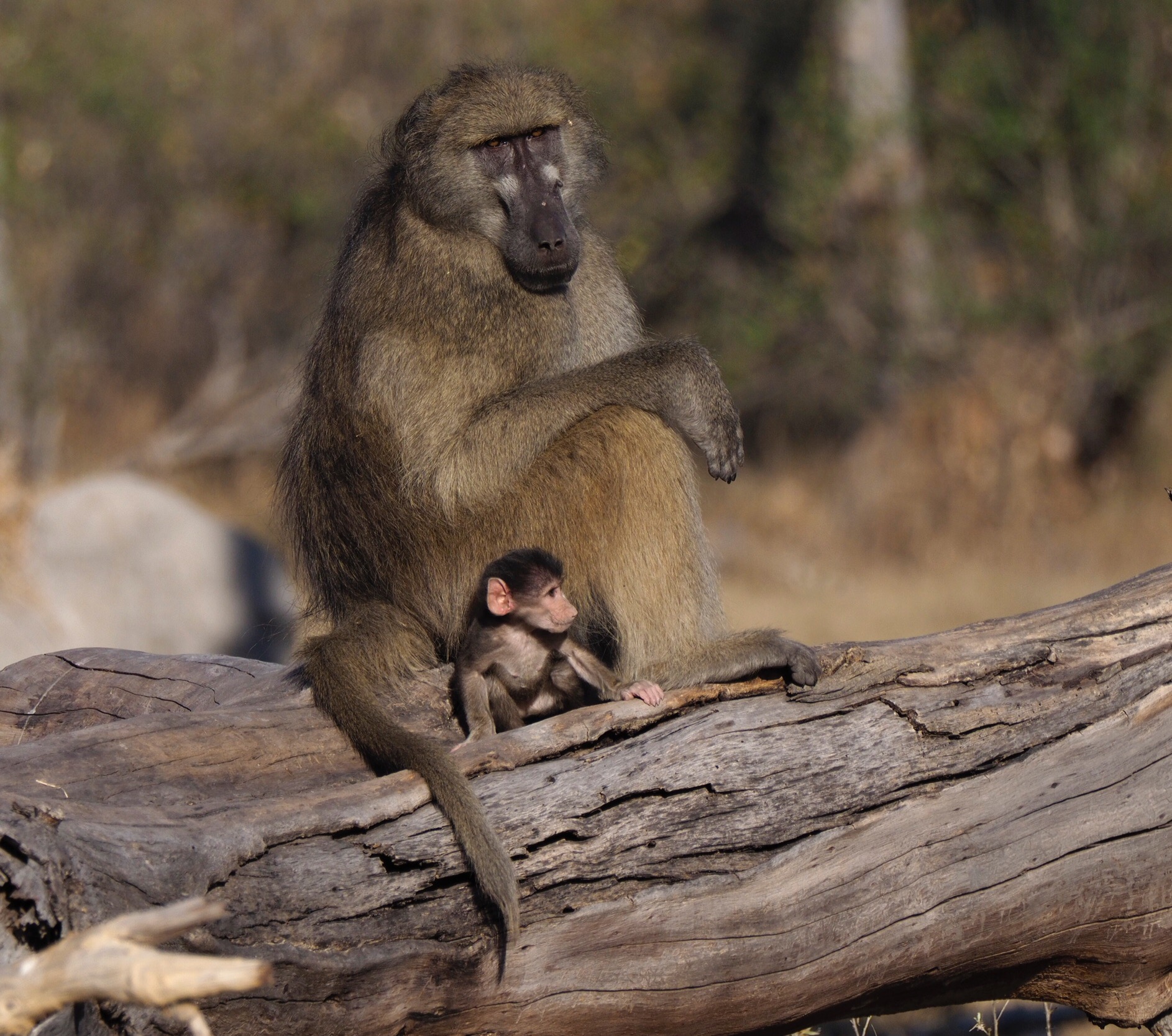
We came across a group of baboons with some youngsters. Chris, our guide at Vumbura, estimated this baby was only a few days old. It’s being cared for by its father.


Father and child reunion, August 2017