Unscheduled Charter

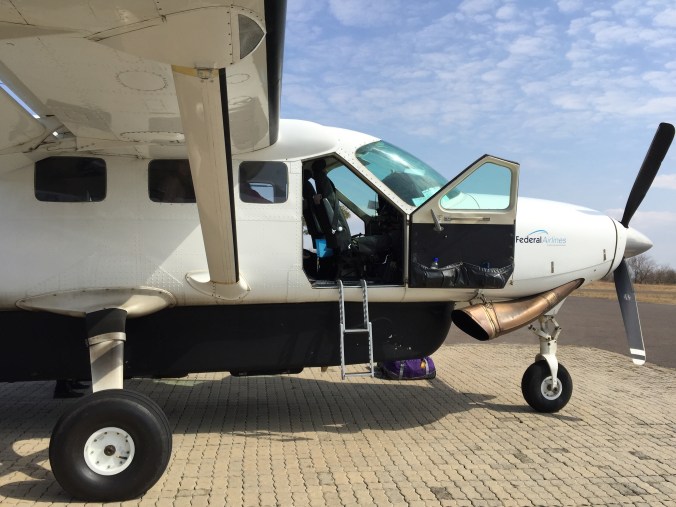
This morning is our first flight on a charter. Actually, an Unscheduled Charter, Federal Airlines. This was also the flight I had the most baggage anxiety about. While the total weight limit per passenger is very sufficient, the cabin luggage limit is 11 lbs. per person. My camera bag clocks in at over 20 lbs., so this was concerning.

We were picked up at the hotel at 8:30 and made the 30 minute ride to the FedAir terminal at O.R. Tambo Airport. We checked in and our duffel bags were taken and weighed; they were about 55 lbs for the two of us, as expected. Then we found out what an Unscheduled Charter is: they take off when they get a slot from air traffic control, which is 11:30 rather than the 10:30 they had told us. So we get to sit here in a comfortable, small lounge for almost two hours.

FedAir lounge, July 2017

They also didn’t bother to weigh our cabin bags. Sally’s was about 13 lbs when we left NY, and might be a pound lighter now. My camera bag is still about 20 lbs. So this is a relief – I won’t have to stuff my pockets with lenses and whatnot.


Flight #2, July 2017

We’re Flight #2.

Joburg

Today was our day seeing Johannesburg, or Joburg in local parlance. The Joburg metro area has about 8.5m people, and the population ranges from the richest people in South Africa to some of the poorest. And that mirrors our day, which started at our hotel in our rich suburb of Sandhurst (1) and proceeded through two of the townships, Alexandra and Soweto. The middle of the day was a visit to the Apartheid Museum, which tells the story of the increasingly formal and institutionalized racism in this country, thru the end of apartheid subsequent to Nelson Mandela’s release from prison in 1994.


South African police prepare to storm an ANC area (photo of photo in Apartheid Museum), July 2017

I will not bore you with this history; it is readily available from Wikipedia and other places if you are interested. However I will make one point: this country passed from an oppressive “democracy” run by the whites, who exploited the black and colored (2) populations from when the first Europeans arrived, to a flawed democracy with an elected government of blacks – and without an endless and devastating civil war. Yes, there were deaths – largely from the oppressive government, and also from the freedom fighters – but somehow the number of deaths in the struggle was measured in 10s of thousands, not millions.


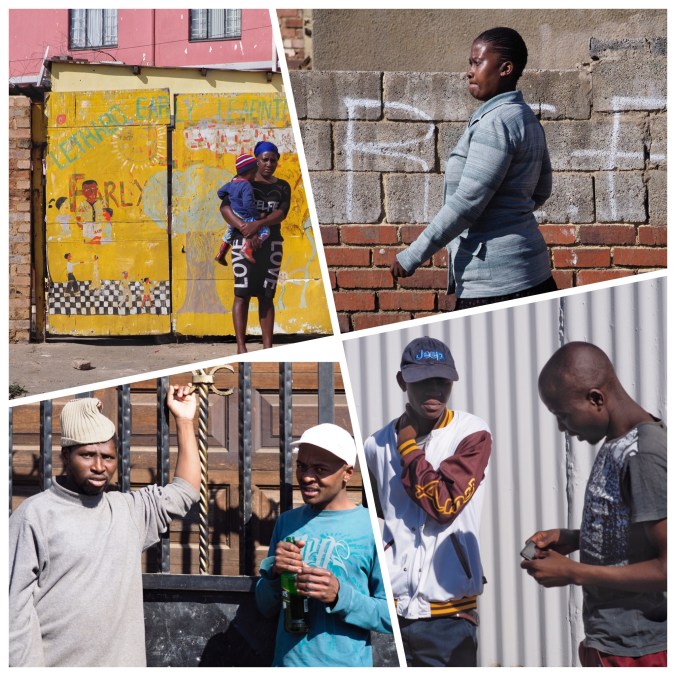
Alexandra residents, July 2017

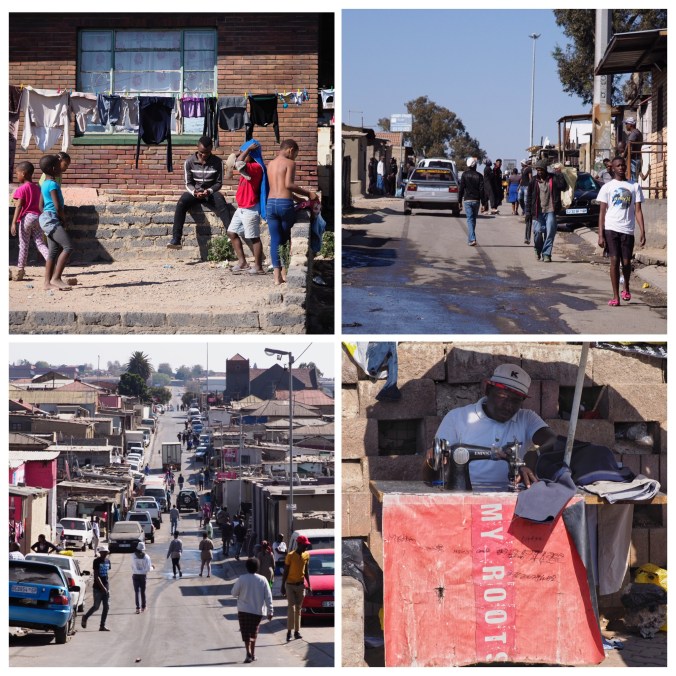
We spent a good part of the morning going though Alexandra, one of the black townships established during apartheid to isolate the black population. This is a place of appalling living conditions and abject poverty. Yet, as the pictures show, people don’t exhibit misery in their everyday lives. Unemployment is 40%; the schools are terrible or worse; drug use and AIDS are rampant. Yet somehow people manage to live each day.


Alexandra streets, July, 2017


Alexandra’s future, July 2017

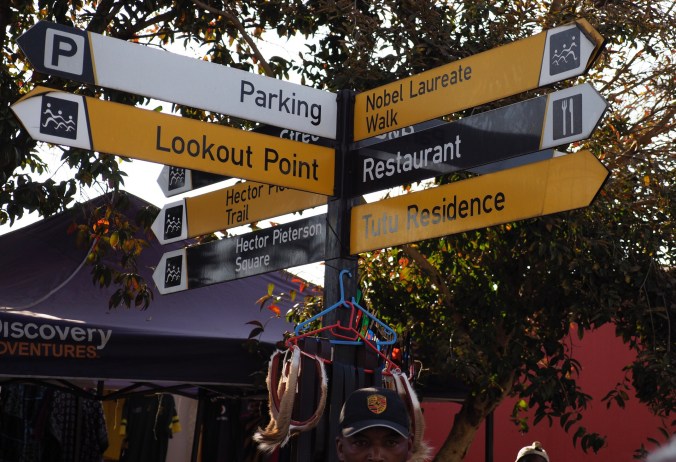
After the museum, we went to Soweto (3), the largest and most famous of the townships. This was the locus of the struggle to end apartheid. Mandela and the other leaders lived here, when they weren’t in jail, exile or hiding from the authorities. We had a pleasant lunch in a buffet restaurant on the street where Tutu and Mandela “lived” (4).


Historical center of Soweto, July 2017

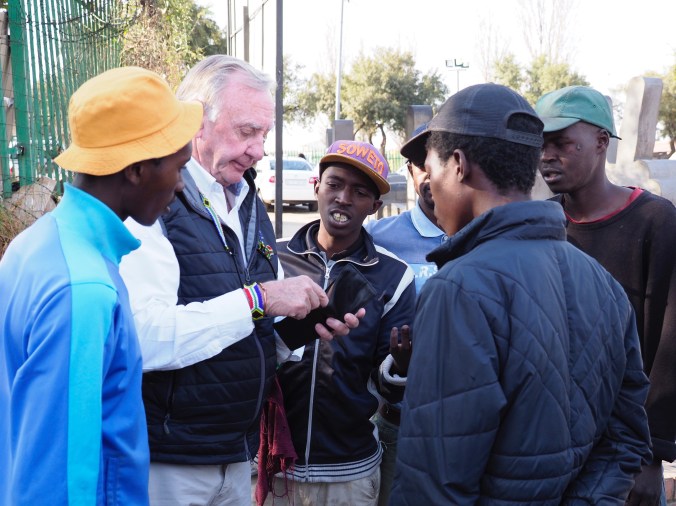
Soweto is large, with millions of residents. The housing ranges from tin roofed and sided shacks, to small but tidy bricked homes, to dormitories that would compete with any tenement in NYC or Chicago. There is a lot of crime here and in Alexandra. Robin, our guide, hired a crew to wash and watch his car while we had lunch in Soweto. In Alexandra, he hired two bodyguards with a gun to follow us in their car while we drove around (we never got out of the car there).


Robin’s crew, July 2017

The Alexandra crew were all quite friendly, and jostled for the dollar or so he gave each of them: the washer, the watcher, the crew chief, etc.

It was an interesting and tiring day.

Tonight we have dinner out at a nearby restaurant. Tomorrow we get on a small plane for a 90 minute flight to Singita, a camp outside of Kruger National Park. We’ll be touring in a private preserve. I expect there’s some level of Internet service there, but if you don’t hear from us, then I was wrong.
———-
(1) Think Scarsdale, Short Hills or Saddle River with electric wire on stone walls
(2) “White”, “black” and “colored” have specific meanings in South Africa, different than in the US. Race is really a cultural concept and not a biological one.
(3) Soweto = SOuth WEst TErriTOries. It is southwest of Joburg proper.
(4) Mandela stayed in the house here for a couple of weeks in his life. Tutu did live here, and his family still owns the house. Winnie Mandela had a restaurant which is now empty.

Gear fail

I’ve written a number of incredibly long and boring posts about my photography gear for this trip. This won’t be long. You can decide if it’s boring,

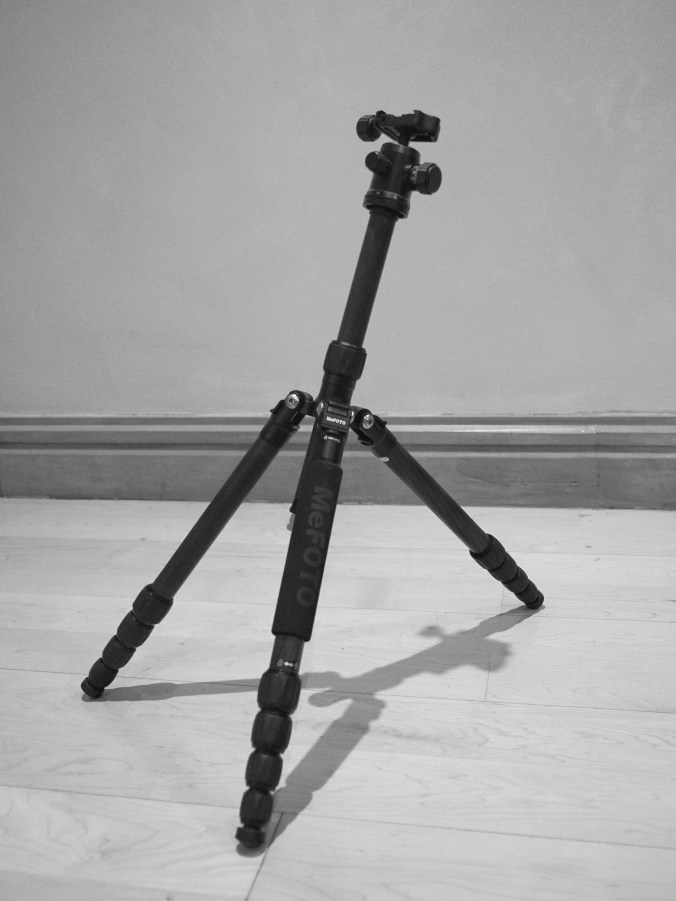
One of the key factors in choosing what to bring was redundancy: two cameras, lenses that can partially offset another that has failed, lots of batteries and chargers, backup strategy for the pictures. One thing which doesn’t have a backup is my tripod, as it’s big and heavy. I almost didn’t bring it at all because of the weight.

So of course, it broke. Partially.


Looks healthy, but it’s not, July 2017

I had disassembled it into three pieces so that it would pack better into our constrained luggage. As I was trying to put it together this morning, the center shaft jammed in an unusable position. After about a half an hour, and at the cost of a skinned knuckle, I got it to the point where it is useable. But I brought this particular tripod because it converts to a monopod, which I can use in the game drive vehicles. Now I’m not sure I’ll be able to disassemble it anymore, or put it back together again if I do.

Arrrrrggggghhhhh!

Inside a wall

We arrived in Johannesburg’s O.R. Tambo Airport this morning after a long and uneventful flight. In at least one way, it was a throwback to the old days of air travel: someone met us at the gate.

I vaguely remember those days, before layers upon layers of security were added to air travel. You could walk your friend or family member to the gate, helping them with their hand luggage (there was no wheeled luggage in those days, either) and delaying the inevitable goodby to the last minute. And the reverse was true: people would crowd around the gates, waiting for their someone to walk down the ramp and emerge to smiles and hugs.

In our case, we were met by an escort waiting with our name on a sign – someone we paid for who guided us through the airport, helped us get our luggage at the carousel, and expedited our passage through passport control and customs. After a tip, he handed us off to our driver, also waiting with a sign, who took us to our hotel in the suburbs. Where he got his tip (1).


Guard at the gate to the Saxon, July 2017

The Saxon Hotel is quite lovely. It is also a fortress, completely surrounded by a high concrete wall. As are all of the other properties in this wealthy suburb. Many of the walls are topped with electrified wires.


Saxon Hotel, 2017

The staff here seems extremely attentive to the guests and are quite pleasant. When we approach one of them in the halls, they invariably stand to one side and wait there until we pass; this is a bit disconcerting to us, accustomed as we are to a less formal and more egalitarian relationship with people.

We kind of stumbled around the room for a bit, then stumbled around the hotel a bit looking for a place to eat, then decided on room service for lunch. A nap, some showers, and we felt better. We have dinner reservations in the hotel restaurant.

Tomorrow we leave at 9:00 for our full day “Soweto and Apartheid Tour with Robin Binckes as a guide”. Hope it’s interesting. It’s a full day.

—————-
(1) We received detailed instructions on tipping from our travel company: drivers, porters, guides, trackers, etc. Each has a price and a currency. In South Africa, where we are for nine nights, it’s the South African Rand, or ZAR.

Lounging around

Despite getting out of JFK late, we got into Heathrow about 30 minutes early. Which did nothing for our sleep. We stumbled off the plane and found our way to Terminal 1, where BA operates two Club lounges. And this has been our home for the last six hours, with another hour or so to go – assuming our flight remains on schedule.


Lots of loungers, lots of drinks, July 2017

Unlike the JFK lounge, which definitely needed a refresh, this lounge is both quite nice and quite busy. There’s lots of snacks around all day, including beverages, and they put out a buffet lunch which we skipped for all kind of reasons. They also have robust wifi, which I’m using right now.


Feeling fidgety? Have a bite, July 2017

We took a walk outside of our gated community to the terminal concourse. It’s really a shopping mall surrounded by security and airplanes. You can buy pretty much everything you might need for a trip here – clothing, toiletries, luggage, cameras, fidgets, etc. We just had lunch in a place called, fittingly, Giraffes.

On our way!

Well, we got everything packed. As far as I can tell, we weigh about 88 lbs. together, so we should be able to bring all of our stuff on some of the more restrictive flights that are coming later. In the meantime, we’ve checked in with British Airways at JFK. Uber was nearby and made a quick pickup, traffic was a bit lighter than usual, and there were about five people ahead of us at TSA. Our flight, scheduled for 10:55pm, is delayed about 25 mins. I checked it’s track record, and it seems to be delayed up to an hour and a half every night. And it seems to get into London Heathrow about on time, at 11:00am local time.

We have a very long layover in Heathrow – 8 hours. While that’s Sally’s longest, I’ve had longer ones in the past. And she actually had an overnight layover in San Francisco a couple of years ago, when she flew out to meet me there and we continued on to Hawaii.

A PRIORITY for a TRANSFER LONG, July 2017

Our bags are checked straight through to JNB (Johannesburg). In the past, when we’ve had a short-ish connection time, I’ve seen the bags tagged “short transfer” or some such thing to encourage the baggage crew to get them to the next flight. This time they were tagged “Transfer Long” to reflect our 8 hour scheduled layover. But because they’re also “Priority” because we’re flying Business Class, I guess the crew gives them priority to wait a long time.


You could shoot a shotgun and not hit anyone, July 2017

In any event, we’re in the BA lounge, which is capacious, has lots of food and snacks, and is pretty run down. And pretty empty. But it’s only for an hour or so.

We leave tomorrow

So today we tried packing absolutely everything. Since I’ve been obsessing over this for months, including a spreadsheet with every item I am taking and it’s weight, this should have been an academic exercise that proved how valuable planning is.

Wrong.

I was over-weight and Sally was over-volume. While it’s not actually a problem tomorrow (British Air gives us lots of capacity for luggage), it will be a problem on Sunday when we fly Federal Air on a scheduled charter (1). FedAir restricts your carry-on to 11 lbs. Sally’s carry-on is only a little overweight, but her checked bag is stuffed and she doesn’t have room to fit what she planned, let alone more stuff. My carry-on (aka my camera bag) is way overweight, and the gear in that bag can’t be checked in a hard sided suitcase, let alone our soft duffle bags. And later we will be on several flights where everything must be 44 lbs or less.


This stuff didn’t make the cut, July 2017

So today we both started pulling stuff out of our bags. I don’t really need those shorts, or the extra t-shirt. I won’t bring a small case for my camera cleaning supplies, they’ll go into a baggie. Same with a filter bag and a belt carrier for a monopod. Detachable shoulder straps for both our duffles and a fleece beanie got jettisoned. A bunch of stuff that had accumulated in my toiletry bag all disappeared, as did miscellaneous small cables and adaptors in my electronics bag. Sally took out some shirts, a sweater, half her mouth wash, a dress, and some underwear. As a result she was also able to eliminate two pack-it bags as well.

I already know that my 11 lb. carry-on was only going to happen by using my photographer’s vest and filling its capacious pockets with 8 lbs of fragile consumer electronics.

We both think we haven’t quite cracked the code here, yet. We’ll try again tomorrow to fit into the weight and space constraints for all the different flights.

—————–
(1) What exactly is a “scheduled charter”? It’s not a scheduled flight, as it has no flight number. But it flies a regular route at a regular time. I’m confused.

Strange stuff to pack

Years ago Sally and I would travel with suitcases filled with clothing and books.  If we were going to a resort or traveling by air, the books would cosume both a big part of my suitcase and my carry-on.  Technology and age have changed these priorities, especially for me.

20170723 untitled shoot SGA10027

Keith and Kindle, July 2017

I haven’t actually carried a real physical book on an airplane in years.  The first practical e-reader, the Kindle, was released in late 2007, and I believe I purchase one shortly thereafter.  Since then, I’ve purchased and downloaded almost every book I’ve gotten as a Kindle book (1).  In 2011, I bought my first iPad (an iPad 2), and installed the Kindle app.  I never replaced my original Kindle device, and it is now long gone.  So my reading library – especially while traveling – is now my iPad or even my iPhone.  Since I carry those whenever I travel anyway, this is a 100% weight and space savings.

The iPad and iPhone are just the tip of the iceberg when it comes to electronics, of course.  Sally does use a real Kindle device, which requires it’s own micro-USB cable.  All of these devices will charge using the same USB wall plug.  And I have my cameras, which use two different batteries, and thus require two different chargers.  The newest addition on this trip is the backup disk drive I bought, but this also charges using a USB wall plug, although again with a unique cable (USB 3).  Any I always take two of everything critical that could fail.

20170723 untitled shoot SGA10024

Meds, eyeglasses and a lens, July 2017

Another class of item that’s been growing for us over the years is our medications.  The good news is that we’ve actually lived as long as we have, and that there are pills to help us feel better every day.  They also help us try to preserve our general health and fitness for the future.  In my case, I have a slew of pills I take everyday to treat my arthritis.  I put the pills into these daily organizer strips that help me ensure that I take all of them everyday.  And I need almost three weeks supply for the trip, plus extras in the event we’re delayed returning or I lose or damage some.  So I’m taking four weeks worth.

Related to the meds are eyeglasses.  Sally and I both wear eyeglasses, of course.  She uses progressives, while I have bifocals.  We each will take a backup pair, as it will be hard to see if we lose or break our primary ones.  We both will take presription sunglasses, as we hope to be in the bright sun a good part of every day, looking for wild animals.  We also both are taking sunglass clips, that attach to the frame of our primary glasses for casual or city use.

The image above shows most (but not all) of my meds and packed eyeglasses. All of this stuff has to be in my carry-on.  I’ve put my largest lens there for size comparison.  I’d rather be able to take another lens.


(1) The only hard cover text I’ve bought in years was Keith Richards’ memoir, “Life”.   I’ve also acquired a number of photography books in paper form, as it’s pretty hard to appreciate the photos in a Kindle book.

I didn’t write this. I just like it.

I received this from a very good friend.  He’s not a military guy.  He’s not a Republican. He’s not from a fly-over state.   He’s definitely not a Fundamental Christian.  But we can all can get behind the sentiment expressed in this email.
I’ve taken some small liberties with the formating. Everything below the line is what I received.
———————————————————————————————————
To: {everyone I know}
Subject: AN AIRLINE CAPTAIN’S REPORT . . . A must read!


“The American flag does not fly because the wind moves past it . . .
The American flag flies from the last breath of each military member who has
died serving it.”

AIRLINE CAPTAIN — You will not regret reading this one.

My lead flight attendant came to me and said, “We have an H.R. on this flight.” (H.R stands for Human Remains.)

“Are they military?” I asked.

‘Yes’, she said.

‘Is there an escort?’ I asked.

‘Yes, I’ve already assigned him a seat’.

‘Would you please tell him to come to the Flight Deck. You can board him early,” I said.

A short while later a young army sergeant entered the flight deck.  He was the image of the perfectly dressed soldier.  He introduced himself and I
asked him about his soldier.

The escorts of these fallen soldiers talk about them as if they are still alive and still with us.  ‘My soldier is on his way back to Virginia,’ he said.  He proceeded to answer my questions, but offered no words.

I asked him if there was anything I could do for him and he said no.  I told him that he had the toughest job in the military, and that appreciated the work that he does for the families of our fallen soldiers.  The first officer and I got up out of our seats to shake his hand.  He left the Flight
Deck to find his seat.

We completed our preflight checks, pushed back and performed an uneventful
departure.  About 30 minutes into our flight, I received a call from the lead flight attendant in the cabin.

‘I just found out the family of the soldier we are carrying, is also on board’, she said.  She then proceeded to tell me that the father, mother, wife and 2-year old daughter were escorting their son, husband, and father
home.  The family was upset because they were unable to see the container that the soldier was in before we left.

We were on our way to a major hub at which the family was going to wait four hours for the connecting flight home to Virginia.  The father of the soldier told the flight attendant that knowing his son was below him in the cargo compartment and being unable to see him was too much for him and the family
to bear.  He had asked the flight attendant if there was anything that could be done to allow them to see him upon our arrival.  The family wanted to be outside by the cargo door to watch the soldier being taken off the airplane.

I could hear the desperation in the flight attendants voice when she asked me if there was anything I could do. ‘I’m on it’, I said.  I told her that I would get back to her.

Airborne communication with my company normally occurs in the form of e-mail like messages.  I decided to bypass this system and contact my flight dispatcher directly on a secondary radio.  There is a radio operator in the
operations control center who connects you to the telephone of the dispatcher. I was in direct contact with the dispatcher.  I explained the situation I had on board with the family and what it was the family wanted. He said he understood and that he would get back to me.

Two hours went by and I had not heard from the dispatcher.  We were going to get busy soon and I needed to know what to tell the family.  I sent a text message asking for an update.  I saved the return message from the
dispatcher and the following is the text:

‘Captain, sorry it has taken so long to get back to you.  There is policy on this now, and I had to check on a few things.  Upon your arrival a dedicated escort team will meet the aircraft.  The team will escort the family to the
ramp and plane side.  A van will be used to load the remains with a secondary van for the family.

The family will be taken to their departure area and escorted into the terminal, where the remains can be seen on the ramp.  It is a private area for the family only.  When the connecting aircraft arrives, the family will be escorted onto the ramp and plane side to watch the remains being loaded for the final leg home.

Captain, most of us here in flight control are veterans.  Please pass our condolences on to the family.  Thanks.

I sent a message back, telling flight control thanks for a good job.  I printed out the message and gave it to the lead flight attendant to pass on to the father.  The lead flight attendant was very thankful and told me,
‘You have no idea how much this will mean to them.’

Things started getting busy for the descent, approach and after landing. we cleared the runway and taxied to the ramp area.  The ramp is huge with 15 gates on either side of the alleyway.  It is always a busy area with aircraft maneuvering every which way to enter and exit.  When we
entered the ramp and checked in with the ramp controller, we were told that all traffic was being held for us.

‘There is a team in place to meet the aircraft’, we were told.  It looked like it was all coming together, then I realized that once we turned the seat belt sign off, everyone would stand up at once and delay the family from getting off the airplane.  As we approached our gate, I asked the
copilot to tell the ramp controller, we were going to stop short of the gate to make an announcement to the passengers.  He did that and the ramp controller said, ‘Take your time.’

I stopped the aircraft and set the parking brake.  I pushed the public address button and said:  ‘Ladies and gentleman, this is your Captain speaking: I have stopped short of our gate to make a special announcement.
We have a passenger on board who deserves our honor and respect.  His name
is Private XXXXXX, a soldier who recently lost his life.  Private XXXXXX is under your feet in the cargo hold.  Escorting him today is Army Sergeant XXXXXX.  Also, on board are his father, mother, wife, and daughter.  Your entire flight crew is asking for all passengers to remain in their seats to allow the family to exit the aircraft first.  Thank you.’

We continued the turn to the gate, came to a stop and started our shutdown procedures.  A couple of minutes later I opened the cockpit door.  I found
the two forward flight attendants crying, something you just do not see.  I was told that after we came to a stop, every passenger on the aircraft stayed in their seats, waiting for the family to exit the aircraft.

When the family got up and gathered their things, a passenger slowly started
to clap his hands.  Moments later, more passengers joined in and soon the entire aircraft was clapping.  Words of ‘God Bless You’, I’m sorry, thank you, be proud, and other kind words were uttered to the family as they made their way down the aisle and out of the airplane.  They were escorted down
to the ramp to finally be with their loved one.

Many of the passengers disembarking thanked me for the announcement I had made.  They were just words, I told them, I could say them over and over again, but nothing I say will bring back that brave soldier.

I respectfully ask that all of you reflect on this event and the sacrifices that millions of our men and women have made to ensure our freedom and
safety in these United States of AMERICA.

Foot note:

I know everyone who reads this will have tears in their eyes, including me. Prayer chain for our Military.. Don’t break it!  Please send this on after a
short prayer for our service men and women.

Don’t break it!

They die for me and mine and you and yours and deserve our honor and respect.

Prayer Request:  When you receive this, please stop for a moment and say a prayer for our troops around the world.. There is nothing attached.  Just send this to people in your address book.  Do not let it stop with you.  Of all the gifts you could give a Marine, Soldier, Sailor, Airman, and others  deployed in harm’s way, prayer is the very best one.

GOD BLESS YOU!!!

Thank you all who have served, or are serving.

We will not forget!!!


Connectivity

Years ago, in the pre-mobile phone era, or even in the roaming-is-so-expensive-you-don’t-dare era, I used to do a lot of business travel.  And Sally and I used to take vacations.  For each of these, I would prepare a list of travel information and contacts for those left behind – Sally if I was on business, our kids or their babysitters if we were on vacation without them.  This would include flights, hotels and phone numbers, contacts at my offices if I was on business and their contacts, etc.  This would enable someone to get in touch with me / us in the event of an emergency.

20170716 Where are we? 20170716 Where are we? Where are-2

Where are we?, July 2017

With the dawn of mobile communications, global email and texting, this became a much less intensive and critical exercise.  Now when we travel for pleasure, we usually let the kids know what our flights are, and generally where we’ll be.  And of course, since I’ve been blogging our major trips, all of you are kept up to date with our location as we go along.

This all changes for Africa.  For one thing, we probably won’t have cell service most of the time.   When we’ve traveled to Europe recently, we were able to (one way or another) tap into the local cell networks either with a wifi hot spot or directly with our mobile phones, as AT&T (and Verizon) have made roaming affordable.  Neither one has any local partners in South Africa or Botswana that I can see.  We will have wifi in our city hotels, so we’ll be able to communicate when we are there.  But while out and about, we’ll be mostly non-communicating.

I will look into getting a local SIM card for my allegedly unlocked iPhone while we’re in Johannesberg and Capetown, but I’m skeptical that it will work.

In addition to the cities (Johannesberg, Cape Town and Victoria Falls) we’ll be in four different camps on this trip.  Two of them have no Internet connectivity whatsoever.  So for the first time in many years, we will be completely off the grid.  If I remember correctly, the most recent time we were even close to this was in Anguila about 12 years ago. There was no cell service, no wifi, and no phone in our room.  There was a phone near the front desk that you could use, and I recall having to make some business-related calls while we were there.
In addition to the two camps that are explicit about having no wifi, I’m expecting wifi to be limited at the other two camps.  While texts and emails might get through, I’m doubtful that I’ll be able to upload any pictures.  And we have been in many city hotels where the wifi was barely useful in recent years.  But maybe I’ll be pleasantly surprised.

In any event, I have created a two page schedule of our flights and accomodations which I’ll leave with our kids before we go.  Not that I expect them to need it.  Unlike years past, this list doesn’t have phone numbers or addresses for our accomodations, nor the scheduled times for our flights.  Rather, I just give the web link for each and expect anyone who wants to get more information – and up-to-date information – will just hit the link.